Starship’s 13th Test Flight Soars: Unveiling the Next Generation of Starlink Satellites

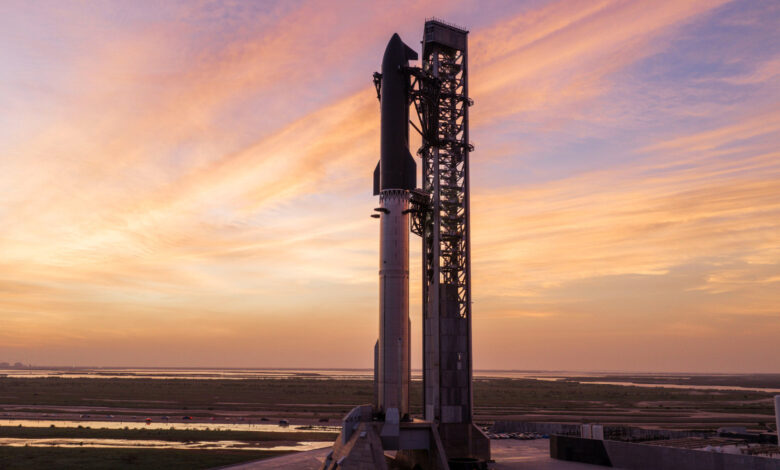
The Starlink satellites are set to disintegrate in the atmosphere within 20 minutes.
SpaceX’s Starship has embarked on its 13th test flight after facing several delays due to adverse weather. This mission marks the inaugural flight of the next-generation V3 Starlink satellites, which aim to significantly enhance service performance. According to the company, these satellites are capable of supporting downlink speeds of up to 1 Tbps, which is ten times what the previous V2 satellites can manage, in addition to an uplink capacity of 160 Gbps, a 22-fold increase from V2.
On this particular flight, Starship will deploy 20 satellites; however, Starlink customers will not experience these improvements immediately. This test flight focuses on assessing the satellites, which will extend their solar arrays and antennas to establish connections with the broader Starlink network using high-capacity lasers. The satellites will operate at a similar altitude and trajectory as Starship before re-entering the atmosphere and disintegrating approximately 20 minutes post-deployment.
Additionally, SpaceX modified two of the satellites for this flight. Cameras were added to allow them to capture images of Starship’s heat shield, which will then be sent back to Earth for analysis. This is part of the company’s ongoing efforts to prepare for future flights.
This marks the second launch of SpaceX’s V3 Starship variant, which was first introduced during the heavy-lift rocket’s 12th test flight in May. Similar to the previous mission, this flight aims to gather data that will aid SpaceX in progressing towards a fully reusable launch system.