Reduce Your Screen Time: The Surprising Benefits of Going Old School with a Brick

For years, I’ve imposed a 30-minute daily limit on social media use via my iPhone, yet I often ignore those notifications to continue watching endless Reels. The horror of realizing how often I’ve dismissed this limit haunts me.
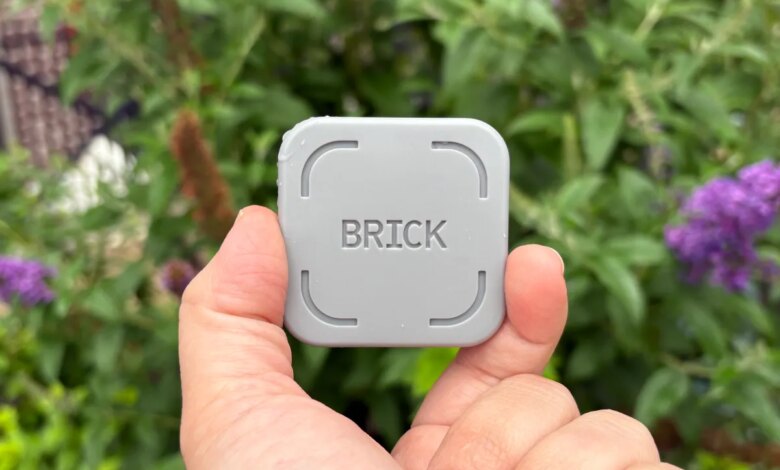
What I needed, it turns out, was a $59 piece of grey plastic. The Brick—a compact, magnetic device—has achieved what no digital screen time app could. It has successfully helped me reduce phone usage and enhance my sleep quality.
The Brick differentiates itself from traditional screen time applications by evolving the concept into a tangible object. This device enables users to lift their custom screen time restrictions solely by tapping their phone to it, akin to a contactless payment. Just the act of physically getting up to tap my phone to engage with Instagram has made me less inclined to do so.
“Brick was created out of our own experiences; our phone addiction was interfering with real life,” said Zach Nasgowitz, the co-founder, in an email correspondence. Realizing that existing solutions fell short, we decided to develop a tool that would effectively address this issue.
I’ve utilized the Brick to enhance my bedtime routines, and I must admit, the results have exceeded my expectations.
Similar to many millennials whose employment relies heavily on the internet, I have fallen into the trap of scrolling on my phone late into the night, which negatively affects my sleep. Even worse, I sometimes browse my phone first thing in the morning, leading to a sluggish start to my day.
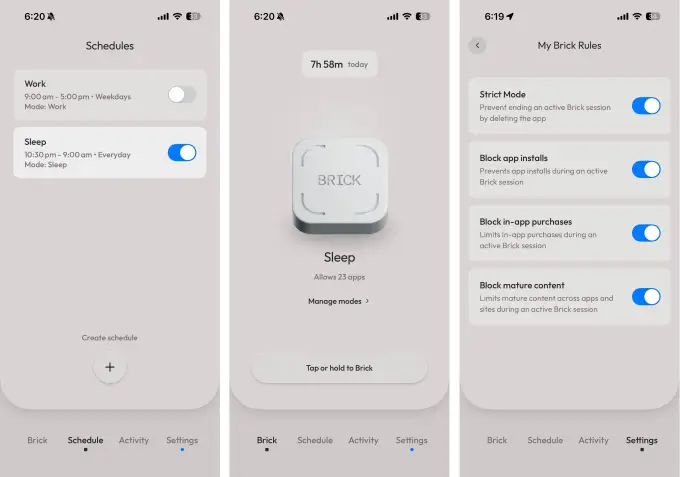
With the Brick app, I configured a “Sleep” mode that activates nightly at 10:30 p.m. During this time, my phone blocks all applications except for messaging and audio apps—enabling contact when necessary and allowing for podcast listening. In the morning, to use any app, I must physically get out of bed and tap my phone on the Brick, which discourages mindless scrolling. (For those who prefer to leave their phones outside of the bedroom, a Dreamie alarm clock may be a suitable option for utilizing podcasts.)
It feels somewhat embarrassing that a $59 gadget was necessary for me to alter my habits, but the risk of reverting to old habits felt considerable without the Brick. I am currently testing a review unit provided by the company and find it so beneficial that I plan to purchase my own, as review units are returned or donated for ethical reasons. Interestingly, if someone wanted to replicate the Brick, they could potentially utilize an NFC tag with Apple Shortcuts.
“Digital solutions like Screen Time are often too easy to bypass, which is why introducing friction is effective,” co-founder TJ Driver mentioned in an email. “By requiring a physical interaction to unblock apps, the act of reconnecting becomes a conscious decision rather than a habitual response.”
Users are also given a limited number of “emergency unbricks” for situations where access to certain apps, like Google Maps or Uber, is urgently needed while out. Personally, I find it simpler to include those apps in my sleep mode to avoid using up emergency unbrick options, as I don’t doomscroll through Uber.
“Instead of relying solely on willpower, creating an environment that reduces temptation can be more effective,” Driver added. “The Brick helps people decide how to best use their phones in specific contexts while effectively decluttering their digital space.”
The focus on personal choice and control has resonated with many users.
“One user, who wanted a simpler phone but couldn’t give up KakaoTalk to stay in touch with his friends and wife in Korea, called the Brick a solution to achieving his ideal phone—a device that allows for texting, calling, and photo-taking, yet remains suitably limited. It’s just what he needed,” Nasgowitz shared.
The growing desire to switch to “dumb phones” reflects a broader discontent with Big Tech, yet traditional flip phones don’t meet the demands of contemporary life, where digital conveniences like e-tickets and mobile payments are ubiquitous. Companies like Dumb Co and Commodore are attempting to bridge this gap by modifying flip phones for app compatibility or innovating new hardware.
For those hesitant about making drastic changes like downgrading to a flip phone, the Brick offers a balanced alternative—it’s effective yet not overly invasive. Users can modify their phone experience as needed.
“Ultimately, the screen time conversation is not about shunning technology; it’s about reclaiming control and being mindful again,” Driver concluded.