Qualcomm Invests $70M in Ultrahuman, Aiming to Transform Smart Rings into Miniature Computers

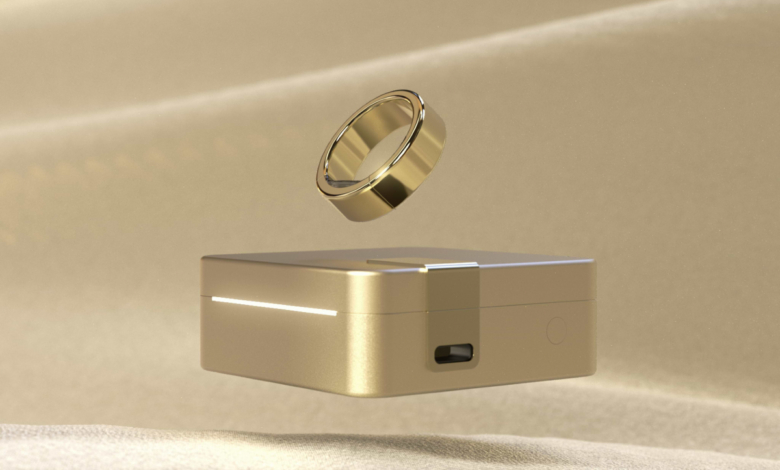
Ultrahuman, a startup from India recognized for its innovative smart rings, has secured $70 million in a recent funding round. This investment, which includes participation from Qualcomm Ventures, aims to expand the device’s capabilities beyond sleep and health monitoring to incorporate software applications and features like AI interactions and gaming.
This funding round values Ultrahuman at $365 million, significantly up from its valuation of $120 million in 2023, as noted by industry insiders.
Qualcomm Ventures joined forces with several prominent investors in this round, including U.S. diagnostics firm Labcorp, Alpha Wave, Blume Ventures, Nexus Venture Partners, and Alteria Capital. According to Mohit Kumar, the founder and CEO of Ultrahuman, the round consists of $65 million in equity and $5 million in debt.
Ultrahuman is collaborating with Qualcomm to develop a next-gen ring powered by Qualcomm’s silicon technology, which will replace the current chip sourced from Nordic Semiconductor. Kumar stated that this enhanced computing capacity will allow for more software and algorithms to function directly on the ring, minimizing the device’s dependence on smartphones or cloud services.
“Today’s rings primarily function as trackers,” Kumar noted. “They monitor metrics like heart rate, movement, and sleep.” The vision for Ultrahuman is to evolve the ring into a more computational device capable of running applications directly.
This transition could significantly broaden the applications of the ring beyond its traditional health and sleep tracking features.
Kumar mentioned that eventually, developers will be able to create custom applications for the device. Ultrahuman is also investigating the potential for the ring to serve as a pointer, game controller, car key, and a way to interface with AI technologies.
Quinn Li, head of Qualcomm Ventures, commented on the shift towards “personal, ambient, and always-on” AI devices, which Ultrahuman is poised to contribute to.
While the new Qualcomm-powered ring is still in development, Ultrahuman is not delaying its efforts. Kumar indicated that some new features will be introduced to their current Ring Air and Ring Pro models through a software update by the end of September. These features will enable the ring to function as a game controller and allow interaction with AI applications, while also opening up possibilities for third-party developers to innovate.
Kumar emphasized that the ring’s location on the finger provides unique advantages, differentiating it from smartwatches, which he described as merely “phones on the wrist.” The ring can serve as a precise tool for interaction and also gather physiological data such as heart rate, temperature, and motion.
“A game controller doesn’t measure your heart rate or temperature, but ours does,” he stated, envisioning games that react not only to player movements but also to physiological indicators like heart rate and body temperature, making the ring both a controller and a source of health insights.
Business Developments Ahead
Concurrently, Ultrahuman’s revenue is on the rise, despite its efforts to diversify the functionality of its rings. The company is currently on track for an annual revenue run rate of $140 million, which represents a growth of approximately 45% compared to last year. Kumar also projected that this number could hit $200 million by January 2027, highlighting that around 800,000 rings have been sold to date, an increase from 700,000 in February. Roughly 12% of users subscribe to the PowerPlugs, Ultrahuman’s premium software features.
Founded in 2019 by Kumar and Vatsal Singhal, Ultrahuman initially launched with continuous glucose monitors aimed at helping individuals track metabolic health. Over time, the focus shifted to smart rings as the cornerstone of its offerings, which now also include blood testing and environmental sensing to create a more comprehensive health solution.
The U.S. market remains Ultrahuman’s largest, although the launch of the Ring Air was impacted by a patent conflict with competitor Oura. The company has since re-entered the market with a revamped Ring Pro this year, which Kumar reports is currently in high demand, with demand outstripping supply by 18 to 20 times.
Kumar elaborated that he anticipates returning to previous sales levels in the U.S. next quarter, with ambitions to triple those figures over the subsequent year as supply increases. In the current quarter, approximately 45% of Ultrahuman’s revenue is derived from U.S. sales, while India contributes around 11%.
The newly acquired funds will support Ultrahuman’s growth in regions like India and the UAE, where offline retail channels have proven beneficial for sales. Despite these plans for expansion and investment in clinical research and product development, Kumar suggested that the company might not achieve profitability this year.
Unlike competitor Oura, which is preparing for a potential public offering soon, Ultrahuman is taking a more cautious approach. Kumar shared that the startup aims to establish about eight quarters of profitability before considering an IPO, a timeline he estimates may extend to 2028.
Meanwhile, Ultrahuman is keen to enhance its partnership with Labcorp to further tap into health and diagnostics markets. They are exploring the potential for combining blood-flow signals from the ring with blood test results to identify health risks related to cardiovascular health, fertility, and aging.
“Ultrahuman is creating new avenues in personalized health by merging wearable data with comprehensive biological signals,” stated Labcorp’s Megann Vaughn Watters.
The collaboration could lead to further product integrations in the future, although Kumar refrained from providing specifics, suggesting that more announcements from Ultrahuman are on the horizon.