Writing this review feels odd, given the spotlight on the compact iPhone Duo and the introduction of new wide foldables by Chinese brands. Yet, Google has remained steadfast, unveiling the Pixel 11 Pro Fold, a device very much like its previous foldable iteration.
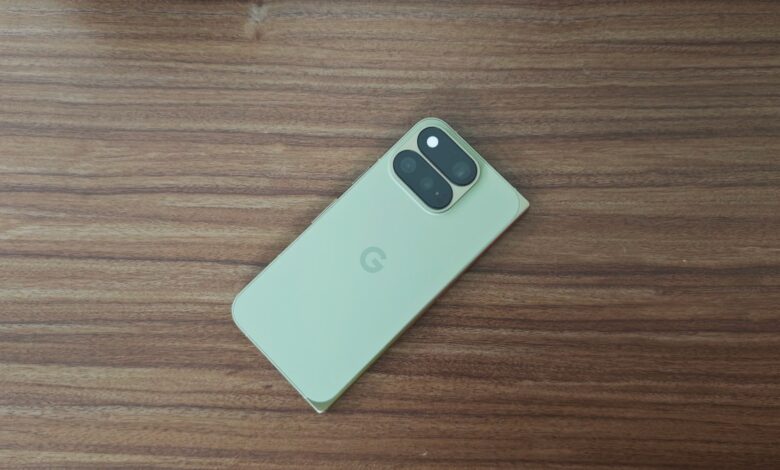
Enhancements include a lighter build, a more vibrant display, improved wireless charging capabilities, and a fresh camera sensor. The new olive hue is understated yet attractive, providing an additional perk. However, amidst numerous choices available, first-time foldable buyers might not gravitate towards this model unless they’re already fans of Pixel.
That said, my experience with the Pixel 11 Pro Fold has been enjoyable. Its cameras perform well, although they fall short of the Pixel 11 Pro’s renowned camera system, and the display is pleasant to use, despite the noticeable crease.
Design
The Pixel 11 Pro Fold is 5mm thick when opened, slightly thinner than last year’s model at 5.2mm, and 10.1mm when closed, compared to 10.8mm of the previous version. This is more of a specification point since the difference might not be felt significantly. Compared to devices like the Honor V6 Magic, it still doesn’t quite achieve the same thinness.
One noticeable change is the 19 grams lighter weight compared to last year’s phone. Still, for someone migrating from one foldable to another or purchasing their first, the difference is minimal.
The Pixel 10 Pro Fold was already robust, and Google claims to have tripled the durability with this model. The introduction of a glass-ceramic front and glass-fiber composite back helps absorb impacts. My Pixel 10 survived several minor falls without any visible damage, illustrating good craftsmanship from Google.
However, a strong hinge design means the 11 Pro Fold can’t be unfolded with one hand, which is intentional.
The external display is marginally larger, but an important upgrade is the peak brightness, now at 3,600 nits, an improvement from last year’s 3,000 nits, ensuring better usability in brightly lit environments.
The ongoing visible crease in Google’s foldable is worth mentioning, especially as competitors like Oppo and Honor have made strides in minimizing such imperfections. Under bright conditions, the crease becomes even more prominent due to the device’s non-reflective display.
On the back, a new HiLight indicator activates for calls from favorite contacts and during hands-free conversations. This feature, while functional, lacks additional utility.
Software and AI
Engaging with media and multitasking on the foldable is enjoyable, even if wider foldables may have an advantage for video content. You can only have two apps open side by side, which somewhat limits multitasking capabilities. Certain apps tailored for foldables, like Gmail, excel surprisingly well, allowing users to view their inbox on one side while reading an email on the other.
However, applications like Slack still lack a split view, causing frustration when navigating multiple tasks. This issue persists despite the growth of Android’s foldable ecosystem.
With the rapid evolution of Apple’s development environment, Android could feel behind in terms of foldable app experiences after the launch of the iPhone Duo. Developers are swiftly adapting their apps for unfolded screens, demonstrating a responsive market approach.
The introduction of bubbles for accessing apps in floating windows is a promising feature, allowing users to view app information temporarily without necessitating full-size windows.
Updates to Gemini have been fairly subdued this year, relying on the Magic Cue feature to suggest timely actions in various apps. As I noted in my previous review, the Rambler function made communication simpler, letting users respond to texts and emails without needing to type on a wide keyboard.
Camera
Historically, foldables have struggled to match the camera quality of their more traditional counterparts. Unfortunately, the Pixel 11 Pro Fold continues this trend, and labeling it “Pro” feels somewhat misleading. The quality is decent, but it does not reach the standard set by the Pixel 11 Pro XL.
Despite this, there are improvements. The main sensor remains at 48 megapixels, but now allows more light, leading to better detail in photos, and it’s upgraded to support 30x Super Res Zoom, an increase from the previous 20x range.
Despite not having the same ultrawide and telephoto lenses as the standard Pro models, it would have been ideal if the Fold had the same primary sensor as its rectangular counterpart. The telephoto and ultrawide sensors are similarly outdated, yielding results comparable to the prior model.
On the software front, features such as Looks offer options for adjusting image tones with various presets, while Magic Capture can identify the best frames from videos—particularly valuable for families with children or pets.
Price
At a price point of $1,899, the Pixel 11 Pro Fold appeals mainly to ardent Pixel enthusiasts seeking a foldable device, as its cost is only $100 less than the latest iPhone Duo and aligned with the Samsung Galaxy Z Fold 8, both of which feature conventional wide formats. The similar Samsung Galaxy Z Fold 8 Ultra starts at $2,099 in the U.S.
In Europe, brands such as Xiaomi and Honor are preparing to release their foldables, meaning Google’s entry will encounter considerable competition in this market.