Pentagon Unveils Fresh UFO Documents, China’s Tianwen-2 Successfully Hits Asteroid Goal, Plus More Exciting Science News

In the past week, several noteworthy events have unfolded. Prominent aviator Wally Funk, known for her groundbreaking contributions as one of the Mercury 13 astronauts, the first female FAA inspector, and for briefly holding the record as the oldest person in space, passed away at the age of 87. Additionally, new declassified documents regarding UFOs have been released, and China’s Tianwen-2 spacecraft transmitted its first image of an asteroid from which it aims to extract a sample.
Newly Released UFO Documents
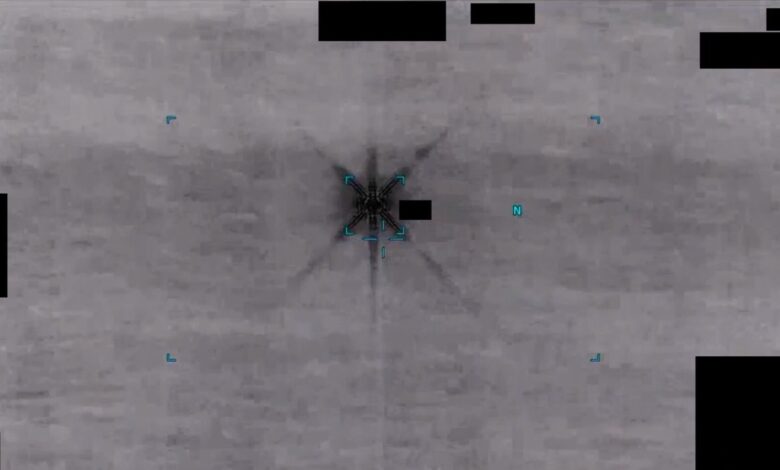
Since early May, the US Department of Defense has been making publicly available files related to unidentified anomalous phenomena (UAP), commonly recognized as UFOs. The latest, fourth collection of these documents was released last Friday, encompassing records from agencies such as NASA, the Department of Energy, the CIA, and the FBI, with some dating back many years. Regardless of individual beliefs regarding these events, the information is intriguing.
Included in this collection are scans of original documents featuring firsthand accounts of sightings, complete with illustrations and photographs, as well as numerous videos. The administration has expressed a commitment to ensuring transparency regarding government knowledge of UAPs and plans to continue issuing declassified documents periodically. Recently, it was announced that the Office of the Director of National Intelligence is forming a specialized team to investigate UAPs and their potential threat to national security, led by Avi Loeb, a theoretical physicist known for his long-term efforts in searching for extraterrestrial life and his controversial theories regarding evidence of such life.
Tianwen-2 Captures a Close Image of an Asteroid
Last spring, China initiated a mission to a near-Earth asteroid with the launch of the Tianwen-2 spacecraft. This week, the China National Space Administration (CNSA) announced that the spacecraft has successfully arrived at its destination. On Monday, they revealed a photograph of asteroid 2016HO3 taken from a distance of just 12.4 miles (20 kilometers). Tianwen-2 will remain near the asteroid for several months, with plans to land and collect a sample for return to Earth by late 2027.
China’s upcoming mission to gather material from the asteroid follows successful returns by both the US and Japan that have provided valuable insights into the early solar system. The asteroid 2016HO3, also referred to as Kamo’oalewa, qualifies as a quasi-satellite due to its looping trajectory around Earth, maintaining a consistent proximity as both bodies orbit the sun. As explained by Paul Chodas, a long-time manager at NASA’s Center for Near-Earth Object Studies, this asteroid is expected to remain gravitationally bound to Earth for several centuries before drifting away.
With a diameter of about 100 feet, asteroid 2016HO3 is relatively small. However, data from the Tianwen-2 mission should provide more accurate measurements. After completing its mission at the asteroid, the spacecraft will head toward the main-belt comet 311P.