Patronus AI Secures $50M to Create ‘Virtual Realms’ for Testing AI Agents Under Pressure

Artificial intelligence agents are advancing in their capabilities, transitioning from simply responding to queries to independently managing complex, multi-step tasks.
Before these agents can safely handle tasks such as travel planning or financial assessments for users, the organizations developing these models want to ensure their performance is consistent across a wide spectrum of scenarios.
AI research facilities typically rely on benchmarks to showcase the capabilities of their models; however, achieving a high score on agent-specific benchmarks does not necessarily demonstrate that an AI can effectively manage various complicated, real-life tasks.
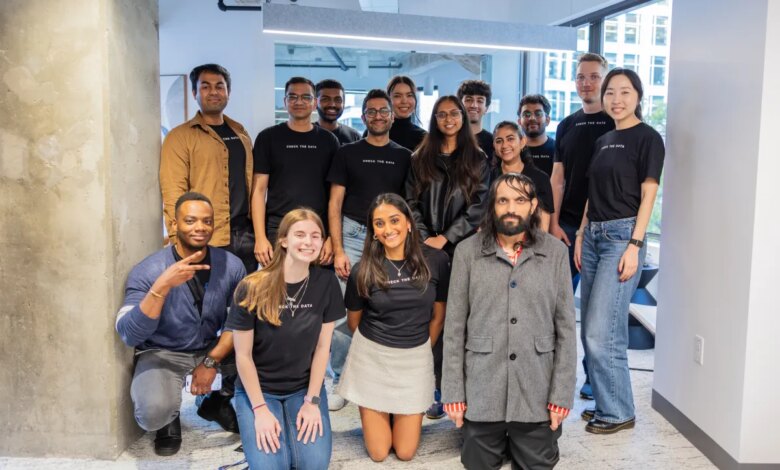
Patronus AI, a startup established in 2023 by former Meta AI researchers Anand Kannappan and Rebecca Qian, is aiding companies and model developers in refining their systems by offering simulated digital environments to assess agents’ performances.
Based in San Francisco, Patronus appears to be addressing a critical need. Notably, many leading AI labs and numerous emerging startups have become clients, as described by Glenn Solomon, a managing director at Notable Capital, who notes that the demand for the company’s simulation environments is nearly limitless.
The startup’s revenue has surged 15 times over the last year, attracting considerable interest from investors. Recently, Patronus announced a $50 million Series B funding round led by Greenfield Partners, with contributions from Notable Capital, Lightspeed, Datadog, and Samsung. This round raises their total funding to $70 million.
Patronus leverages what they call “digital world models” to create replicas of websites and internal systems. In these simulated environments, agents undergo rigorous testing after training, utilizing reinforcement learning techniques that reward them for successfully completing tasks while penalizing mistakes.
AI laboratories find significant value in these digital simulations, as they allow agents to encounter a range of unpredictable scenarios. The company relates its methodology to Waymo’s approach in training self-driving cars, which initially involved constructing synthetic environments to help vehicles navigate rare challenges, such as severe weather or children chasing after balls.
The key distinction with AI agents is their tendency to cut corners, which can lead to incomplete task execution. “Patronus excels at identifying these shortcuts and ensuring the models are held accountable,” expressed Solomon.
Currently, Patronus offers its simulated digital realms for software engineering and finance, but Kannappan indicates these are merely the initial areas of focus.
“Our current emphasis is on problems that can be verified quickly, but there are numerous areas that are significantly more challenging to validate,” he noted.
The fact that these processes are verifiable does not imply they are straightforward. “We aim to create environments where agents can operate for extended periods—whether that’s 10 hours, 10 days, or even 10 weeks,” Kannappan remarked.
As for competition, Patronus sees itself mainly up against the in-house teams that AI labs have developed to evaluate agent behavior. While companies like Mercor and Surge provide assistance to model developers through reinforcement learning, Patronus takes a distinct approach by analyzing agent behavior without human intervention.