The venture capital landscape poses significant challenges for newcomers, particularly for those managing their first funds. The current climate is especially intimidating.
Recent data indicates a stark disparity in fundraising within the U.S. venture capital sector. Established firms raising their fourth fund or later secured an impressive 88.2% of the capital in the first three quarters of the year. In contrast, first-time funds attracted a meager 4.5%, with only 81 such funds closing during this period, pointing to a potential record low for first-time fund managers in over a decade.
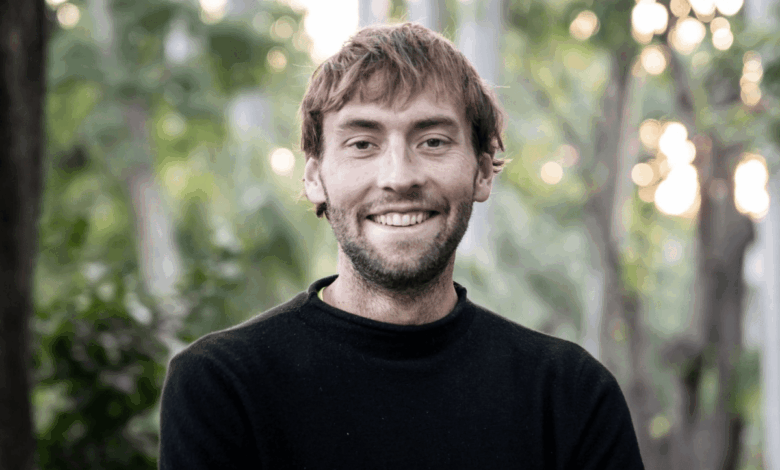
Olaf Sakkers has spent the last five years demonstrating that while the path is tough, success is achievable. He launched RedBlue Capital in 2021 and raised approximately $5 million for its first fund by 2023. Recently, he announced a first close on a second fund he anticipates reaching at least $50 million.
Originally from South Africa, Sakkers studied anthropology at Princeton, concentrating on global health issues and penning a thesis about HIV in his homeland. After graduating, he moved to Israel, where he was drafted into the Israel Defense Forces. During his service, he worked closely with the U.S. military, which sparked his interest in autonomous vehicles.
A fortuitous introduction led him to Michael Granoff, founder of the venture capital firm Maniv Mobility, who saw potential in Sakkers and hired him immediately. At that point, neither had experience in venture investing, leading them to unintentionally build a fund while learning on the job. Sakkers oversaw daily investment processes, supporting Israeli entrepreneurs transitioning cybersecurity innovations into the automotive sector, and eventually expanding into the U.S. and other markets.
By 2021, Sakkers had established himself as an equal partner in Maniv’s model but sought a more structured and scalable option, prompting him to start his own venture. Today, RedBlue Capital invests in what Sakkers refers to as the “real economy,” including sectors like robotics, logistics, and energy.
Reaching this stage has required significant perseverance and persuasive skills. Sakkers identifies institutional investors, such as endowments and pension funds, as particularly challenging to engage due to the disparity in investment sizes and their preference for minimizing risks by backing established firms.
He likens the experience of emerging founders to that of veteran entrepreneurs who become seen as “inevitable” after successfully launching previous companies. Meanwhile, new founders contend with external perceptions, which can impede their growth and visibility.
Sakkers’ approach prioritizes demonstrating results over time. “It’s a long-term game of building trust,” he explains. His inaugural fund served as a proof of concept, funded mainly by acquaintances and family offices, while the second fund now draws on a broader group of both family offices and institutional investors.
RedBlue typically invests smaller amounts, between $50,000 and $100,000, and often co-invests with other lead investors, allowing it to participate in more opportunities. Sakkers emphasizes the importance of providing practical support beyond financial capital by facilitating connections with major investors and potential customers. He believes many founders expect minimal assistance from VCs, so RedBlue strives to exceed those expectations.
Sakkers reports strong performance metrics, noting that 15 of the 28 investments made have seen valuation increases, with a net internal rate of return exceeding 50%. While only one exit has occurred so far, most of the gains remain unrealized.
Public records reinforce some of Sakkers’ claims. For instance, HappyRobot, a startup backed early by RedBlue, achieved a $150 million Series C round at a valuation of $1.2 billion recently. Meanwhile, Westmag, which produces motors for drones and robots and is another RedBlue investment, secured $11 million in seed funding led by a prominent venture capital firm.
Sakkers attributes his competitive advantage to discipline. RedBlue publishes research-focused essays and relies on a bespoke database he developed with collaboration to document key interactions and insights. This system enables him and his sole full-time associate, based in New York, to function effectively despite time zone differences. He believes that artificial intelligence tools become ineffective if not properly guided, hence the need for meticulous record-keeping.
Despite challenges in the venture capital environment, trends indicate that smaller funds, those with capital between $1 million and $10 million, outperform larger funds when it comes to overall returns, as highlighted by recent analyses. Sakkers remains proactive, reaching out to various stakeholders and sharing his narrative, as he acknowledges the difficulty of distinguishing oneself in a field where rewards tend to concentrate among a select few. His resolve remains steadfast: “Life is short, and regrets last forever,” he asserts.