NVIDIA’s Nader Khalil and Sydney Sykes Announce Their Participation in Disrupt 2026

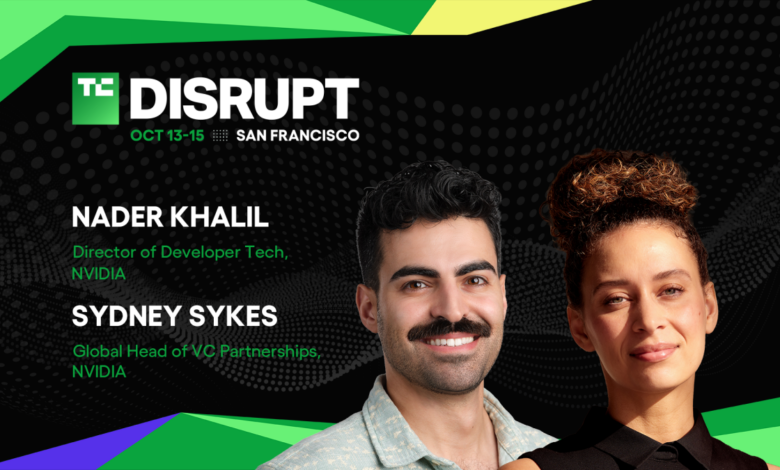
If you’re a startup founder working on an AI product, you face a critical choice: Should you utilize a proprietary model for rapid development, opt for an open-source model for better control, tailor your own variant, run it locally, utilize multiple models, or even shift your strategy as the landscape evolves?
The right choice isn’t always clear, but a wrong decision can ripple through every aspect of your venture — affecting costs, infrastructure, profit margins, differentiation, speed, and control.
This pivotal discussion will take place in the session titled “The Open vs. Closed AI Debate Is Just Getting Started” on the Builders Stage at TechCrunch Disrupt 2026, set for October 13-15 in San Francisco. Nader Khalil, Director of Developer Tech at Nvidia, and Sydney Sykes, Global Head of VC Partnerships, will lead this discourse on the trade-offs involved in choosing between open and proprietary AI, exploring if either path offers sustainable competitive advantages.
This is not merely a philosophical debate on open-source vs. proprietary models; it’s a pressing business decision that tech startups of all sizes are grappling with. Attend TechCrunch Disrupt to immerse yourself in this important AI discussion with over 10,000 industry leaders. Register now for a chance to save up to $200 before prices go up on September 25 at 11:59 p.m. PT.
The AI Gap Narrows, Yet Choices Remain Complex
Open models have evolved rapidly. According to Nvidia, 145 papers presented at ICML 2026 have referenced its Nemotron open models and datasets, which are also used alongside other open model families in various fields, including robotics and biomedical research.
Conversely, proprietary labs are also advancing model capabilities. Thus, the conversation is increasingly less about the utility of open models and more about the commercial implications of each approach.
Nvidia itself moves away from a simplistic binary view. At GTC this year, CEO Jensen Huang stated that the future involves a combination of both proprietary and open solutions. However, this becomes more complicated when forming a company around this decision.
If two models yield similar outcomes, does the lower cost dictate success? What if one model grants more control over your data? Does owning more of your infrastructure ensure durability, or simply add layers of maintenance? Additionally, if the best model shifts every few months, how closely should your product be linked to any single one? Khalil and Sykes will address these inquiries at TechCrunch Disrupt 2026. Don’t miss the opportunity — register for your ticket now and save $200 before the deadline.
Diverse Perspectives on the Same AI Stack
Nader Khalil approaches the subject from a builder and infrastructure standpoint. Previously, as co-founder of Brev.dev, he focused on simplifying GPU infrastructure access across diverse environments before it was acquired by Nvidia in July 2024.
Brev.dev aimed to make it easier for developers to deploy AI applications across various infrastructures without relying on just one source of computing power, delivering flexibility in operational environments.
On the other hand, Sydney Sykes contributes insights from the venture capital landscape as Nvidia’s Global Head of VC Partnerships.
This collaboration creates a unique lens to evaluate the same decision from different perspectives: the requirements of developers and the needs for businesses to achieve scalability and attract investment.
Be present at one of the most significant discussions in the AI field. Register for your ticket now to secure a $200 discount before the offer expires.
Your Model Isn’t Your Moat — Until It Becomes One
An additional critical inquiry within the open vs. closed discussion is: Where truly resides your competitive edge?
If your competitors can utilize the same proprietary API, your differentiation must derive from other areas — whether that’s unique data, workflows, distribution methods, client relationships, user experience, or specialized technology. However, choosing an open model does not automatically provide immunity against competition.
This option offers adaptability and potentially greater control, but also entails decisions regarding deployment, optimization, and infrastructure management. Economic factors can fluctuate based on specific workloads and scale considerations.
Nvidia is significantly investing in open architecture. Its Nemotron 3 Super, a recent open model designed for demanding tasks, showcases how companies are starting to blend open and proprietary models rather than treating them as exclusive choices. This hybrid approach may represent a compelling aspect of the ongoing debate.
Register now to join the vital conversation on the Builders Stage this October. Take advantage of savings of up to $200 that end on September 25 at 11:59 p.m. PT.
What Should You Build On? Make Your Decision at TechCrunch Disrupt 2026
This session promises to be valuable beyond just AI engineers.
For founders, the decision will influence your profit margins, fundraising narrative, and product strategy. As an investor, discern where genuine value lies in the market to differentiate solid defensibility from superficial products leveraging someone else’s technology. For line-of-business leaders, it affects procurement, security protocols, data management, infrastructure, and future vendor relationships. For developers and students, it provides insights into how current technical decisions are shaping emerging business models.
Rather than another theoretical debate about the merits of open versus closed AI, builders require a more transparent understanding of the trade-offs involved.
Join Nader Khalil and Sydney Sykes on the Builders Stage at TechCrunch Disrupt 2026 and determine which approach aligns with your AI strategy. Register now to save up to $200 ahead of the imminent price increase.