In the realm of collegiate sports recruitment, metrics like sprint speed and strength are easily measurable, but quantifying an athlete’s mental resilience, especially in high-stakes scenarios, has long stumped experts. The fundamental question remains: how well can an athlete maintain composure and focus under pressure?
Dan Connerty, co-founder and CEO of NTangible, believes he has discovered a breakthrough method to assess whether an athlete will shine in critical moments.
“Our main focus has been on understanding clutch performance,” explained Connerty, who transitioned from professional baseball to the sports technology sector. “Cognitive science has often been overlooked because past attempts to measure it effectively have fallen short.”
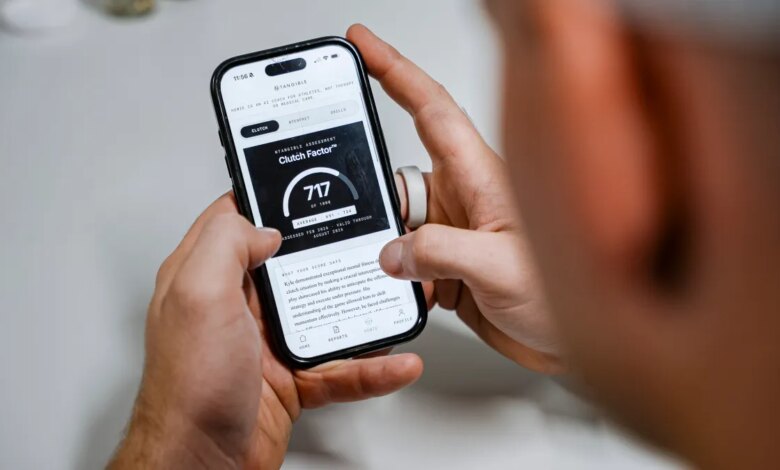
Working in collaboration with Dr. Ed Levine, a psychologist and professor emeritus at the University of South Florida, Connerty has created a psychological evaluation meant to indicate how likely athletes are to perform under pressure. The resulting Clutch Factor assessment draws inspiration from the Thematic Apperception Test, a method where individuals interpret ambiguous images and narrate their perceptions, character roles, and potential scenarios.
According to Connerty, there are no definitive correct or incorrect responses. The phrasing and choice of words contribute to a score based on a neurolinguistic framework established by psychologists, which ultimately yields an individual’s clutch factor score.
Scores can range from 0 to 1000, with athletes who achieve 750 or above reportedly twice as likely to secure commitments from Division I schools.
“Our analysis allows us to demonstrate its predictive capabilities,” Connerty stated. “This score can be instrumental in recruiting discussions, rankings, and negotiations related to scholarships amidst today’s dynamic collegiate sports landscape, where substantial deals are being offered.”
However, a potential limitation of this approach is that athletes might feel compelled to present themselves more favorably by fabricating their answers to achieve higher scores. Personally, my initial attempt at the assessment yielded a below-average score of 584 due to my trepidation about high-pressure situations during my own athletic experiences. In a second attempt, where I envisioned scoring like an ideal recruit, I achieved an 802.
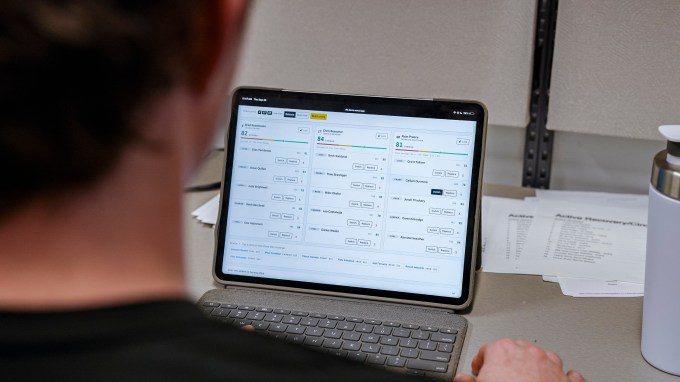
The platform might function best as a tool for coaches to gain insights into their athletes and assist them in developing weaker skills. Connerty believes clutch performance can be honed, and while NTangible is not centered on training, he collaborated with former MLB sports psychologist Howie Schwartz to compile exercises for athletes aiming to enhance their mental game.
NTangible, originally rooted in baseball, is now applicable across nine sports and Connerty aspires to extend the clutch assessment to corporate environments, enabling HR teams to evaluate employee resilience under stress. The NTerpret assessment focuses more directly on workplace dynamics by capturing responses to coaching and feedback, equipping management with valuable data regarding employee behaviors.
The most promising avenue for NTangible appears to be in offering their services to sports organizations and businesses rather than individual athletes. Connerty plans to discuss this strategy during TechCrunch Disrupt, where NTangible currently stands among the top 20 contenders for the Startup Battlefield grand prize.
This week, attendees can witness the competition and meet the investors determining the winner at Disrupt, scheduled for October 13 to 15 in downtown San Francisco.
When you purchase through links in our articles, we may earn a small commission. This doesn’t affect our editorial independence.