Microsoft Unveils Groundbreaking Cybersecurity Framework Alongside Innovative Agentic Defense System

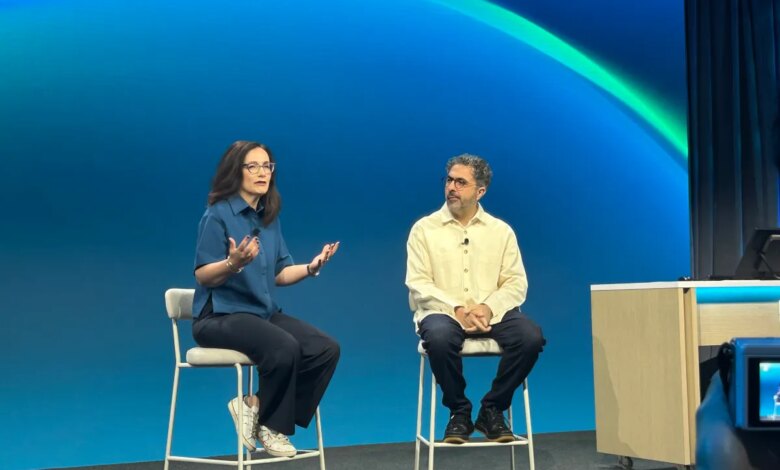
On Monday, Microsoft unveiled its inaugural cybersecurity-focused model, along with a new AI-driven cybersecurity platform, during a compact event in San Francisco. This marks a direct challenge to industry leaders such as Anthropic, Google, and OpenAI.
The model, named MAI-Cyber-1-Flash, is engineered to uncover complex vulnerabilities within intricate code structures. It operates within the framework of MDASH, Microsoft’s tool specifically aimed at identifying and addressing software vulnerabilities.
The newly introduced platform, titled Perception, aims to mobilize teams of agents to assist in and automate numerous security operations, including the identification and resolution of bugs. It is also capable of integrating with MDASH.
According to Microsoft, MAI-Cyber-1-Flash offers enhanced performance at a more affordable price compared to competing models, as evidenced by results on a recognized AI cybersecurity evaluation standard.
“We’re thrilled to share our findings,” stated Mustafa Suleyman, co-founder of DeepMind and current CEO of Microsoft AI. “MAI-Cyber-1-Flash is integrated with GPT 5.4 within the MDASH framework, surpassing Gemini, GPT 5.5 Cyber, GPT 5.6 Sol, and Mythos 5 on Cyber Gym, the key benchmark used in our industry.”
“We are rolling this out into production immediately,” he added.
Acknowledging the rising use of AI by hackers in their attacks, Hayete Gallot, Microsoft’s vice president of security, described Perception as a means for businesses to combat AI-driven threats with equal scale and speed.
Perception incorporates distinct teams: agentic red teams, blue teams, and green teams. Red teams simulate potential attacks, offering insights into threat actors and the vulnerabilities they may exploit. Blue teams focus on detecting and assessing current bugs, while green teams implement “corrective actions” to address those bugs.
Dave Weston, the lead engineer behind Perception, characterized the platform as a significant efficiency boost for corporate security teams. “What once required hours of manual effort from various specialists can now be resolved in minutes. We identify, prioritize issues, and provide solutions—covering detection, posture correction, and even code fixes,” he explained.
While AI has enhanced defensive measures for organizations, its accessibility to cybercriminals has also introduced a myriad of new threats.
Microsoft’s new cybersecurity tools are expected to be available for preview on November 3, entering a competitive market filled with AI security solutions. Earlier this year, Anthropic introduced Mythos, a security platform made available to select partner organizations under a program named Glasswing. In May, OpenAI also launched its own security initiative through the Daybreak program.