Intero Biosystems Advocates for Miniature Human Intestine Testing Over Animal Trials for Drug Development

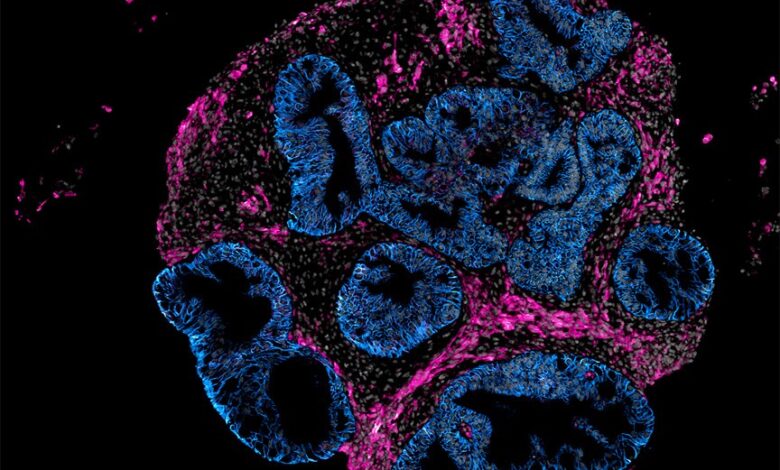
The process of drug development has traditionally depended on animal testing, but variations between species can lead to failures in translating results to humans. Intero Biosystems, a startup based in Denver, is focusing on creating human intestinal organoids—lab-grown tissues that imitate the human gut. This approach aims to enhance the study of how drugs and other substances impact the human body prior to human trials. There is a growing interest in developing models that more accurately reflect human biology to supplement and potentially lessen the reliance on animal testing.
Originally branched from the University of Michigan, Intero states that its organoids are more advanced than simpler models that only represent portions of the gut. These organoids encompass various cell and tissue types found in the human intestine, making them a more relevant option for drug testing, according to co-founder and CTO Madeline Eiken.
“The majority of drugs do not succeed in clinical trials, and it’s clear that mice and flat cell layers do not fully represent human biology,” Eiken explained.
The company’s primary offering, GastroScreen, consists of a human intestinal organoid model sold to pharmaceutical, biotech, food, and chemical companies for the evaluation of drugs and materials. Each organoid measures approximately one millimeter in diameter, and Intero typically ships around 100 at once in one package, shared co-founder and CEO Charlie Childs. Clients have the option to use them as healthy intestinal models or to introduce disease-like conditions to observe how the tissue reacts to various compounds.
“We are essentially mailing miniature living organs to our clients,” Childs emphasized.
In addition to the organoids, Intero offers necessary supplies for their growth and experimentation, such as nutrient solutions and experimental chemicals. The company also conducts studies for clients, assisting in custom experimental designs, performing lab tests, and providing the collected data. This work primarily addresses drug safety and disease research. For instance, organizations can test drug candidates on the organoids to assess potential harm to the gut or use organoids mimicking specific gut conditions to observe responses to various substances.
Founded in 2024, Intero has expanded to seven employees and nearly ten customers after securing a $2.3 million pre-seed funding last year. The startup reported over $400,000 in revenue from the last quarter of the previous year to the third quarter of this year, as noted by the CEO.
Shift in regulatory policies has also increased the demand for alternatives to animal testing. In April of last year, the U.S. FDA announced intentions to lessen its dependence on animal testing methods in drug development, advocating for various alternatives, including organoids and AI-driven computational models.
In March, the FDA released draft guidelines for drug developers on how to authenticate new approach methodologies, or NAMs, that replace animal testing. Although the guidance outlines a validation framework, it does not endorse specific techniques. The acceptability of a NAM for regulatory submissions is contingent on several criteria, including its application and the data provided.
Recent changes in U.S. legislation permitting drug developers to adopt non-animal testing approaches have encouraged pharmaceutical companies to pursue technologies like organoids, Eiken explained. Companies that were once hesitant to embrace such technologies are now exploring the possibility of integrating organoids into their internal processes.
Intero is not alone in its mission to create human-centric gut models. Companies like Altis Biosystems work with stem cell-derived intestinal models, while InSphero provides patient-derived intestinal organoids for gastrointestinal toxicity assessments. Other firms, such as MIMETAS, utilize organ-on-chip technology, employing microfluidic systems to replicate the environments of human tissues.
Intero claims to differentiate itself from competitors through the complexity and scalability of its models. Unlike intestinal models sourced from tissues gathered through invasive procedures like colonoscopies, GastroScreen is generated from induced pluripotent stem cells, which can be derived from blood samples and reprogrammed into nearly any cell type. This gives Intero the ability to personalize its models for different patients and to scale production more efficiently.
In response to inquiries about how GastroScreen demonstrates a better prediction of human drug responses compared to existing animal or cell-based models, Childs noted that the company is currently in the second phase of a three-phase validation process. They have first confirmed that GastroScreen includes essential human gut tissues and are now testing well-known medications with established effects in humans. According to Childs, the organoids have produced expected reactions to treatments that mitigate intestinal inflammation and to compounds known to be harmful to the gut. The final phase will involve direct comparisons of GastroScreen’s outcomes with existing animal and clinical data from pharmaceutical companies. These studies are already in progress with several firms, assessing both established drugs and new candidates.
Intero does not employ AI in the creation of its organoids. Instead, Childs perceives a chance to leverage these organoids to generate the biological data that AI models necessitate, with plans to license such datasets to pharmaceutical and AI organizations.
In the short term, Intero is concentrating on increasing production efficiency. Currently, the company can produce a few thousand organoids at once and is working toward automating the manufacturing process, aiming for hundreds of thousands in each batch. Looking ahead, the goal is to enter the realm of personalized medicine, crafting organoids from patients’ cells to test various drugs prior to their administration. Ultimately, the company dreams of creating an artificial intestine, a vision Childs believes will build on the scalable manufacturing and patient-specific data acquired through their organoid technology.
Intero participated earlier today at TechCrunch Disrupt, competing among 20 startups for this year’s Startup Battlefield title. The event runs from October 13 to 15 in downtown San Francisco.