Industrial Next Aims for Rapid Task Switching in Factory Robots – from Weeks to Minutes

In traditional manufacturing settings, automation is often rigid. Robots and machines are designed for specific tasks, and altering a production line entails extensive reprogramming and retooling, which can span weeks or months. Industrial Next, a startup based in San Francisco, is looking to revolutionize this process.
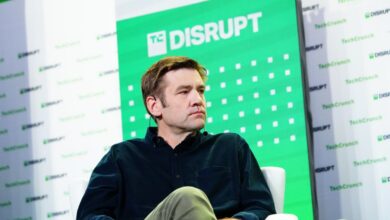
The company, which showcased its innovations during the Startup Battlefield at TechCrunch Disrupt 2026, develops self-sufficient robotic stations powered by advanced AI models. These models integrate vision, task context, and motion, allowing for rapid retooling of production lines in mere minutes rather than the traditional lengthy process. Their aim is to enable manufacturers to automate tasks that usually require intricate human intervention.
During their presentation, Industrial Next announced a collaboration with the BMW Group Technology Office to explore the application of its AI-driven robotic manipulation in manufacturing settings.
Founded in 2021 by Lukas Pankau and Allen Pan, both former Tesla employees, Industrial Next’s inception stemmed from their experiences in the automotive industry. Pankau had a prominent role as a lead electrical architect at Tesla before working with Waymo, while Pan spearheaded Tesla’s efforts in autonomous factory development and later became a chief architect at Neolix, a company focused on autonomous driving.
Their partnership began under unusual circumstances; Pankau first encountered Pan while tripping over him on a factory walkway during an all-night shift. Despite initial friction, they quickly recognized their shared commitment to innovation and their complementary skills.
After witnessing the limitations of outdated manufacturing equipment throughout their careers, the duo concluded that a significant overhaul of manufacturing technology was necessary.
“At Tesla, we could utilize advanced technology for car design, but the challenge was programming robots effectively,” Pankau reflected. “There was a distinct divide between the technical prowess in design versus the obsolete machinery at factories. We began envisioning a modern approach that leveraged today’s technology and knowledge.”
Their dissatisfaction with outdated equipment persisted even after they took different career paths. They maintained communication, frequently discussing the manufacturing tools that failed to meet expectations, ultimately convincing themselves they could create something better.
“I felt stagnant at Waymo, missing the dynamic environment of Tesla,” Pankau noted. “Pan echoed similar sentiments at Momenta, a Chinese self-driving firm. We acknowledged that as time passed, our enthusiasm remained, and the frustrations with industrial tech persisted. It was time to launch our own company.”
According to Pankau, conventional industrial robots are limited to executing specific, repetitive tasks. Even slight adjustments in processes or products can lead to operational failures and costly interruptions, forcing manufacturers to narrow their product designs for efficiency.
Achieving true flexibility in robotics poses its own challenges, requiring significant training datasets. Unlike general AI models, robotics lacks the extensive data necessary to teach machines complex physical operations.
“While there’s abundant data for entertainment uses like robotic dancing, fine assembly tasks remain challenging,” Pankau stated. “Our key advancement involves employing high-fidelity simulations that replicate real-world dynamics, enabling robots to perform intricate tasks with minimal need for physical input.”
Essentially, these robots undergo training in a meticulously crafted virtual environment that closely aligns with actual physical principles. Industrial Next’s robotic stations are adaptable, allowing for quick reconfiguration and redeployment across various production lines. Tasks are learned through simulations and demonstrations instead of traditional programming methods.
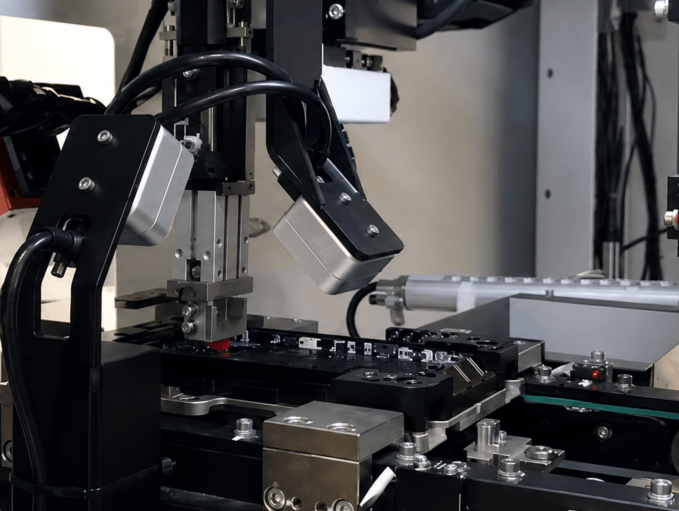
Pankau highlighted that some of the startup’s workstations are already instrumental in producing one of the world’s leading smartphones. These systems tackle tasks that manufacturers previously struggled to automate, such as threading delicate cables and securing small component covers. He noted a specific “film peeling” operation where AI-driven robots efficiently remove protective films from camera modules and buttons, achieving 100% accuracy and maintaining speed even when switching to new phone models and production lines they have not encountered before.
“Our impetus for starting this company stemmed from the performance capabilities we wished we had access to during our tenure at Tesla,” Pankau remarked. “Our long-term vision is to extend these capabilities beyond just smartphone assembly to ultimately manufacture entire vehicles without human involvement.”
To discover more innovations and insights from the Startup Battlefield and established industry leaders, attendees are encouraged to join the Disrupt event taking place this week in downtown San Francisco.