Indian Electric Vehicle Startup River Secures $120M in Series C Funding to Expand Production and Introduce New Models

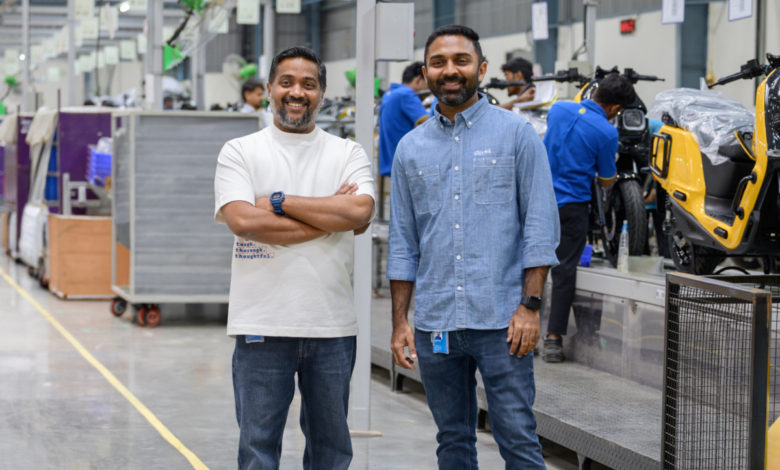
Indian electric vehicle startup River announced on Wednesday that it has successfully secured $120 million in funding to enhance its manufacturing capabilities for future growth.
In this Series C funding round, Indian firms Elev8 Venture Partners and Claypond Capital took the lead, with contributions from Singularity AMC, Anicut Capital, 360 ONE Asset, JIF Capital, and HDFC AMC. Existing investors including Yamaha Motor, Al-Futtaim Group, and Mitsui also participated.
The venture debt made up less than 10% to 12% of the total round, with the entire equity raised being primary capital without any secondary share sales. Founder and CEO Aravind Mani shared that this round brings River’s total raised capital to $144 million.
Established in 2021, River figures among the growing electric two-wheeler sector in India, competing against newcomers like Ather Energy and Ola Electric as well as established manufacturers like Bajaj Auto and TVS Motor. This market has significantly contributed to the increase in EV adoption across India.
In contrast to many competitors, River has centered its operations around a singular electric moped model called Indie, launched in 2023. The company reports monthly sales of approximately 6,000 units across over 75 retail locations in India, totaling more than 50,000 units sold so far.
Rather than aiming for various consumer markets, River has positioned the Indie as a utility-specific vehicle. According to Mani, one of the company’s key achievements over the past year has been mastering the art of scaling production.
“At one point, we were producing just 20 vehicles daily. Now, we have ramped that up to 300 vehicles a day, and achieving this level of scale was quite challenging. It’s a steep learning curve for any emerging business,” he noted.
The Indie, priced at ₹155,000 ($1,630), boasts a claimed range of approximately 99 miles and comes with optional accessories. Mani pointed out that the typical buyer is a self-employed individual aged between 28 and 35.
Fueled by growing sales of the Indie, River recorded a staggering 330% increase in revenue for the fiscal year ending March 2026, reaching monthly earnings of around ₹1 billion (about $11 million), according to Mani.
River aims to achieve operational profitability as monthly production reaches between 20,000 to 25,000 vehicles, a target set for 2028-29. Gross margins, currently nearing double digits, are expected to improve with the scaling up of production.
While maintaining a focus on its single-model strategy has allowed River to gain momentum, the company plans to roll out two additional models starting next year.
“The constraint we face is capacity. Currently, I cannot introduce another model at this factory,” Mani stated.
River is approaching its production limits at its initial manufacturing site near Bengaluru, which has recently been upgraded to produce about 10,000 vehicles monthly, with full utilization expected by early next year.
Construction of a new manufacturing facility is anticipated to start in the coming two months, with the first phase expected to be operational by mid-2027. This new plant aims for an annual production capacity of around 700,000 to 800,000 vehicles.
The startup also plans to expand its retail network to over 200 stores by March 2027, eventually growing that number to around 400 outlets by March 2028.
This latest funding round marks a shift in investor focus. Previous investments were primarily directed toward product development and technology, while the new investors are banking on River’s capacity to scale operations, since the startup has shown impressive traction.
Mani noted that despite a long-standing recognition of the EV potential in India among Silicon Valley investors, many have underestimated local consumer adoption of electric two-wheelers. “They grasp the macroeconomic factors but often overlook customer behavior,” he concluded.