How International Google Pixel Models Distinguish Themselves from Their American Counterparts

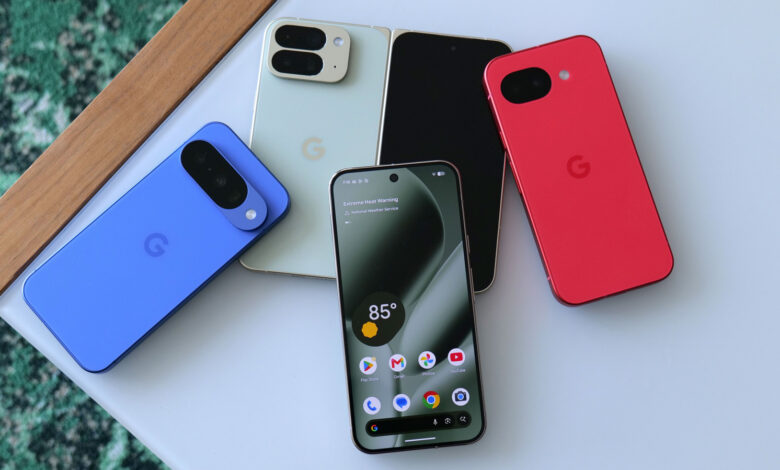
Google stands as one of the world’s leading smartphone manufacturers, and it’s not surprising that its Pixel devices are available in numerous markets beyond the United States. Adapting to local regulations and consumer preferences, Google customizes its products for different regions. Factors like language, power outlets, and network compatibility necessitate these adjustments. For those interested in the distinctions between Pixels offered in the U.S. and their international counterparts, here’s an overview of some key differences.
Hardware
Unlike Samsung, which varies its devices with Snapdragon or Exynos processors based on the region, the differences between U.S. and international Pixel devices are minimal, particularly over recent generations. Most international Pixel smartphones come with the same Tensor processors, memory options, and storage capacities as their U.S. counterparts, along with identical camera specifications, display technologies, and charging features. For example, the base Pixel 10 includes a Tensor G5 chip, 12GB RAM, and storage options of 128GB or 256GB, featuring a 6.3-inch Actua OLED display and a rear camera setup consisting of a 48MP main, a 12MP ultra-wide, and a 10.8MP telephoto lens. Furthermore, the physical design remains consistent across markets, including materials and color choices.
A notable hardware difference in the latest models is that while the Pixel 10, Pixel 10 Pro, and Pixel 10 Pro XL are eSIM-only in the U.S., international versions still accommodate a physical Nano SIM slot along with eSIM capabilities. Google made this decision considering the ease of eSIM use and its broad acceptance among American carriers, enabling the maximization of internal space previously designated for a physical SIM for components needed to support mmWave 5G. However, it’s worth noting that all versions of the Pixel 10 Pro Fold, both in the U.S. and abroad, include Nano SIM trays.
Software
When it comes to software, the variations between U.S. Pixels and their international equivalents are limited, although there are exceptions. Since Google’s devices are sold in more than 30 countries and support over a dozen languages, localizing features for different markets can take time. Frequently, new tools and applications first launch in English in North America while Google works to ensure they meet regulatory requirements and usability standards in other languages and regions. An example is the Magic Cue feature, leveraging AI to present relevant information such as addresses and calendar events in messages based on context. Currently, this feature is accessible in select countries, including the U.S., Canada, India, the U.K., and Japan, with expansion to more markets in progress.
Cellular Support
The most significant difference between U.S. and international Pixel models lies in cellular compatibility. This is crucial as carrier support can vary greatly across countries. For those traveling or relocating, it’s essential to have a phone that maintains reliable internet connectivity and can handle calls. The type of cellular coverage also differs significantly by region. In the U.S., providers like Verizon have heavily invested in mmWave 5G technology, which offers very high speeds but shorter range and less penetration compared to mid-band and sub-6GHz frequencies. To optimize costs and ensure performance, many phones sold internationally, including newer Pixels, do not support mmWave 5G. Additionally, the U.S. imposes stricter testing and approval processes for phones offered by carriers, contributing to the absence of many Chinese brands in the U.S. market.
Overall, there is considerable similarity between Pixel phones sold in the U.S. and those in other countries. If you plan to move, purchasing a phone in your future location often proves the easiest. However, aside from some minor differences, especially in hardware, international and U.S. Pixel models remain largely comparable.