Google Pixel 11 vs. Galaxy S26: Here are 6 Compelling Reasons I’m Choosing the Pixel This Year

Joe Maring
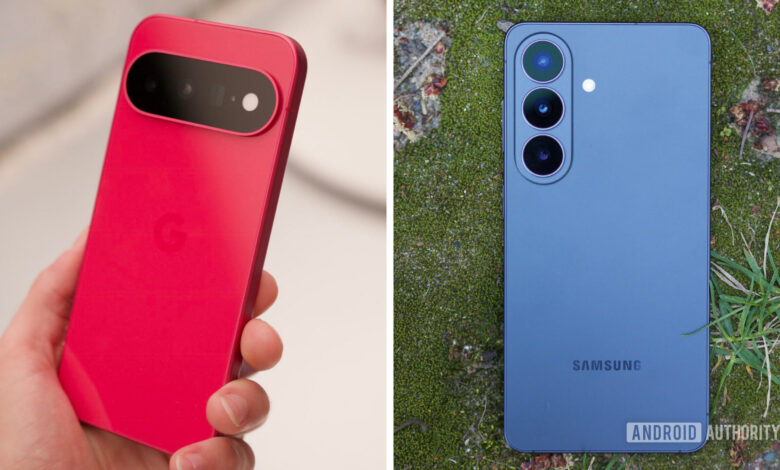
The smartphone landscape of 2026 is experiencing a lull, primarily due to manufacturers grappling with soaring RAM costs. Prominent among the latest offerings are the Google Pixel 11 and the Samsung Galaxy S26, both of which show modest upgrades over their predecessors.
While neither device represents a significant leap, various smaller distinctions could sway potential buyers between the Pixel 11 and Galaxy S26.
Upon careful comparison of both models, I’ve found compelling reasons to favor the Google Pixel 11 over the Samsung Galaxy S26—and I believe you might too.
Pixel 11 vs. Galaxy S26: Which would you choose?
3 votes
The Pixel 11’s Battery Edge
Featuring one of the slimmest designs among flagship smartphones, the Samsung Galaxy S26 unfortunately compromises on battery size. This is a crucial factor for me when considering the Pixel 11 over the S26.
The Galaxy S26 comes with a 4,300mAh battery, which feels inadequate for a flagship device in 2026. Our reviews indicated that while the battery can handle a day of regular use, it struggles under heavy tasks like gaming or extensive camera work, often leaving users searching for a charger.
In contrast, the Pixel 11 boasts a 4,840mAh battery, surpassing even the S26 Plus in terms of capacity, making it better suited for demanding applications.
Superior Wireless Charging with Google
In a notable trend, Google’s Pixel series maintains its edge by offering complete Qi2 support straight out of the box, and the Pixel 11 continues this legacy.
Equipped with Qi2 magnets in its design, the Pixel 11 effortlessly integrates with magnetic accessories without the need for external cases. Its wireless charging can reach speeds of up to 25W, outpacing the Galaxy S26’s maximum of 15W.
Architected only for Qi2 readiness, the Galaxy S26 lacks the Magnetic Power Profile, necessitating specific cases for magnetic charging compatibility.
Camera Upgrades Favoring Pixel 11
One of my main critiques of the Galaxy S26 is Samsung’s decision to increase the price by $100 while offering no significant upgrades to the camera system from the Galaxy S25.
Conversely, the Pixel 11 also raises its price point but introduces substantial camera enhancements, notably a 48MP primary sensor that captures significantly more light than its predecessor.
While the telephoto and ultrawide lenses remain unchanged at 10.8MP and 13MP, respectively, the zoom capabilities have been notably enhanced. The telephoto lens now allows for 30x zoom, up from the previous cap of 20x.
The Pixel 11’s telephoto camera allows for 5x optical zoom, while the Galaxy S26 reaches merely 3x. Based on hardware improvements, Google’s camera presents a compelling argument this year.
Tackling Longstanding Performance Issues
Historically, Samsung has outperformed Pixel devices in terms of processing power, primarily due to its reliance on Qualcomm’s latest chipsets. However, the Pixel 11 potentially mitigates existing criticisms around Tensor’s performance with its new Tensor G6 chipset.
The Tensor G6, manufactured on TSMC’s advanced 2nm technology, presents an improvement over the Snapdragon 8 Elite Gen 5’s 3nm process used in the Galaxy S26.
While raw performance comparisons will be conducted soon, I’m particularly keen to see if these advances eliminate previous concerns regarding overheating and energy efficiency with Pixel devices.
The Clear Choice for Software Updates
One standout advantage of owning a Google Pixel is the swift access to Android updates. In 2026, those keen on the latest features will find the Pixel appealing.
Although Samsung has improved its update policies for the Galaxy line, it still cannot quite match Google’s efficiency. Pixel devices typically receive new Android versions first, making the Pixel 11 a logical choice for early adopters.
Choosing a Distinctive Design
Finally, Samsung’s Galaxy S series has become somewhat stagnant in design, with the latest iterations lacking distinctiveness. The Galaxy S26’s aesthetics feel somewhat generic.
In contrast, the Pixel lineup has established a unique identity, particularly with its characteristic camera bar. Recognizing a Pixel device is intuitive, even from afar.
For those who appreciate a smartphone with character, the Pixel 11 stands out as the more appealing option compared to the Galaxy S26.
Ultimately, I’d choose the Google Pixel 11 over the Galaxy S26, though this doesn’t diminish the latter’s quality.
For users seeking a feature-rich Android interface, the Galaxy S26 may still be more suitable, offering additional features and the reliability of Snapdragon performance.
Nevertheless, prioritizing aspects like battery life, integrated Qi2 support, upgraded camera features, and timely software updates leads me to favor the Pixel 11 this time around.
Thank you for engaging with our content. Please review our guidelines on community interactions before commenting.