Google Believes SpaceX’s Starship Must Complete 1,800 Launches Before Space Data Centers Can Take Flight

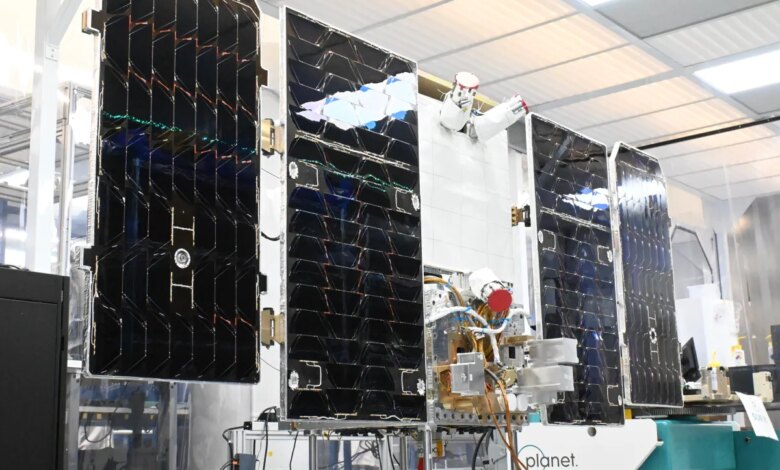
A prototype of Google’s orbital computing satellite was launched today aboard a SpaceX rocket from California, marking the tech company’s first venture into space with its advanced chips.
Developed by Planet Labs, this satellite is set to test the functionality of Google’s Tensor Processing Unit, which rivals Nvidia’s GPUs, in an extraterrestrial environment. The mission aims to provide a kilowatt of steady power, manage thermal conditions for the chip, and run various models to identify any potential issues.
“While we’ve conducted extensive ground testing, there’s no substitute for experiencing the real conditions,” stated Travis Beals, the Google executive overseeing Project Suncatcher, which aims to create extensive computing clusters orbiting the Earth.
After deployment, the satellite will activate its TPU in short bursts of 15 minutes to minimize stress on its power and thermal systems. Although this prototype is based on a standard platform from Planet Labs, the two companies are collaborating on a future demo mission scheduled for next year, featuring two satellites designed for more intensive computing tasks that can communicate through laser links.
Beyond Google’s satellite, the SpaceX rocket is also carrying over 100 other payloads, including missions from companies like Satlyt and Cowboy Space Company.
What differentiates Google’s initiative from other startups and SpaceX itself is its vision of a sustained long-term project.
Described by Beals as a “long-term moonshot,” the goal is to construct the future infrastructure for space and AI workloads. The concept involves a network of 81 satellites positioned closely together, capable of processing tasks simultaneously.
“The bandwidth and latency between TPUs are critical for executing multi-rack workloads. We’re anticipating not just today’s needs but where workloads will evolve in five years,” Beals explained, noting that the rockets needed to support large-scale orbital data centers in a cost-effective manner have yet to be developed.
On Thursday, Google also released a peer-reviewed analysis on orbital data centers, one of the most detailed studies on the challenges of computing in space, scheduled for publication in Joule.
A key aspect of the paper is Google’s perspective on access to space. While the researchers clarify that it isn’t a feasibility study, it presents an intriguing outlook on expected reductions in rocket costs over time.
As with all data center operators, Google is reliant on SpaceX for its launches, having invested significantly in the company.
The authors argue that SpaceX has produced a cost-reducing “learning curve” of about 20% per year since introducing the Falcon 1 rocket. They estimate that by 2035, launch prices could approach $200 per kilogram.
Achieving this will require a substantial amount of payload to be launched by the Falcon 9. The authors believe that for a similar cost-reduction trend, the Starship must transport 370,000 tons into orbit, necessitating around 1,800 launches over the next decade, equivalent to 180 launches annually—assuming each can carry 200 metric tons per mission.
This poses a significant challenge for a rocket that has yet to exceed five flights within a year. SpaceX anticipates increased flight frequencies, with Elon Musk earlier suggesting that Starship could potentially achieve an hourly launch rate by 2029, although such claims are often met with skepticism.
On a positive note, Google’s latest research suggests that its chips will likely withstand the radiation exposure in space. The company had to conduct tests using a particle accelerator to compensate for shielding configurations that were overly protective compared to real conditions, which resulted in minor errors in the chips’ logic. Nonetheless, Google remains optimistic that its chips can manage significant workloads in orbit for the expected five years of a satellite’s operational life.
“The error rate is extremely low for typical inference tasks, around one in a million,” Beals noted. “However, it becomes problematic for extensive training runs requiring numerous chips over months.”
Correction: The initial estimate of the learning curve for Starship launches was incorrectly stated as 1,600; the accurate figure is 1,800.