
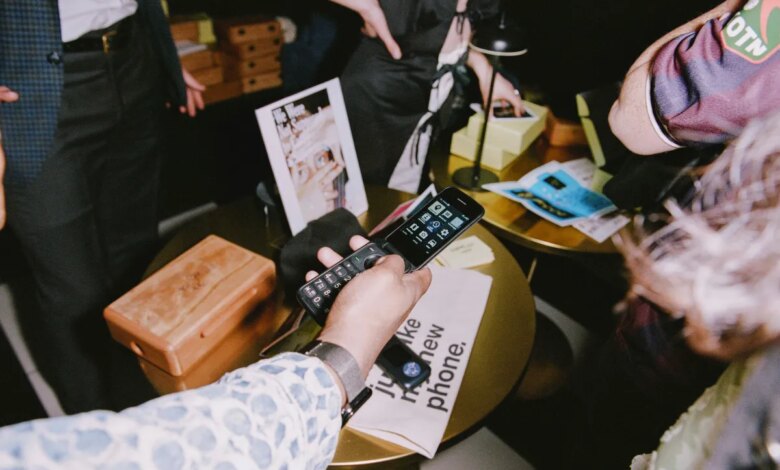
Lydia Peabody laughed out loud last year when she saw a friend pull out a flip phone at a gathering.
“I thought it was a joke and asked, ‘What are you doing with that?’” she shared. Her friend was actually taking part in a challenge called Month Offline, where participants traded their smartphones for flip phones for a month.
Peabody found the idea hard to grasp, but it sparked something in her. Fast forward a year, and her life has transformed. She left her job as a licensed therapist to become the chief marketing officer of Dumb Co, a flip phone startup that emerged from the Month Offline initiative. And now, she feels more content.
“When I did Month Offline, I suddenly realized, ‘Why do I feel so less anxious?’” she recounted. “I was blind to the fact that spending so much time on my smartphone after work was making me uneasy.”
Dumb Co’s flip phones are designed to complement smartphones rather than replace them. This approach creates a middle ground, allowing users the familiar connectivity of modern devices while mitigating the overwhelming aspects of smartphone life. Founded on support from friends and family, the company consists of a small team in their 20s and 30s, all striving for a less hectic lifestyle. Although they were raised with iPads and Instagram, they now yearn for simplicity.
The company embeds its software into affordable flip phones, enabling functions like WhatsApp, Spotify, Apple Music, and Uber access. Users can even send iMessages through compatible apps. By introducing familiar features like music streaming and navigation in a retro device, Dumb Co aims to assist those wanting to minimize their screen time while balancing their digital needs.
“We are creating a product that allows you to step away from your smartphone and truly engage with the world around you,” said Afreka Ebanks, Dumb Co’s communications director. “When you choose to use your smartphone again, the call and text forwarding features can be disabled.”
I tested the device, referred to as the Dumb Phone, for over a month with my iPhone as a backup in moments of need. Initially, I didn’t utilize the Dumb Phone much, but as I showcased it to friends, I found their reactions leaning towards envy rather than confusion.
“I’ve had numerous intriguing conversations with strangers who noticed my flip phone,” Ebanks said, showcasing her customized device. “It’s a remarkable conversation starter, highlighting how less distraction can actually help foster social interactions.”
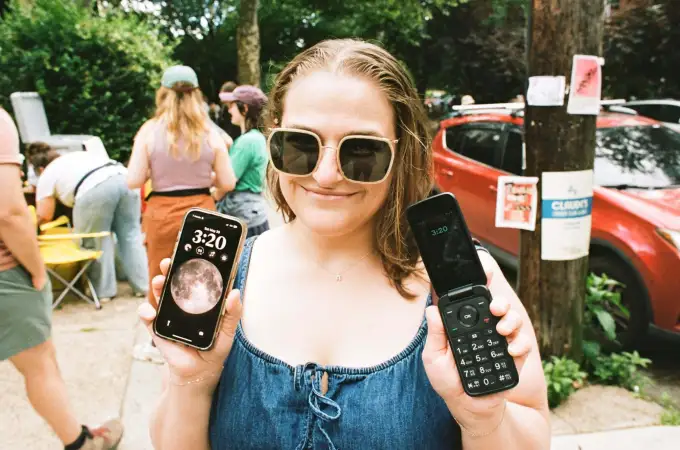
The Dumb Phone can feel cumbersome and has slower performance, making tasks like texting take longer compared to an iPhone. Yet, there is a refreshing aspect to it—certain activities like opening social media or checking emails are simply not options.
During my dual-use period, Peabody asked whether I had ventured out only with the Dumb Phone. I confessed I hadn’t, explaining that I often check transit schedules or stay updated with work messages when I’m out during the day.
“When you say you need it, it’s almost like saying you need food or shelter,” Peabody explained. “Yes, knowing bus schedules is helpful, but sometimes you can just ask someone nearby.”

Peabody challenged me to step out without my iPhone. On the day we spoke, I planned to cover an event at a library I had never visited. I worried about not having directions and not being able to record interviews. However, Peabody reassured me that the Dumb Phone does have audio recording capabilities.
“I really want you to experience this,” she urged. “During my switch to a Dumb Phone, I went without my smartphone for seven weeks while road-tripping, and it was surprisingly manageable.”
Faced with her determination, I ran out of justifications for keeping my smartphone. If she could drive thousands of miles without hers, how could I claim needing mine to confirm train stops?
Smartphones and social media have both pros and cons. They provide valuable interactions—sharing pet photos with grandparents or utilizing mobile payments. While researchers don’t categorize smartphone dependence as a true addiction, there are undeniable similarities. For those like me, excessive screen time often leads to anxiety and distraction. Peabody likened her phone habits to a past addiction to vaping.
“Breaking that habit was tough, but now I have a strong aversion to it,” she recounted. “During my seven-week smartphone hiatus, I genuinely felt a resistance to returning to it.”
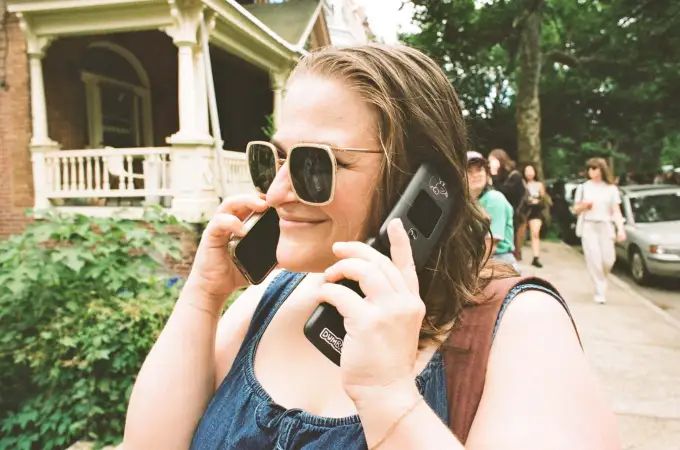
Despite my initial reluctance to leave my iPhone behind, I successfully navigated the public transit system without it (although I did double-check the library information). When I faced a lengthy text, I resorted to voice messaging. Overall, I felt more in tune with my surroundings, and everything went smoothly.
While I don’t plan to make a permanent switch to the Dumb Phone, I value its role in helping me be more mindful of how I interact with my smartphone. It comes with a velour pouch meant for storing your smartphone when you need to disconnect. I haven’t completely given up my iPhone, but I took the pouch with me on a recent beach trip. I used my phone for a few things, but I didn’t take it out while enjoying my day at the beach. With a book, a sandwich, and some water, I wondered what more I could possibly need.




