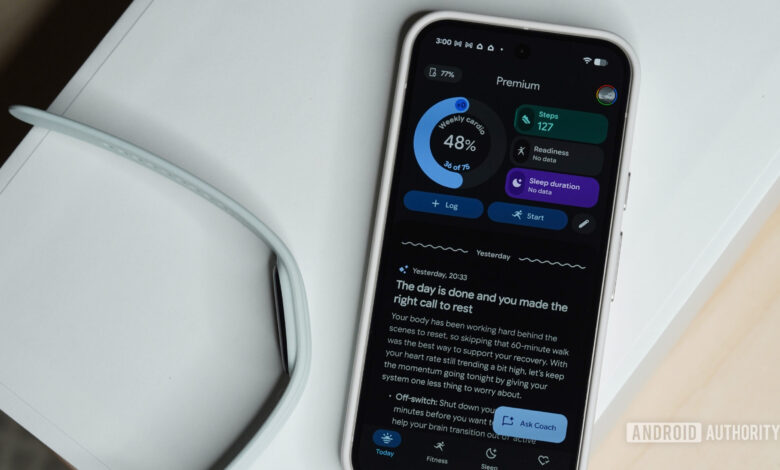
For several months, Google has been gradually introducing its AI-enhanced Health Coach in the Google Health app, which is associated with Fitbit. Recently, the company began testing this feature with selected users eager to participate. As someone curious about this new tool’s capabilities, particularly in comparison to Oura’s excellent functionalities, I was eager to give it a try, but it hadn’t yet reached my account.
A few weeks ago, just before a week-long trip, I received an offer to test the new health coach, and I jumped at the chance. During the first week, I found myself frequently active while exploring Romania, and I was keen to evaluate the coach’s effectiveness. Upon returning home, I wanted to see how it adjusted to my routine. I must admit, every time I opened the Google Health app, it felt as though I was receiving a lecture about my health habits.
Have you tried the new AI Health Coach from Fitbit?
215 votes
The coach tends to overcommunicate
Kaitlyn Cimino / Android Authority
During my busy first week of travel, the health coach seemed to be consistently monitoring my every movement. Woke up? Expect a notification about my sleep quality. Took a stroll from my hotel to the city center? Another alert. Added another walk after lunch? Guess what, another message. It became increasingly obvious that the more I moved, the more I heard from the coach.
Initially amusing, the constant notifications grew tiresome. I found it unnecessary to receive updates for short walks that didn’t significantly impact my health. Ideally, the coach would have been more perceptive and understood the context—if I was already highly active, it shouldn’t ping me unless I engaged in more meaningful exercise, like extended workouts.
Moreover, the insights provided were not particularly enlightening. The responses were often superficial, like noting I walked at a steady speed or that my heart rate remained unchanged. Given my moderate exercise levels, such information felt redundant.
The sheer volume of notifications led me to disregard the coach’s feedback. It became apparent that the balance between useful insights and overwhelming information was skewed.
An effective coach should recognize when to dial back communication. However, Google’s Health Coach appears to react to every minor activity. A quick nap? Notification. A few flights of stairs? Another update. While I understand the intent behind this engagement, it can feel intrusive. I’m aware of my own habits; I don’t need reminders for every little action.
This ongoing barrage of notifications caused me to feel smothered by the coach’s presence. As my trip concluded, I found myself almost ignoring the Coach entirely, knowing that most feedback was unnecessary.
The coach is persistent without nuance
I’ve struggled with poor sleep recently amid a busy schedule, yet this doesn’t seem to register with the Health Coach. At first, I found its reminders about healthy habits amusing—akin to a caring parent’s advice. Notifications about reducing screen time, resting, and prioritizing sleep provided a sense of comfort.
However, the repetitive messaging soon became grating. It felt like an overenthusiastic voice that continues to offer advice without considering my context. I understand the principles of a healthy lifestyle, but external circumstances often dictate my choices, such as travel stress or anxiety-driven sleeplessness.
I attempted to communicate my situation to the AI, but it did not seem to adapt its feedback. While it initially acknowledged my input, it soon reverted to its usual nagging tone after a few reminders.
Google should enhance this feature by allowing users to customize feedback frequency or tone. Sometimes, I crave constructive advice; other times, I prefer to be left alone. If I were working with a personal coach, continuous reminders might be warranted, but an app should recognize my cues and adjust its approach accordingly. I sincerely hope for such improvements.