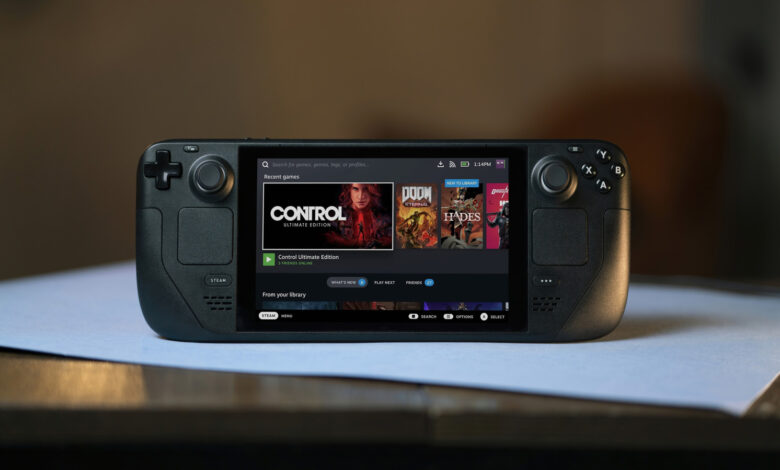
The Steam Deck made a strong impression upon its launch as a leading handheld gaming device. However, with emerging competitors and rising prices, the question remains: is it still a worthwhile investment in 2026?
The tech industry is currently grappling with a significant memory shortage, primarily due to the demands of AI-driven applications. This situation has led to rising prices for gaming consoles, which historically saw declines in costs over time. The Steam Deck has experienced a price hike of $300, prompting many to question its value amidst a new wave of portable gaming competitors in 2026.
Since its launch in February 2022, the gaming scene has evolved rapidly. The release of Unreal Engine 5 shortly after the Steam Deck’s debut introduced advanced tools for developers, resulting in more demanding graphics that challenge hardware. Although the Steam Deck OLED launched in 2023, improvements were limited to its screen and battery life, with no significant performance enhancements.
Despite the increased competition, the Steam Deck maintains certain features that make it appealing as of 2026.
Comparing the Steam Deck’s Main Rivals
Among the strongest competitors for the Steam Deck are the Asus ROG Xbox Ally (and Ally X) and the Lenovo Legion Go series. Both claim superior performance, generally outpacing the Steam Deck in real-world testing. Most models in these lines achieved higher 3DMark Time Spy benchmark scores than the Steam Deck, with the exception of several less powerful variants within the Legion Go series. However, the performance gap can sometimes be minimal based on the specific games being played.
These rivals cater to different gaming preferences. The Xbox Ally and Ally X are optimal for fans of Xbox games, albeit hampered by the Windows OS, which has received mixed reviews. Conversely, the Legion Go models are equipped with SteamOS, enhancing their appeal, especially because some versions feature detachable controllers reminiscent of the Nintendo Switch’s Joy-Cons, ideal for docked gaming experiences.
Furthermore, the Nintendo Switch 2 emerges as a noteworthy alternative despite its limited game library. Jessica Conditt highlighted in her Steam Deck OLED review that “the Switch 2 is the only handheld that justifies its price at the moment,” particularly compelling given its recent price rise from $450 to $500. Even with this increase, it remains more affordable than its Xbox Ally and Legion Go counterparts while also supporting Nvidia’s DLSS rendering and HDR capabilities, alongside the Steam Deck.
Assessing the Value of the Steam Deck

When deciding to purchase a Steam Deck, your gaming preferences are a crucial consideration. As Conditt mentions, “If you’re focused on Steam games without the need for cutting-edge graphics, the Steam Deck remains a solid choice, even with the price hike.” It’s particularly suitable for those who enjoy less demanding games within its library. However, bear in mind that SteamOS cannot accommodate certain titles that implement specific anti-cheat measures, such as Fortnite and Call of Duty: Warzone.
Battery life is another crucial factor. While competitors like the Xbox Ally and Legion Go (S and 2) have larger batteries, Valve’s handheld often excels in real-world scenarios. Once the Xbox Ally or Legion Go is pushed beyond low-power modes, their battery life can diminish rapidly. For users intending to game for prolonged stretches, the Steam Deck might offer the best endurance. It is also one of the lightest options, making it comfortable for extended play sessions, alongside the Switch 2.
In terms of affordability, the Switch 2 is the most budget-friendly option. The standard Xbox Ally offers access to a PC library at a lower price but comes with the drawback of its Windows operating system. Overall, the Steam Deck OLED is more competitively priced than the Xbox Ally X and every device in the Lenovo Legion Go’s current generation, especially when buying directly. Therefore, your final decision will hinge on your preference for Nintendo, Windows, or Steam OS, along with your budget considerations.