Decade-Long Sky Survey Captures ‘Cosmic Cinematics,’ Cyborg Cockroaches Take the Plunge, plus Exciting Science Updates

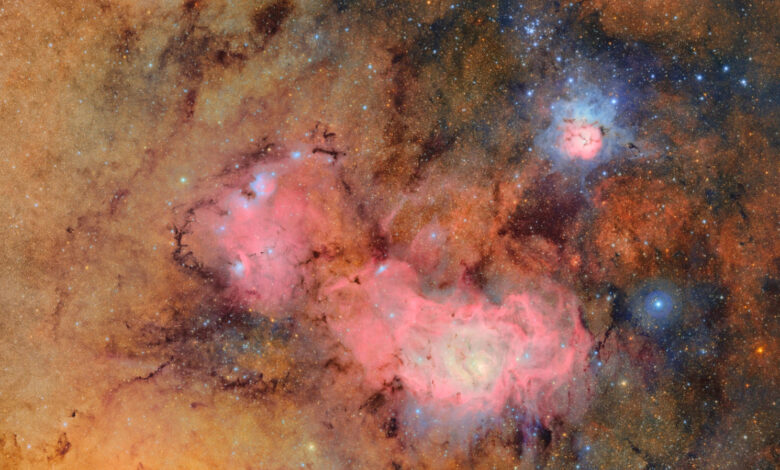
This week marked the official launch of the Legacy Survey of Space and Time (LSST) at the Vera C. Rubin Observatory, a monumental project that has taken over two decades to come to fruition. The survey aims to deepen our understanding of our solar system as well as the broader universe, tackling phenomena like dark energy, dark matter, and cosmic expansion. Here are additional highlights from the world of science that caught our eye this week.
Vera C. Rubin Observatory Begins Its Ten-Year Survey
Located in Chile, the Vera C. Rubin Observatory houses the world’s most advanced digital camera, boasting 3,200 megapixels. The observatory has initiated its decade-long survey of the universe, which commenced on June 30. Over the next ten years, it will capture images approximately every 40 seconds, effectively covering the entire southern sky every few nights. A recent announcement emphasized that these observations will create an ultra-wide, ultra-high-definition time-lapse record of the cosmos.
Brian Stone from the National Science Foundation remarked, “Today, we begin filming the greatest cosmic movie ever made.” Last summer, the observatory conducted a test run and produced striking images of millions of galaxies, stars, and even thousands of newly discovered asteroids. The LSST aims to revisit each portion of the sky about 800 times, allowing researchers to document changes and cosmic events, capturing roughly a thousand images nightly and generating around ten terabytes of data each day.
Darío Gil, Under Secretary for Science at the US Department of Energy, stated, “This mission will redefine modern cosmology and astrophysics. By exploring the mysterious phenomena of dark energy and dark matter, we are not merely observing stars; we are trying to understand the fundamental principles that govern our existence.”
Cyborg Cockroaches Equipped with Diving Suits
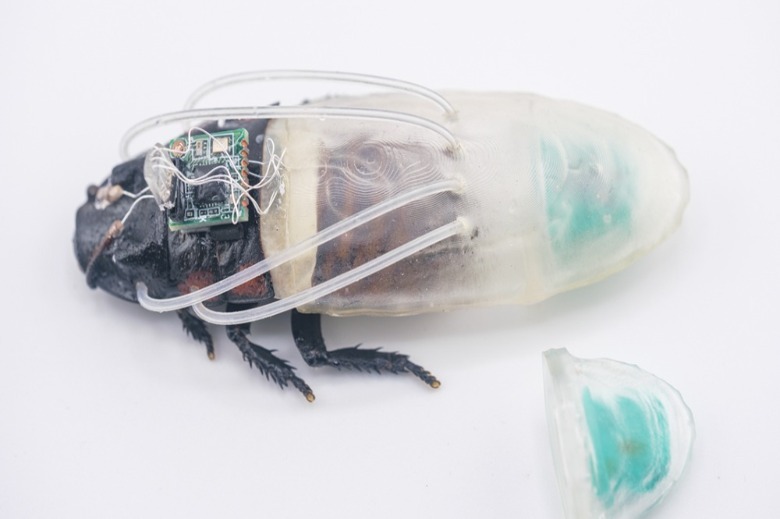
In an intriguing development, researchers from Nanyang Technological University Singapore and Waseda University unveiled a tiny diving suit that enables cyborg cockroaches to swim underwater for extended periods. The rationale behind this unusual project is the potential utility of cyborg insects in search and rescue operations, where they can access areas where larger entities cannot.
Recently, these cyborg cockroaches were deployed to assist in search and rescue efforts following a catastrophic earthquake in Myanmar this spring. The cyborg roaches, modified from Madagascar hissing cockroaches with electronic controls, can typically not handle water environments. The flexible diving suit includes an oxygen supply tank, a pliable shell, and four silicone tubes connected to the cockroaches’ breathing openings. The tubes can be detached painlessly without harm to the insect. Research published in *Nature Communications* indicates that these cyborg roaches were able to swim underwater for as long as three hours during trials.
NTU Singapore/Waseda University
NASA Selects Companies for Lunar Base Payload Deliveries
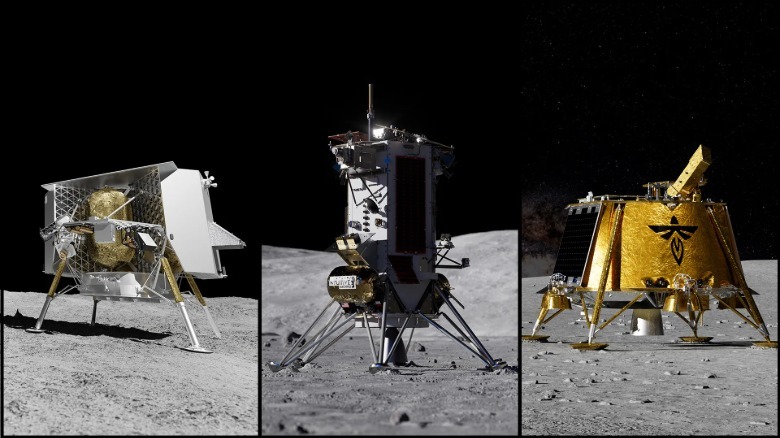
Earlier this year, NASA revised its lunar exploration strategy, opting to halt plans for a Lunar Gateway space station in favor of constructing a $20 billion Moon Base. The first missions to deliver payloads to the Moon are slated for completion by the end of 2026. This week, NASA announced four additional missions targeted for late 2028, awarding contracts totaling nearly $600 million to Astrobotic, Firefly Aerospace, and Intuitive Machines to deliver scientific payloads for the Moon Base.
Astrobotic will conduct two lunar trips, while the other two companies will each make one journey. These deliveries will utilize updated versions of their respective landers, building upon insights gained from previous NASA missions under the Commercial Lunar Payload Services (CLPS) program. Each delivery will carry identical payloads: a Stereo Camera for Lunar Plume Surface Studies (SCALPSS) for collecting landing data, a Laser Retroreflector Array (LRA) for accuracy in spacecraft positioning, and a Linear Energy Transfer Spectrometer (LETS) for measuring space radiation energy. This redundancy is intentional for better data collection.
NASA/Astrobotic/Intuitive Machines/Firefly
Joel Kearns, NASA’s deputy associate administrator for exploration in the Science Mission Directorate, stated, “Using the same scientific instruments across various landers will enhance our understanding of landing hazards while contributing to a comprehensive network of environmental data and location markers on the Moon. It’s similar to establishing weather stations across different regions on Earth. The three payloads are proven in flight, and their data will be crucial for the safe exploration of the lunar surface by humans.”