Colossal Biosciences Unveils Innovative AI Platform to Propel De-Extinction Initiatives Forward

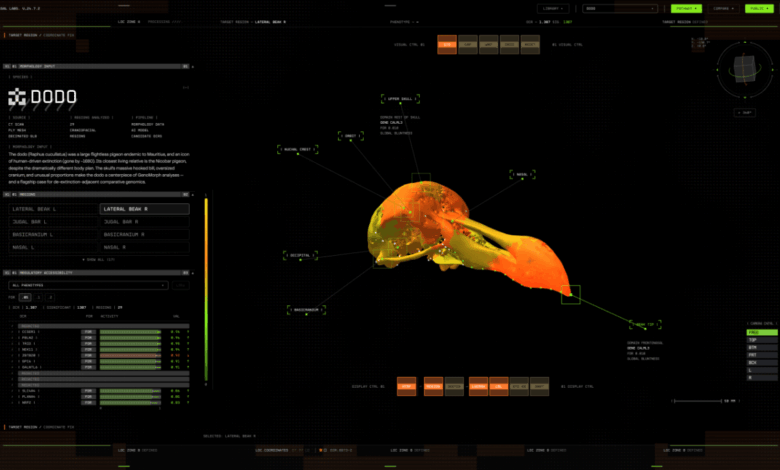
Colossal Biosciences unveiled an innovative AI platform on Wednesday aimed at expediting its mission to resurrect extinct species.
The new platform, named GenoMorph, harnesses cutting-edge 3D morphology, comparative genomics, and developmental biology to pinpoint genes that could be modified in de-extinction projects, especially where genetic information is sparse. This technology is part of the company’s initiative to revive the dodo bird, for which there are minimal genomic resources available.
Currently, Colossal is working with a single dodo genome, in stark contrast to the 100 genomes it has collected for its woolly mammoth revival project. The DNA from the woolly mammoth can be extracted more easily, thanks to the preservation capabilities of colder climates, unlike the tropical habitat of the dodo.
“Typically, scientists analyze multiple genomes to discern the genetic variations linked to specific traits,” explained Colossal CEO and co-founder Ben Lamm. “Unfortunately, with ancient DNA from extinct species, the available data is severely compromised, and we can only analyze a few complete genomes.”
To create GenoMorph, Lamm mentioned that the team gathered extensive developmental information from birds like chickens, quails, ducks, and pigeons, and integrated it with genetic details and 3D skull metrics of over 70 bird species. This project took more than a year to develop and builds on the company’s extensive experience in the field of de-extinction.
“The AI discerns which DNA regions activate during the development of various bird beaks and facial features, using that data to deduce which genetic switches may have shaped the dodo’s distinctive look,” Lamm stated. He likened the platform to a “treasure map for the dodo genome,” choosing to focus only on the significant genetic differences instead of sifting through countless possibilities.
“Up until now, we’ve pinpointed around 2,300 potential gene-editing targets linked to the dodo’s cranial features that we can study further in the lab,” he added. Lamm noted that GenoMorph aims to alleviate one of the largest challenges in reviving extinct species: determining which alterations contribute to the unique characteristics of an extinct animal. However, he emphasized that scientists also need to ascertain whether these modifications will indeed result in the desired physical attributes.
“We have introduced a novel method using lipid nanoparticles to directly deliver gene-editing tools within developing bird embryos,” he said. This approach enables the team to observe how particular genetic alterations influence bird development “without waiting for a complete breeding cycle that necessitates the birds to reach sexual maturity.”
On Wednesday, the company also revealed that its Nicobar pigeon population has grown to 36 individuals and that they have successfully generated the essential cells destined to become eggs and sperm.
“As the Nicobar pigeon is the dodo’s closest living relative, these cells are critically important for our strategy to create birds with dodo characteristics,” he elaborated. The company aims to validate the predictions made by GenoMorph in laboratory settings. “The most thrilling aspect is that we are nearing a point where the various technologies we have been developing converge to support other projects rooted in entirely different branches of the evolutionary tree,” he added.
When questioned about the safety of this gene-editing method, Lamm clarified that the goal of GenoMorph is to enhance the precision, control, and testability of genetic engineering. The platform itself does not perform gene edits but aids the team in recognizing which genetic changes are worthwhile to explore.
“Just because we identify a potential genetic modification doesn’t mean we immediately implement it in an animal or assume it’s safe,” he noted. “The more accurately we can determine and verify these changes, the more informed our decisions will be throughout the entire process.”
In a related development, Colossal Biosciences’ recent innovations have garnered support from Peter Diamandis, founder of XPRIZE. Diamandis, an investor in Colossal, announced the launch of his new venture capital firm, NeoGenesis Capital, aimed at investing in companies utilizing Colossal Biosciences’ programmable biology technologies across various sectors including health, agriculture, and conservation.