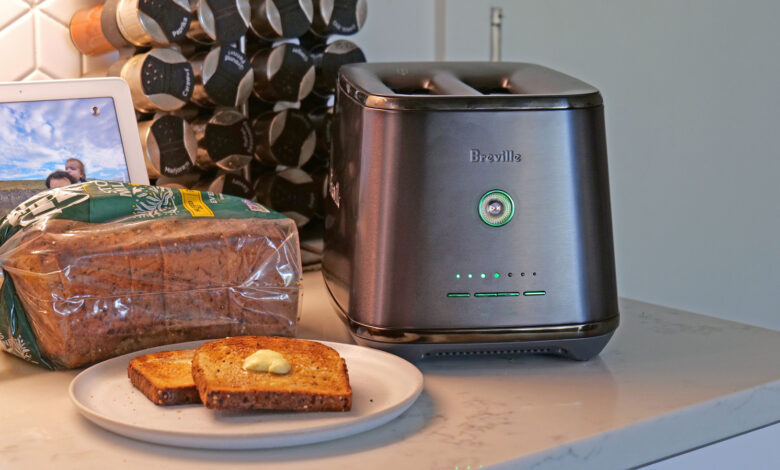
To thoroughly test the Eye Q toaster, I purchased a fresh whole wheat loaf and toasted a slice using each of Breville’s seven settings. The outcome was a delightful spectrum of browning that would impress any color enthusiast. The lightest setting barely toasted the bread, only crisping the surface without much change in shade, while the darkest produced a rich brown slice that was close to burnt, particularly around the crust’s edges. In between, the Eye Q created a beautifully golden slice, perfect for anyone’s breakfast. In fact, I found the middle setting so reliable that I used it for most of my toasting needs afterward. (Note: In the comparison image, the top left slice is untoasted, followed by seven shades of toast from the Eye Q.)
If I had to be picky, I noticed the toaster’s grill lines were sometimes visible on the bread, and certain slices appeared more unevenly colored than others. However, these are minor aesthetic flaws, as the taste after adding a bit of butter was fantastic. There’s no need to guess timing; the Eye Q manages the cooking time automatically. And if you prefer your toast a little crunchier, there’s a “A bit more” button, akin to hitting snooze on your alarm clock. It even handles frozen bread straight from the freezer without risk of overcooking.
The Eye Q also offers a sourdough mode, which you can access by holding down the main button. This feature enhances the toasting process for artisanal loaves by intensifying the Maillard reaction in the large air pockets typical of such breads. Naturally, I used this option to prepare some avocado toast. Even with a substantial French miche, it resulted in a perfectly crispy and appealing slice ideal for toppings. Just a note: I had to slice the bread lengthwise to accommodate it in the toaster.
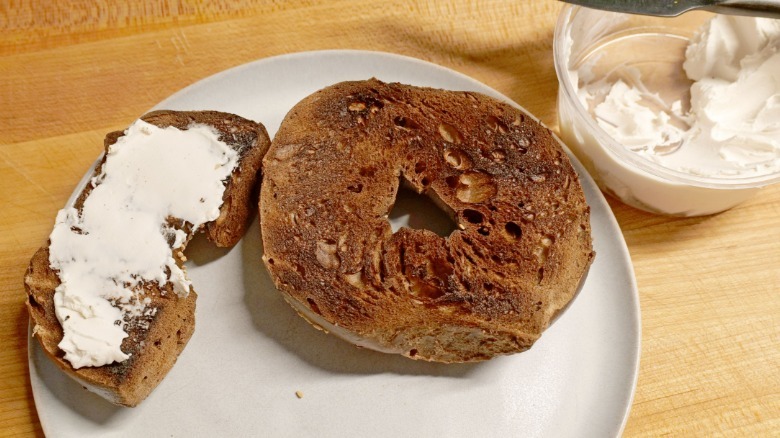
Bagels are another item the Eye Q can toast. However, living in the Northeast US where quality bagels abound, I believe that a great bagel shouldn’t need toasting. Breville seems to share this sentiment because when I toasty-fied a fresh bagel from my local shop, I found that authentic NYC-style bagels are often so thick that they struggle to fit in the toaster, even when halved, leading to awkward adjustments.
Sam Rutherford
When toasting bagels, it’s advisable to position the sliced sides outward for optimal results. Unfortunately, when I employed this method with a lovely Russian rye pumpernickel, it ended up slightly burnt. I suspect this was due to the bagel being too large, causing it to get too close to the heating elements. If you typically purchase mass-produced bagels, the Eye Q can manage them effortlessly, but for those with access to authentic bagels, it may be best to forgo the toaster altogether.