Breaking New Ground: Orbital Matter Produces Space’s First Rigid Beam Through 3D Printing

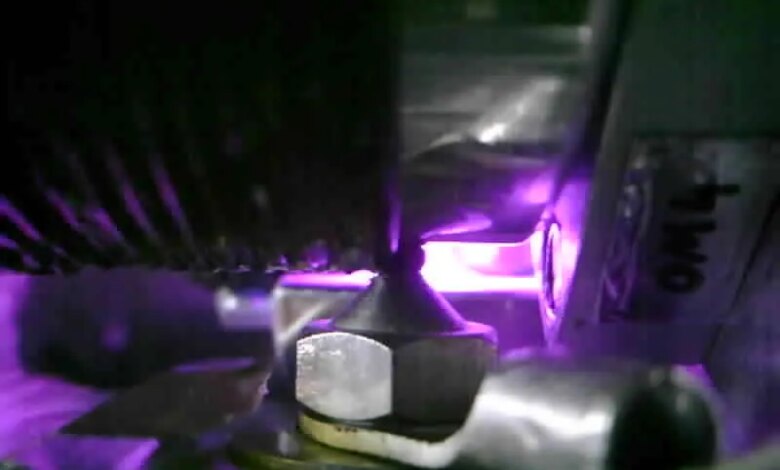
A satellite developed by the German startup Orbital Matter has successfully 3D-printed a half-meter-long beam using a specially formulated plastic material. This achievement marks a significant milestone for free-flying spacecraft in orbit and represents progress toward building larger structures in space.
The company’s compact satellite, named Replicator 2, was launched during a SpaceX rideshare mission earlier this summer, carrying four of the company’s 3D printers. Each printer operates by extruding coils of resin that are solidified with ultraviolet light, a process that Orbital Matter likens to combining cement and water.
This innovation is crucial as future spacecraft will need to be more expansive to produce additional electrical power and manage heat more effectively while in the vacuum of space, especially if they are intended to function as orbital data centers. They must still fit within the restricted space of the rocket’s fairing intended for launching them into orbit. If spacecraft can fabricate their own structures in space, it could significantly simplify the challenges related to power management and heat dissipation.
“Replicator 2 demonstrates for the first time that we can construct an array in space, tailored to the mission’s specifications,” remarked Jakub Stojek, CEO and co-founder of Orbital Matter. The company is collaborating with the European Space Agency and Thales Alenia, a major satellite manufacturer in Europe, which partnered on the Replicator 2 project.
Currently, large structures in space resemble origami, where solar arrays or telescope mirrors are compacted and then unfolded once they reach orbit. This approach presents considerable engineering challenges, making the prospect of manufacturing and assembling these structures in space very appealing. NASA has previously supported initiatives in this area, including a mission with Redwire that aimed to 3D-print structural beams in a vacuum chamber in 2023, although it ultimately did not launch.
Two of Orbital Matter’s printers were intended to deploy a flexible solar array, but due to an anomaly, one encountered a failure. Nevertheless, the successfully manufactured boom managed to extend the solar array, providing a vital proof of concept. Historically, 3D printing in microgravity has been constrained to the pressurized environment of the International Space Station.
“We deployed multiple printers on this single satellite to gain insights in orbit and modify the software as required, instead of spending years testing different scenarios on Earth,” explained Robert Ihnatisin, CTO of Orbital Matter.
The boom’s length was restricted by the available resin on board the satellite, and the engineering team believes that it’s possible to create booms of up to 100 meters in length. For context, SpaceX’s Starlink V2 satellites are equipped with solar arrays that measure 20 meters long and are among the most powerful mass-produced satellites currently in orbit.
Orbital Matter was co-established in 2022 by Ihnatisin, who previously worked with the 3D-printing company FormLabs, along with Stojek, and secured $3 million in their initial funding round.
Looking ahead, Orbital Matter is preparing for another demonstration mission set for launch in 2028. This mission aims to test an enhanced version of their printer on a larger satellite, which is expected to deploy a solar array capable of generating 5 kW of power. This initiative will serve as a vital step towards deploying systems that can produce over 100 kW of power per wing by 2030.
Additionally, the company is partnering with satellite manufacturers who are exploring the integration of its Printer-Assisted Deployment System (PADS) into their designs for extending solar panels, antennas, and other components.