As India seeks to establish a domestic player in the global artificial intelligence landscape, billionaire Mukesh Ambani is positioning Reliance Industries as a frontrunner by launching AI services aimed at enhancing phone calls, mobile applications, and smart home functionalities.
During its recent annual shareholder meeting, the Mumbai-based conglomerate introduced Jio Call Agent, an AI assistant designed to participate in phone calls, transcribe discussions, summarize them, and execute various tasks such as booking cabs, ordering meals, and making reservations. This service, which can be activated with the phrase “Hey Jio,” is expected to be available later this year for Jio’s user base of over 500 million.
By integrating this service directly into its telecommunications framework instead of launching it as a separate application, Jio aims to ensure that AI assistance becomes an integral part of phone conversations. This strategy could lessen users’ dependence on external call-assist applications while granting Reliance a significant distribution benefit in an increasingly competitive AI market.
The company also introduced an AI-enhanced version of its MyJio app capable of handling tasks like activating eSIMs and choosing roaming plans through natural language interaction. Additionally, Reliance presented TeleFrame, a home display that employs AI agents to offer proactive information and suggestions, including weather updates, schedules, and household reminders. This product aligns with a broader trend towards ambient AI solutions for homes, pursued by major companies such as Amazon and Google.
These announcements highlight the next step in Reliance’s AI vision as India aims to foster local capabilities in a domain largely influenced by U.S. and Chinese firms. This initiative follows the establishment of Reliance Intelligence last year, which focuses on building AI infrastructure and services aimed at consumers, businesses, and government sectors, including applications supporting 22 Indian languages.
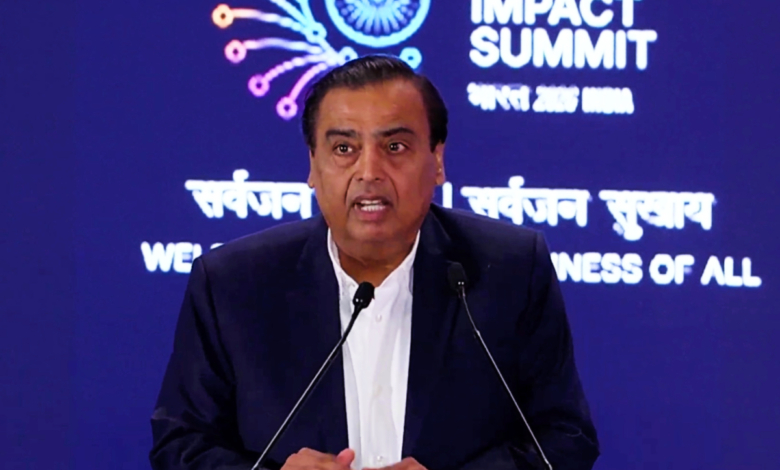
“India should not remain a mere consumer of AI developed abroad. It should evolve into a creator and global leader in the AI sector,” stated Ambani, 69.
Reliance is also ramping up its AI initiatives through collaborations with Google, Meta, and Nvidia. Earlier this year, the company revealed plans to invest $110 billion in AI infrastructure, aiming to position itself as a prominent figure in India’s evolving AI landscape.
At the shareholder meeting, a range of AI services for healthcare, education, agriculture, and small enterprises was announced. These services, named JioHealthIQ, JioLearnIQ, JioKrishiIQ, and AI Vyapar, are tailored to function in various Indian languages and meet local demands.
Furthermore, the meeting brought significant news for investors anticipating Jio’s market launch. Ambani announced that Jio Platforms’ board had authorized a draft prospectus for an initial public offering, which will include a new issuance of up to 270 million shares, as per a stock exchange report.
These announcements raise important questions regarding how Reliance will manage user data as it expands its AI offerings across various platforms. Although the company confirmed that services would operate with user consent, it did not clarify whether the data produced by these products would be utilized for AI model training or shared with tech partners.
Reliance’s ambitions in AI coincide with the reality that many Indian companies still depend heavily on foreign AI solutions and cloud services. Recent obstacles in accessing some of Anthropic’s latest models have highlighted this dependency, demonstrating how overseas decisions can affect Indian startups and businesses focused on developing AI products. This supply-chain risk is driving Indian conglomerates to invest in their own technology stacks instead of relying on external services.
Last week, Reliance announced a partnership with Meta to set up an AI data center in Gujarat, building on Meta’s past investment in Jio Platforms and a joint venture initiated last year to create AI solutions for both domestic and international enterprise clients.
Reliance is entering a competitive field, as other major players like Tata Consultancy Services, Infosys, and rival Adani Group are also expanding their AI endeavors and establishing partnerships with global firms such as Anthropic, Google, and OpenAI, all vying to secure influential roles in India’s AI future.
For Reliance, the stakes are particularly high; it is preparing Jio for a long-anticipated stock market debut and is in need of new avenues for growth, especially as the conglomerate’s shares have dropped approximately 17% this year.