A YC Startup Invests $1 Million to Tackle Five Unresolved Challenges in Materials Science Using AI

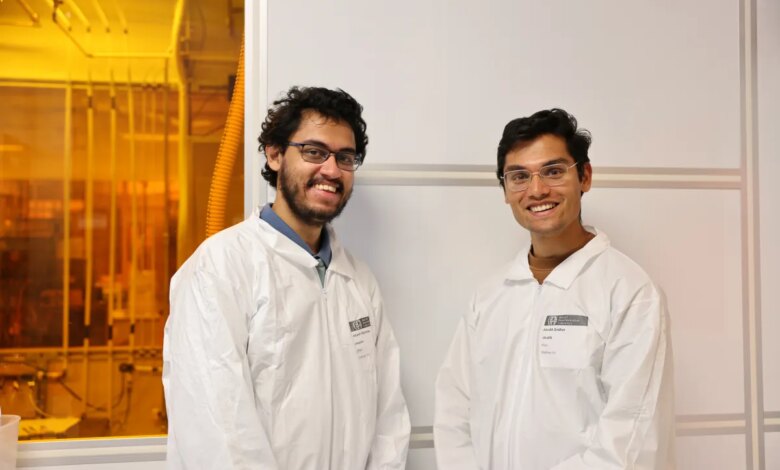
Discovered Materials, a newly established startup based in San Francisco that employs AI to identify novel materials for cutting-edge chip production, has launched a challenge worth one million dollars aimed at utilizing AI to address five significant issues in materials science.
While advanced AI systems have successfully tackled numerous mathematical challenges and made strides in biological sciences, they have yet to explore the intricate physics involved in advanced materials.
“Formulating problems in materials science is inherently more challenging; unlike mathematics, where definitions are precise and lead to definitive answers, materials science often lacks such clarity,” explained Advaith Sridhar, co-founder of Discovered Materials, which participated in the Y Combinator spring 2026 cohort. “We engaged in discussions about identifying major hurdles in this domain and determining how we could measure AI’s progress.”
Although materials science lacks a set of daunting problems like the Millennium Prize Problems, Discovered Materials assembled an advisory panel of academic experts from prestigious global institutions to define five pressing challenges. The startup is offering up to $1 million in prizes for effective solutions.
- Developing a theoretical framework to elucidate cuprate superconductivity, where specific materials exhibit near-zero electrical resistance at extremely low temperatures.
- Creating a numerical approach to predict the structural characteristics of interfaces between silicon and silicon dioxide, crucial components in nearly all semiconductor devices.
- Establishing a method to correlate grain structure with thermal properties, aiding the design of superior heat management materials.
- Formulating a theory to explain the phenomenon of light interaction altering material properties, particularly concerning superconductivity.
- Enhancing Density Functional Theory, an essential modeling technique in materials science for predicting atomic and molecular structures.
“Within materials science, there are observable phenomena that remain unexplained,” stated Felipe Jornada, a professor from Stanford who collaborated on the establishment of the challenges. “Achieving explanations for these phenomena would not only expand our understanding of physics, but also directly influence electronics fabrication, energy storage, and future material production.”
Prior to launching the challenge, Discovered Materials allowed advanced lab models to tackle these problems, granting AI access to the internet and other tools for autonomous exploration over several days. Despite several attempts without significant breakthroughs, one can envision companies like OpenAI or Anthropic taking a fresh shot at the challenges with greater computational resources or improved models.
“Our primary concern isn’t whether we solve the issues ourselves, or if they are resolved by someone else or an academic,” said Sridhar. “The purpose of these challenges is to create benchmarks. Successfully addressing them would enhance our comprehension of materials and their interactions.”
Monitoring efforts to resolve these challenges will demonstrate whether there is progress within this area, he noted.
This challenge also signifies a shift in scientific exploration, as AI increasingly uncovers insights and methodologies previously unanticipated by human researchers. As solutions appear more accessible, the emphasis shifts to formulating critical questions.
“This approach represents a novel perspective on scientific inquiry, where we establish the challenges and validation first, and then invite innovative thoughts to address these inquiries,” Sridhar noted. “Identifying the right questions to pursue is inherently complex and requires substantial effort, which is where our academic partners have been instrumental in guiding us.”
Discovered Materials aims primarily to innovate new materials for semiconductor applications, collaborating with major chip manufacturers on research initiatives while also financing its own scientific projects. When the company announced its initial funding round in August, Sridhar expressed optimism about developing a viable material within a year.
“I believe our timelines have sped up slightly,” he now asserts. “I am increasingly confident that we will discover these commercially viable materials in a timeframe shorter than a year.”