The rover will be capable of exploring diverse terrains regardless of light conditions.
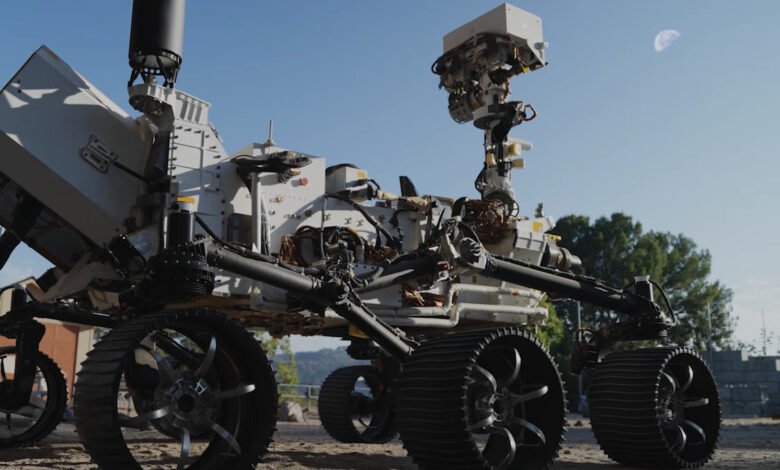
Curiosity and Perseverance have full-scale replicas situated on Earth that scientists utilize for testing features and updates before they are transmitted to the Mars rovers. Originally constructed to remain on Earth as test models for Martian vehicles, NASA now intends to send one of them—or a combination of both—to the moon.
Introduction of PROMISE the rover
In late June, NASA unveiled a proposal to deploy a rover dubbed PROMISE, which stands for Polar Rover for Observation, Mapping, and In-Situ Exploration, to the lunar surface. Reports have indicated that this will be a repurposed version of the engineering test model of Perseverance. The video issued by NASA showcased Perseverance’s landing on Mars, followed by a glimpse of its replica on Earth. However, the new rover is referred to as a “hybrid” combining features from both the Perseverance and Curiosity models.
Before its renaming to PROMISE, the test model of Perseverance was called the Operational Perseverance Twin for Integration of Mechanisms and Instruments Sent to Mars, or OPTIMISM for short. “We have accumulated years of experience operating both rovers on Mars, and we have this hardware that has seen significant investment from taxpayers,” stated NASA administrator Jared Isaacman. “So the question arose: ‘What if we send it to the moon?’ … This will provide significant capabilities to the lunar south pole expeditiously.”
PROMISE will focus on investigating the lunar south pole, a possible site for future lunar bases due to its rich deposits of water ice, while also characterizing the lunar surface and underground. It will be powered by a multi-mission radioisotope thermoelectric generator (MMRTG), which relies on plutonium as fuel. This generator transforms heat from the plutonium’s natural decay into electricity, enabling PROMISE to conduct its explorations without depending on sunlight.
“With a nuclear RTG installed, we can navigate anywhere our lunar objectives take us, regardless of light conditions,” remarked Carlos García-Galán, the program manager for the Moon Base initiative. “Surviving the lunar night will be one of the significant challenges we can overcome with this setup.”
Timeline for PROMISE’s Journey to the Moon
The timeline is contingent upon various factors, and currently, PROMISE remains a conceptual project. The OPTIMISM model is not yet flight-ready, requiring numerous modifications and enhancements before it can become a viable lunar rover.
Nasa hasn’t disclosed the necessary steps to prepare the rover for its mission. The vehicle is lacking crucial components, such as sensors for temperature regulation, scientific instruments suitable for flight, a communication system, or an operational generator. Additionally, its materials have not been evaluated for resilience against the harsh lunar dust. Essentially, extensive upgrades are mandatory before it can proceed to the moon.
Estimates from experts suggest that the total cost to NASA for PROMISE could range from $700 million to $1.3 billion, with a projected launch not occurring until the early 2030s.