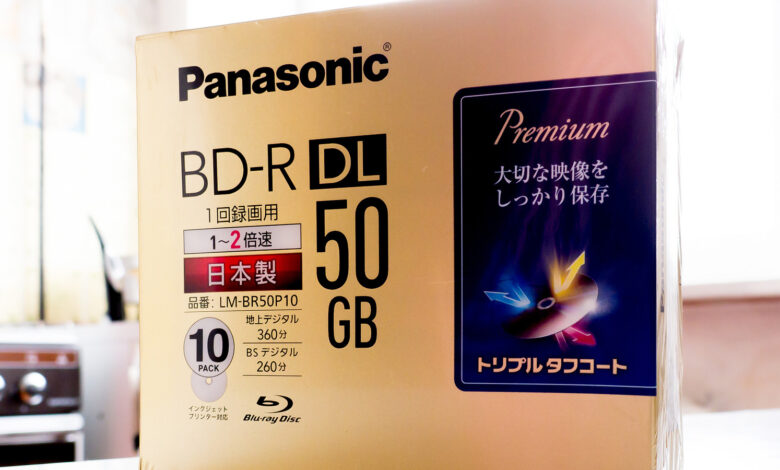
While recordable Blu-ray discs can have an extended lifespan, there are important considerations to keep in mind.
While Blu-ray has largely been overshadowed by digital downloads, streaming, and flash storage, it remains a favorite among film enthusiasts for its superior video and audio quality. Additionally, it may offer a cost-effective solution for long-term file archiving, especially as the prices of flash memory continue to rise.
A key question is how reliable recordable Blu-ray discs (BD-R) are for preserving vital files. This is particularly relevant when considering irreplaceable items, such as personal videos or artistic works.
On the whole, the outlook is favorable for BD-R as a storage medium, but factors like manufacturing quality and future accessibility could impact their longevity.
What is the lifespan of recordable Blu-ray discs?

In terms of deterioration, the primary risk for Blu-ray discs is known as disc rot, a term encompassing several types of decay. For instance, the reflective layer may become oxidized, and moisture could promote mold growth or separate the layers. Exposure to ultraviolet light is more likely to fade labels than damage the data itself. Spotting early signs of rot, like discoloration, can help identify issues before trying to access the disc.
Data from the Canadian Conservation Institute indicates that lower-quality BD-R discs may only last between five to ten years on average, making them unsuitable for archival purposes. By contrast, external solid-state drives often surpass this lifespan significantly while offering greater storage capacity.
Higher-quality BD-R discs utilize a silicon-copper alloy instead of a dye layer, often appearing dark gray or brownish. These can last from ten to twenty years, according to CCI data. Moreover, rewritable BD-RE discs show even greater resilience, with lifespans potentially reaching 20 to 50 years, enabling the possibility of passing down storage to future generations. However, reliance on Blu-ray for such extended periods may not be advisable due to other considerations.
Potential drawbacks of using BD-R discs for long-term storage

One of the most apparent concerns is the fragility of discs. While storing them in a dry, dark, and cool environment can mitigate rot, they are susceptible to physical damage from scratching or cracking. In contrast, many solid-state drives are housed in durable metal enclosures, making them less vulnerable to such harm. A simple oversight, like stacking a disc at the bottom of a moving box, can lead to its destruction.
A more pressing issue, however, lies in the diminishing support for Blu-ray technology. Optical drives have become less commonplace in computers, and companies are gradually exiting the BD-R market. While currently available, the future availability of burners and Blu-ray discs remains uncertain. There is a risk of having a well-preserved collection with no way to access it if hardware and compatible software become obsolete.
As a best practice, it’s advisable not to rely solely on one medium for storing important files. The prevailing recommendation is to keep one copy in cloud storage and two additional backups on different local storage options. Though this may not always be feasible, ensuring that you can migrate files to newer formats is crucial for safeguarding your data.