Exploring the ‘Dead Internet Theory’: Should We Be Concerned About Its Implications for Humanity?

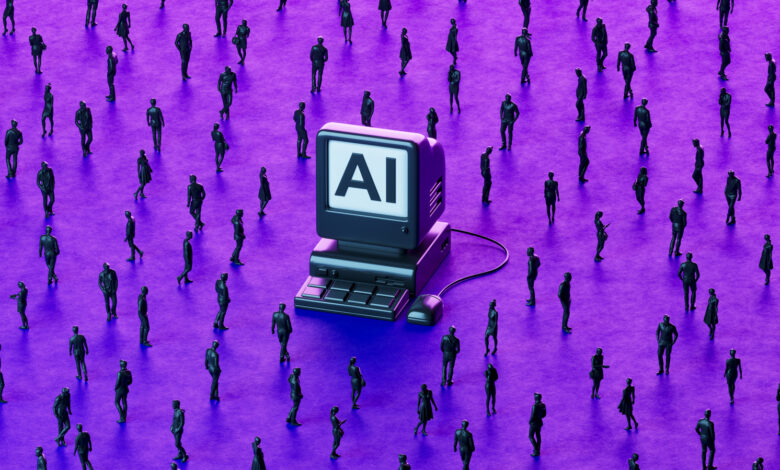
Do you ever sense that the digital world feels less human? Maybe social media posts seem strange, or the customer service agent you’re communicating with feels more like a robot. If you relate to this, you’re not alone. This sentiment has given rise to a concept known as the “dead internet theory,” which suggests that online spaces are increasingly overcrowded with bots and content generated by artificial intelligence.
This theory has been circulating since the 2010s, coinciding with the rapid advancement of AI technologies. In a noteworthy development, a report released in September 2026 revealed that bots made up 53% of all web traffic, up from 51% the previous year. Moreover, AI chatbots are now engaging with one another outside of human interaction. A recent acquisition by Meta of a platform called Moltbook allows these bots to communicate amongst themselves, often discussing human users. As the online landscape transitions towards this artificially driven environment, it’s essential to understand what dead internet theory entails and whether it’s a cause for concern.
Understanding Dead Internet Theory
Dead Internet Theory describes the phenomenon where a significant portion of the internet is driven by bots and various non-human entities. Initially labeled a conspiracy theory on online forums, it gained traction in the late 2010s. The theory became more structured with a 2021 post on Agora Road titled “Dead Internet Theory: Most of the Internet Is Fake,” which claimed that the internet has felt increasingly empty since 2016. This change was attributed to the emergence of AI-generated content dominating search results and social media feeds.
Since then, the prevalence of chatbots and AI-generated material has surged. A Pew Research study in 2024 indicated that only 33% of Americans had utilized chatbots like ChatGPT, Gemini, or Copilot. However, this figure rose to 49% by 2026, with 25% of respondents reporting daily usage. This trend has created situations where the organic human interaction is overshadowed by a cycle of AI-generated content, leading to scenarios in which students employ AI for essay writing, only for those submissions to be graded by AI systems.
Should Concern Be Raised?
On a personal level, the prevalence of chatbots can evoke discomfort. Scripted social media posts or generic AI-generated advertisements might trigger feelings of unease. However, the implications extend beyond mere discomfort. Bots have the potential to disseminate misinformation, particularly in the political arena, with inadequate legislative measures being taken to address the risks posed by AI, such as deepfakes.
As AI’s footprint grows, so does public apprehension. A Pew Research study revealed that 40% of Americans believe AI will negatively affect society over the next two decades. Companies like Pangram are gaining traction in developing AI detection tools, receiving substantial funding to enhance their capabilities. Following the EU AI Act, OpenAI has started marking AI-generated content to help individuals discern between artificial and genuine material, aiming to foster more meaningful human connections online.