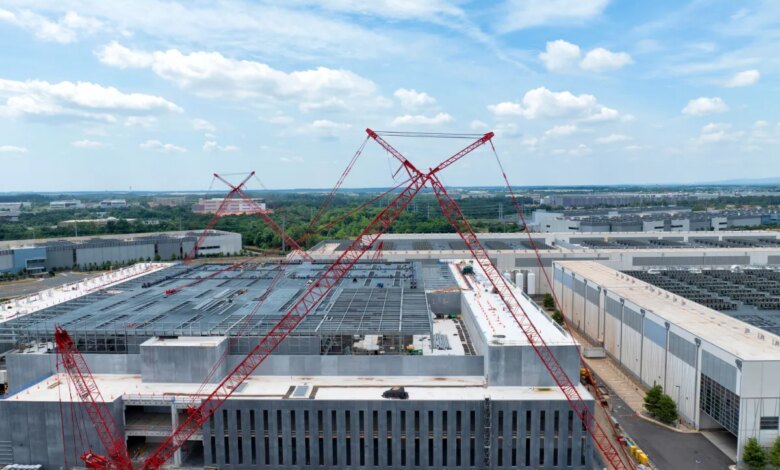
Dina Powell McCormick, president of Meta, commented that recent Democratic victories in the midterm elections will complicate the establishment of data centers, noting that the tech industry has struggled to communicate the advantages of such investments.
During her remarks at the WSJ Tech conference on Wednesday, she emphasized that the public backlash against data centers—an issue prominent during the recent election—reflects broader concerns regarding artificial intelligence (AI) technology.
“Data centers are visible signs of AI that individuals might oppose in their neighborhoods,” she stated. “There’s a larger question at play concerning public sentiment towards AI overall.”
Meta is optimistic about improving public opinion on AI by showcasing the benefits of both data centers in local communities and the technology itself.
“The implications of who develops technology that addresses significant issues like cancer treatment or educational access create a crucial distinction… Mark [Zuckerberg] emphasizes a long-term human focus, prioritizing people over machines,” Powell McCormick articulated. “We envision a future that is inclusive, ensuring no one gets left behind. This can only happen if technology is accessible and equitable,” she added.
She praised Meta’s extensive experience in constructing data centers over the last 20 years, highlighting that substantial computing power is essential for their social networking services. Currently, Meta operates data centers across 23 states, with plans for five mega-facilities, including a significant one in Texas.
However, the company is apprehensive about the potential impact of anti-data-center political campaigns on its investments.
“The future looks more challenging,” Powell McCormick remarked regarding the construction of data centers. “While it has always been difficult, we are gaining clarity on effective models that states prefer.”
Specifically, communities are more inclined to accept data centers if they can derive benefits, according to her explanation of Meta’s current strategy for establishing data center projects.
Successful initiatives often see Meta covering its own energy costs, directing any tax benefits toward local educators and emergency personnel, hiring from the local workforce, and securing bipartisan backing for projects.
Looking ahead, she anticipates increased scrutiny of data center projects, focusing on whether community members genuinely support them.
Meta is banking on its AI investments, particularly its consumer AI agent Muse, to expand significantly beyond its current 10 million users to potentially serve billions in the future. Nevertheless, even without level growth, the company believes their investments in data centers will yield value through the computing resources they provide.
“We receive daily inquiries to lease the computing power we’ve developed, so we are identifying various monetization strategies,” Powell McCormick concluded.