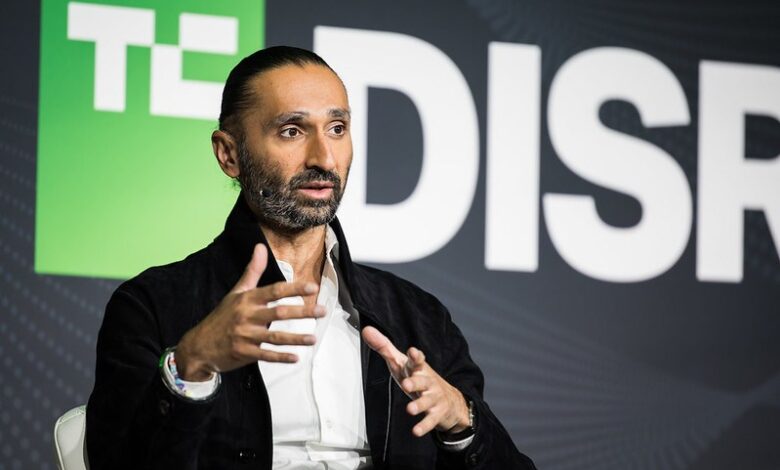
Blackstone, a leader in private equity, is positioning itself to leverage the burgeoning AI sector, as noted by veteran executive Jas Khaira at TechCrunch Disrupt last week.
The firm is employing a variety of financial strategies, including substantial loans to data centers and investments in advanced AI technologies and applications.
Earlier this year, Blackstone established Blackstone N1 (BXN1) in San Francisco, serving as the focal point for its AI endeavors. Khaira is heading this initiative, having moved from New York to be closer to the AI landscape.
Unlike previous tech waves like mobile or SaaS, which allowed for significant growth with relatively low investment, the AI shift demands considerable financial resources. This urgent need for capital is where Blackstone, managing $1.3 trillion in assets, can have a pivotal impact.
Khaira stated that Blackstone differentiates itself from traditional venture capital firms through its focus on compute financing and flexible capital structures that include both debt and equity. The firm has been making significant investments.
“Today, we are the largest owner of computational resources outside of hyperscalers, with investments spanning neo clouds and data centers, utilizing that compute strategically to support various companies,” Khaira explained.
BXN1 has been instrumental in several computation-related acquisitions, including an investment of $5 billion in Crux AI, a neocloud collaboration with Google focused on commercializing custom TPUs. Additionally, Blackstone has supported Etched, a chip startup that has rapidly gained attention from investors. Neoclouds refer to cloud service providers renting out AI GPU infrastructure.
Blackstone has introduced a unique financing model that enables it to provide substantial loans to venture-backed neoclouds by assessing customer contracts and using pledged GPUs as collateral.
The first instance of this model occurred in 2023 with CoreWeave, which, despite generating only $30 million in revenue with minimal profitability, asked Blackstone for a $2.3 billion loan due to skyrocketing demand post-ChatGPT release.
CoreWeave utilized the significant value of its Nvidia GPUs for collateral, and Blackstone felt more secure with the loan because CoreWeave had contracts with established clients like Microsoft.
This transaction established a financing model that Blackstone and other lenders have used to provide billions in additional debt to CoreWeave and competing neoclouds.
“A key focus for us is the nature of the customer. When the customer is investment-grade, like Microsoft or Meta, the risk is assessed accordingly,” Khaira remarked.
Building on the success with CoreWeave, Blackstone has made additional financing deals, including co-leading a $10 billion credit facility for Australian GPU provider Firmus earlier this year, alongside Coatue.
Khaira acknowledged recent concerns regarding the heavy debt loads of these firms and other neocloud operators. CoreWeave’s debt, for instance, has surged to around $50 billion. Notably, Altimeter Capital’s Brad Gerstner mentioned in a recent interview that the collateral, primarily Nvidia GPUs, is no longer sufficient for securing low-cost debt.
Khaira noted that market apprehensions are influenced by several factors, including rising interest rates in September and unexpected inflation, which suggest that borrowing costs might keep increasing. An influx of AI infrastructure debt offerings adds to these concerns.
“We’re also witnessing higher credit spreads,” he stated, explaining that lenders are demanding higher premiums alongside elevated base interest rates for financing AI developments. “Even established tech companies like Meta or Microsoft are encountering increased borrowing costs,” he added.
These worries over rising debt costs have affected stock market performance. Shares of CoreWeave have recently plummeted over 20%, while Firmus had to cancel its planned IPO on the Australian Securities Exchange, which aimed for a valuation around $30 billion.
“Ultimately, the market context didn’t support that valuation, leading to the deal falling through,” Khaira noted regarding Firmus’ unrealized listing.
“Current sentiment revolves around determining correct valuations for neoclouds amidst increasing interest rates,” he added.
Despite these challenges for specific infrastructure providers, there remains a high demand for compute resources among AI companies, prompting further expansion of data center infrastructure.
Khaira minimized concerns from pessimists fearing a widespread credit crisis due to accumulated AI infrastructure debts. “This isn’t analogous to the shaky credits of banks in 2008,” he stated.
He emphasized that the majority of data centers are intended for hyperscalers, and the debt financing supporting them is underpinned by some of the world’s most creditworthy companies.
In addition to funding data centers, Blackstone is aiding AI adoption through a $1.5 billion initiative called “Ode with Anthropic,” created this year in partnership with Anthropic and Hellman & Friedman. Ode provides engineers to assist businesses in incorporating AI, starting with Blackstone’s portfolio of 280 companies.
When asked about measurable gains from AI in companies owned by Blackstone, Khaira admitted there have been returns, albeit unevenly. He described technology adoption as likely following a “sawtooth pattern,” which may initially appear as an excess supply of compute resources before the adoption rates align.