Staying Grounded: Benchmark’s Partners Discuss Investing Amid Market Turmoil in San Francisco

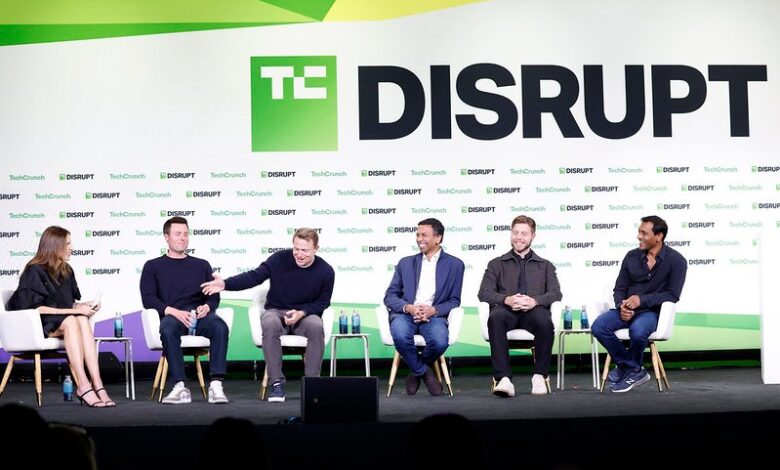
Changes within the player roster can be notable. Three years ago, I met with four partners from Benchmark, and now three of those partners are no longer associated with the firm. Additionally, their capital commitments have evolved. Recently, Benchmark revealed plans to raise $2 billion through two funds, an unusual step in its 31-year history, which typically focused on smaller fundraising efforts.
During the recent TechCrunch Disrupt event, Benchmark’s five partners presented a united front, emphasizing their commitment to a measured investment strategy, contrasting sharply with many competitors racing ahead. While the pace of the global economy seems to be accelerating, Benchmark is maintaining its usual rhythm of making only two to three new investments per partner each year. Despite the overload of information in the market, their Monday meetings continue without a formal agenda. Even with various economic warning signs, they appear unfazed, attributing much of the concern to exaggerated reactions fueled by social media.
Here are some insights from Benchmark’s five general partners shared during their appearance at the event. Some comments have been shortened for clarity, and the full interview is available at the end of this article.
Benchmark has expanded, including a larger core fund and a new growth fund. How do you adapt to these changes while retaining the essence of Benchmark?
Peter Fenton: What remains unchanged is our core work: closely partnering with founders from the outset. This usually involves a long-term commitment of around 10-15 years, which defies scalability. We’ve also had to confront inflation; for two decades, our core fund stayed at $500 million, and we’ve just adjusted it to reflect current economic realities, which we admit was likely a strategic misstep.
Regarding the growth fund, it broadens our investment capabilities. Previously, we missed numerous opportunities that could have yielded significant returns due to our narrow early-stage focus.
Are you planning to make a limited number of investments with that $1.25 billion growth fund?
Fenton: Each of us has varied perspectives, which is one of the strengths of our partnership. Ideally, as noted in a well-known J.P. Morgan paper, we aim for the balance of concentrated portfolios, where a few investments generate the majority of returns. Thus, I envision making about four to six investments, maybe up to eight.
Ev, you’ve previously worked at Founders Fund, Bond, and Kleiner Perkins. How is Benchmark different?
Ev Randall: Every firm is fundamentally shaped by its members and their collaborative dynamics. Some firms are hierarchical, with numerous investment teams, while others are smaller partnerships. Early in my career, I gravitated toward smaller teams for their efficiency and the intimacy of decision-making. At Benchmark, the camaraderie was striking; the current general partners genuinely respect and learn from each other, which is a rare and appealing combination.
Jack, you recently joined Benchmark after raising a $275 million fund for your own firm in just a week. What motivated your decision to become part of Benchmark?
Jack Altman: It’s amusing because during a podcast with these partners, I sensed their commitment to being a small fund, but more importantly, their dedication to being the first call for founders resonated with me. In an industry often overshadowed by finance and prestige, the Benchmark team truly cares about supporting founders and nurturing companies. Although I enjoyed being an independent investor, navigating this fast-paced market alone felt daunting. Joining a group of bright, driven partners has been incredibly rewarding and a fantastic learning opportunity.
I hear you have Monday meetings without a defined agenda.
Chethan Puttagunta: Jack attempted to establish a structure. [Laughs]
Altman: I’ve got plans for next Monday’s meeting!
Eric Vishria: The format seems arbitrary but promotes ongoing discussions. In this fast-evolving landscape, we explore recent developments, companies we’re meeting, and relevant insights from board meetings. While a systematic approach has its merits, the beauty of our small team lies in our fluid interactions and genuine enjoyment of each other’s company. We’re even meeting an entrepreneur today who leads a multi-hundred-billion-dollar company, not a client, simply to broaden our horizons.
Puttagunta: The lack of a formal agenda provides space for spontaneity. If a founder needs support in securing an executive or partnership, all five of us can quickly mobilize.
In an equal partnership, can one member halt a deal?
Puttagunta: That’s ambiguous. We don’t have strict rules regarding that.
Altman: It’s uncertain; I kept waiting to see how others would respond.
Has it ever occurred?
Altman: Given our low deal volume, imposing rigid structures isn’t necessary. If we were looking at numerous firms, stringent processes would be essential. However, our rare investments make the lack of structure advantageous.
Fenton: Our brand excels because we don’t rush to label ventures as “winners” or “losers.” We maintain a sense of reverence for the plethora of possibilities. If a polarizing entrepreneur enters the room and not everyone in the room feels positively, it can hinder our partnership.
In today’s fast-paced business landscape, does it become easier to feel like you’re missing out if you don’t invest more often? Have you increased your investment activity?
Puttagunta: Our pace remains consistent. The reality of venture capital reveals that we can’t invest in every thriving company, which is entirely acceptable. When we identify an entrepreneur with commendable strengths, it’s our role to help amplify that. The specifics of their capital needs or structural preferences are secondary to that collaboration.
Founders are increasingly concerned about VCs investing in competing companies. Has this relationship shifted because companies are expanding into overlapping areas?
Vishria: We emphasize a commitment to entrepreneurs, vowing that we’ll work alongside them through any challenges. The truth is, companies adapt rapidly, leading to unforeseen conflicts. While we uphold confidentiality, we’re fortunate not to have encountered significant clashes recently.
Puttagunta: Ambitions are certainly heightened in the AI era. With the tools to create products becoming increasingly accessible, founders are eager to explore new opportunities, which may lead to overlapping interests. Maintaining respectful relationships during this evolution is essential.
Jack, have you made any investments at Benchmark yet? Did you feel pressured about your first deal?
Altman: Yes, I’ve made a few, some of which are still undisclosed. My background lies in software, but I’ve branched out into chips, robotics, and infrastructure. When I joined, I was told not to stress about the first investment. The reality is that many investments will follow, and the odds of the first one being a standout are typically low. I felt reassured by my partners who understood my perspective as an investor.
The collaborative dynamic is crucial for these decisions. I doubt I could have secured certain investments without my partners’ insights.
Eric, the AI chip company Cerebras was an unconventional bet for Benchmark at the time of investment. What led you to pursue it?
Vishria: We invested in early 2016, marking our first hardware investment in ten years. The founders had a clear vision, though I struggled to grasp much of the technical details. Just before their pitch, Peter expressed his doubts based on conventional venture wisdom, but after the meeting, he was thoroughly convinced. Our journey with the company has included numerous challenges, but it’s ultimately about connecting with a founder and their vision that drives us forward.
Fenton: The founders’ perspectives were not mainstream, and that’s precisely the zone we need to operate within as investors. If everyone agrees, what’s the point of starting a new company?
On a related note, Cerebras recently went public at $185, soared to $350, and is now back around $185. What’s your take on this?
Vishria: A month and a half prior to the IPO, I shared various stock charts with the team: some companies fluctuated dramatically within a year. The market dynamics are unpredictable, and while we can control certain aspects, public companies must manage that volatility as well.
Your former colleague Bill Gurley has argued that the IPO process is flawed, benefiting bankers instead of the firms themselves. Do you agree?
Vishria: I think I’m the only one here with direct experience in a direct listing. It can certainly be a viable option. However, for most AI companies that require substantial capital, traditional IPOs might remain the norm as they effectively raise funds.
Do you foresee a significant market correction? Many AI companies are facing cash flow challenges, and borrowing costs are rising. Character AI recently experienced bankruptcy, which some attribute to a cooling in the market.
Randall: Predicting market movements is often risky. One major shift I’ve observed since starting my investment journey is the abundance of information available. The recent fate of Character.AI illustrates the volatility bred by excessive hype in the sector.
Looking across the market, companies like CoreWeave and Nebius are performing based on the projected health of major AI players. There’s high demand, yet it’s met with operational challenges. The current AI ecosystem remains healthy, although public perception can be skewed by sensationalized narratives.
With prominent companies like OpenAI and Anthropic reshaping the tech landscape, is it essential for founders to be in San Francisco? Are you focusing on businesses outside California?
Altman: Founders don’t necessarily need to be in San Francisco, but it currently offers unparalleled access to talent, funding, and customers. While my colleagues and I do interact with companies outside this region, we’re daily in San Francisco, which certainly influences our investment tendencies.
Fenton: Historically, a vast majority of high-return investments have originated from companies founded in this region. Although success stories exist elsewhere—such as Shopify or Ramp—the unique ecosystem in San Francisco fosters a level of ambition and achievement that’s difficult to replicate.
Randall: In my interactions over the past year and a half, many non-SF companies express intentions of spending significant time or opening offices in San Francisco. Engaging with peers here truly elevates the quality of ideas and innovations in the AI landscape.