Behind the Scenes of the USB Flash Drive: A Surprising History of Computing’s Unsung Hero

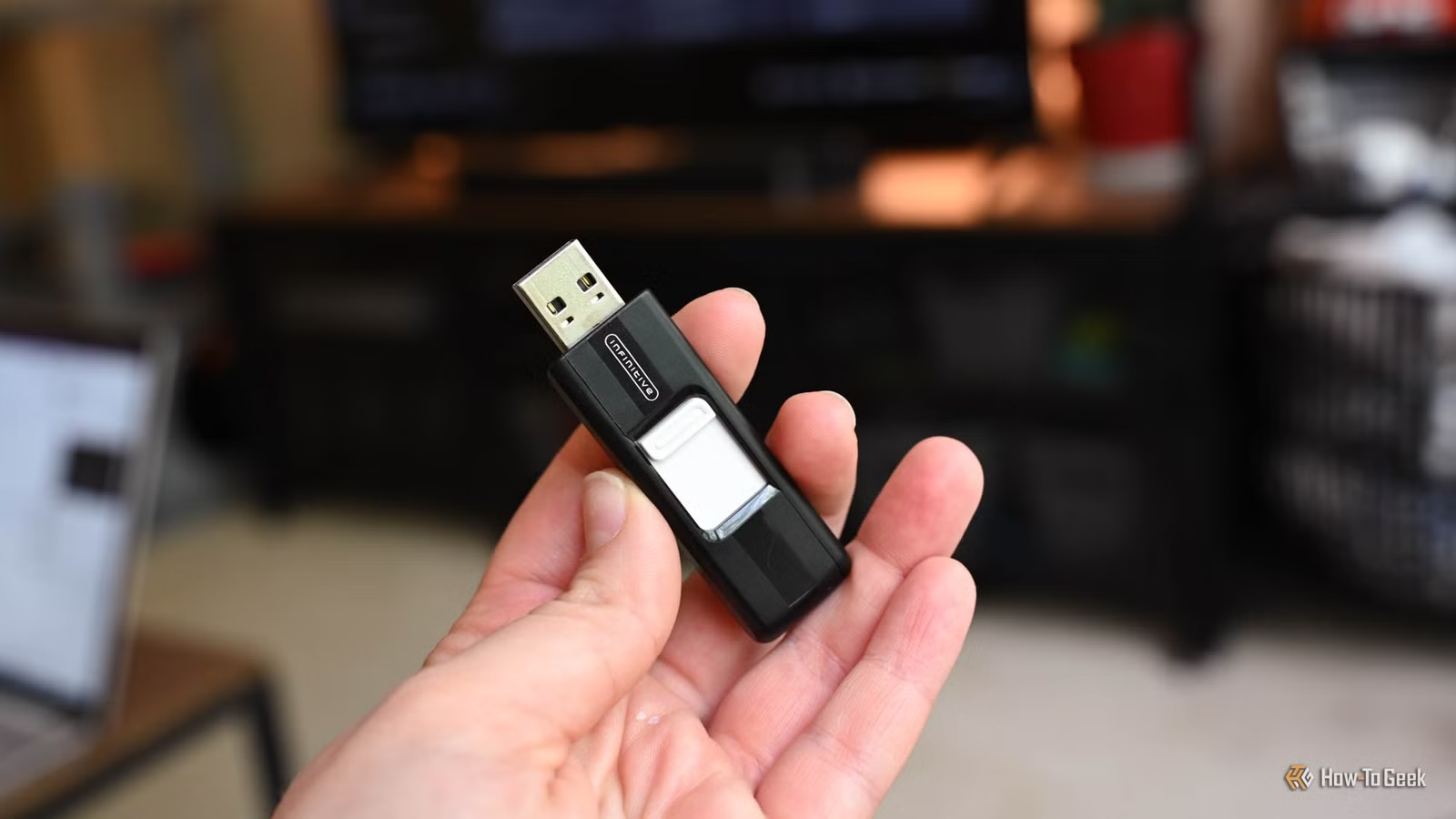
When glancing at a small USB drive resting on a desk, one might think it was the brainchild of a singular inventor who meticulously designed it from the ground up. While some technological innovations can indeed be traced back to an individual genius, the narrative surrounding hardware development often involves a complex interplay of various contributions, leading to disputes over who deserves credit. The USB flash drive is a prime example of this phenomenon.
The Necessary Technological Foundations
Earlier Technologies Set the Stage for the Floppy Disk Replacement
Long before USB flash drives made their way into stores, crucial technologies were being developed within the computing sector. By the late 1990s, assembling these components into a compact storage solution was a natural progression, as the groundwork had already been laid. Historical advancements pointed inevitably toward this eventuality.
In the 1980s, the seeds of solid-state technology were planted at Toshiba under the direction of Dr. Fujio Masuoka, who conceived the idea of non-volatile floating-gate semiconductor memory. This innovation was showcased at the 1984 IEEE International Electron Devices Meeting as NOR flash memory.
NOR flash memory allowed for byte-wise random access, making it superb for system firmware applications, but its design posed challenges in manufacturing due to costly individual contact vias and limited storage density. To address these issues, Masuoka and his team introduced the NAND flash architecture in 1987.
By connecting floating-gate MOSFET cells in series rather than in parallel, NAND flash reduced the need for direct contact vias, diminishing the size of each memory cell to about 60% of that of a NOR cell.
To transform NAND flash into a viable mass-storage solution, Toshiba engineers Riichiro Shirota and Koji Sakui refined the programming mechanics in the late 1980s, leading to the release of the first commercial four-megabit NAND flash chip in 1991.
During this same period, the USB standard was being developed, with Intel engineer Ajay Bhatt heavily involved. The official launch occurred in 1996, bringing significant features like hot-plugging—allowing users to connect or disconnect devices without rebooting—and providing five volts of power directly through the cable, eliminating the need for external power sources.
The establishment of the USB Mass Storage Class protocol further revolutionized data storage by enabling operating systems to recognize and manage external block storage without customized drivers.
This evolution essentially rendered floppy disks obsolete. By the end of the 1990s, floppy disks still offered a meager 1.44 megabytes of storage, were prone to degradation, and required bulky drive bays in computers.
Multiple Teams Aimed to Bring the Technology to Life
Global Companies Sought Recognition Simultaneously
Determining the true inventor of the USB flash drive is an intricate puzzle, as multiple contributors seem to have emerged around the same time. Between 1998 and 2001, a flurry of patent filings, internal proposals, product launches, and factory milestones occurred across various regions. The recognition of who should be credited largely depends on the perspective of the technology and the geographic location in question.
In April 1999, the Israeli company M-Systems, led by Amir Ban, Dov Moran, and Oron Ogdan, filed a patent in the United States, claiming a novel design for a USB flash disk that utilized non-volatile flash memory and a specialized controller ASIC.
In September 1999, IBM’s Shimon Shmueli drafted an internal proposal for a USB flash drive intended to replace floppy drives in ThinkPad laptops. However, IBM did not file a patent for this core concept.
M-Systems launched the product as DiskOnKey in late 2000, forming a partnership with IBM, which marketed the same hardware internationally as the IBM USB Memory Key.
After M-Systems’ U.S. patent filing, Chinese engineers Deng Guoshun and Cheng Xiaohua from Netac Technology applied for a similar patent in China, which was granted in 2002, followed by U.S. patents later on, underpinning their product, OnlyDisk.
Singapore’s Trek 2000 International, led by Henn Tan, was the first to showcase a USB drive publicly, releasing its ThumbDrive after filing a priority patent in Singapore in February 2000. Shortly thereafter, in November 2000, Malaysian engineer Pua Khein-Seng founded Phison Electronics Corporation in Taiwan, making strides by developing the first single-chip USB flash drive controller.
This innovation combined various functions into a single silicon chip, significantly reducing manufacturing costs and paving the way for widespread production.
The Complexity of Legal Recognition
Disparate Patent Laws Complicate Attribution
The simultaneous emergence of many contributors makes it challenging to pinpoint exactly when a unified concept of the USB flash drive appeared. Since no single entity originated the drive as we know it today, disputes over credit remain prevalent. Complicating matters further, patent jurisdictions vary by country, meaning that inventor recognition is inconsistent worldwide.
Focus on Progress Rather than Individual Attribution
Trying to single out one inventor oversimplifies the complex process of technological advancement. The legal landscape around USB flash drives is still convoluted. Ultimately, the more fascinating aspect of this tale is how these devices reached store shelves amidst the disputes over who rightfully conceived the idea.