Over the years, numerous Windows applications have emerged and faded away. As technology and user preferences evolved, many applications were replaced with more efficient alternatives, while others simply became outdated. Here’s a look at some of the once-popular Windows apps that may invoke a sense of nostalgia.
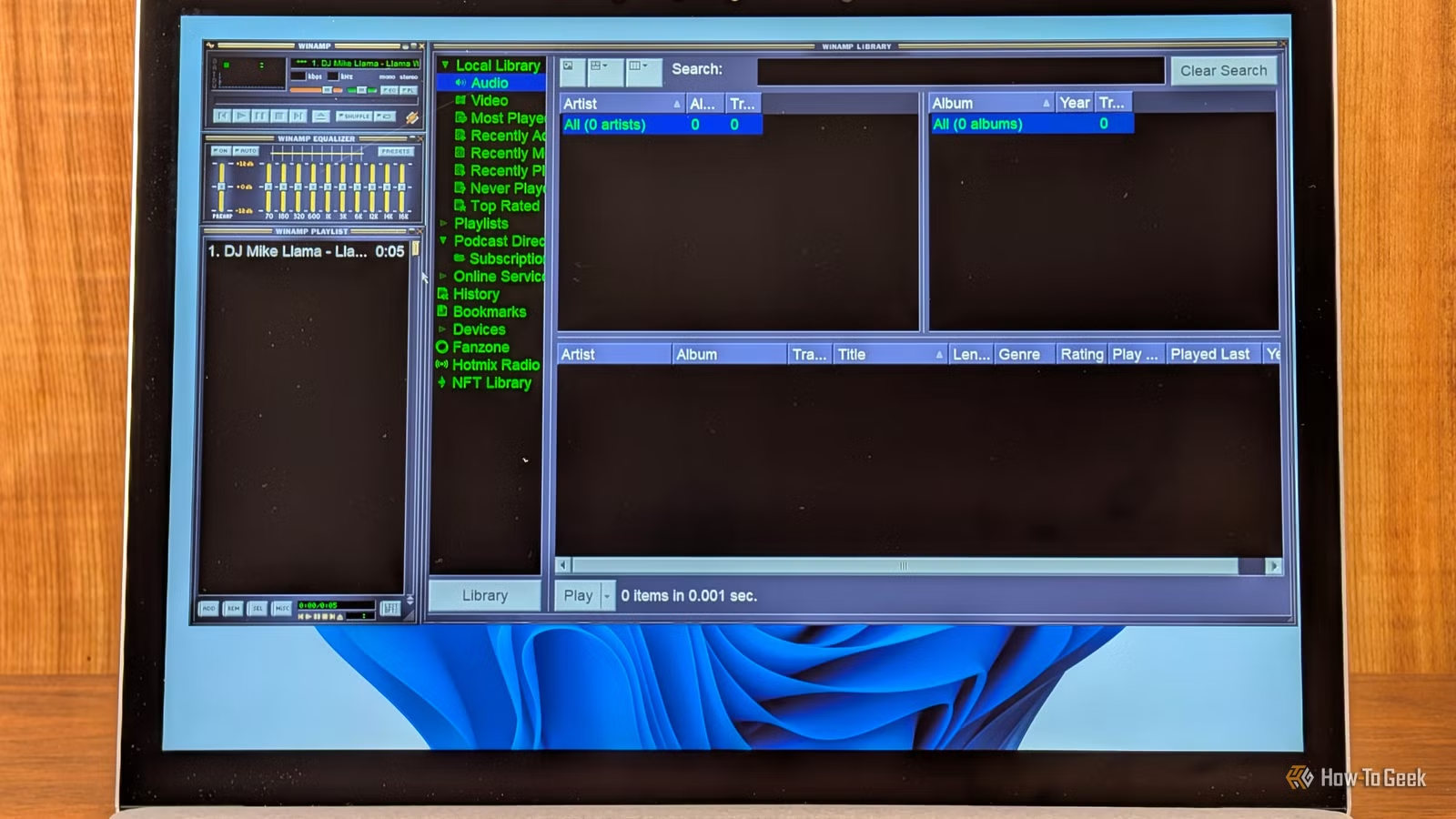
Winamp: The Customizable Music Player That Rocked PCs
A Small Player with Big Personality
During the late ’90s and early 2000s, Windows Media Player was often criticized for being resource-intensive and slow to launch. Users faced the annoyance of waiting for the application to load before they could enjoy their MP3 collections, which strained lower-end systems to the breaking point.
However, in 1997, a small but mighty freeware application called Winamp burst onto the scene, revolutionizing how music was enjoyed on personal computers. It was lightweight, requiring far fewer resources than its Microsoft counterpart, enabling users to play music seamlessly while engaging in other tasks on their PCs.
Winamp stood out not only for its efficiency but also for its iconic 10-band equalizer and its sleek interface that displayed playlists against a dark backdrop. Users could customize the look of their player with a variety of skins—from sleek designs to quirky sci-fi themes—making it highly versatile for individual tastes.
While Winamp still exists today, many users have shifted to music streaming services. Modern PCs offer significantly enhanced performance, making Windows Media Player a competent option now and further diminishing the need for third-party music applications.
MSN Messenger: The Chat Hub of a Generation
When “Logging On” Meant Something
For many who grew up in the early 2000s, MSN Messenger represented one of the first ventures into online communication, well before social media became ubiquitous. Opening the app after school to chat with friends for hours was a rite of passage.
This chat service, despite its age, was packed with features that transcended basic messaging. Users could set custom statuses, share what music they were playing, send playful nudges, and even video chat.
Microsoft consistently added fresh features and visual updates, keeping the platform engaging. However, as users began transitioning to alternative services, Skype became a viable option, offering integrated video and voice calls.
The rise of smartphones and messaging apps only accelerated the shift, leading Microsoft to acquire Skype in 2011 and eventually migrate MSN Messenger users to it in 2013, signaling the end of an era.
Windows Movie Maker: A Beginner’s Guide to Video Editing
Making Everyone a Filmmaker
While tools like Adobe Premiere Pro and Final Cut Pro now rule the video editing landscape, Windows Movie Maker was the go-to platform for many novices—often cited by YouTubers as their first editing experience.
This user-friendly application, taught in classrooms for its simplicity, allowed users to edit basic home videos without requiring detailed guidance. Its intuitive drag-and-drop functionality and organized timeline made it easy for anyone to combine clips and add transitions.
This basic utility fulfilled the needs of casual editors creating school projects or family video compilations. However, Microsoft ceased development of the suite that included Movie Maker in 2012, and by 2017, the application was officially retired.
Nero Burning ROM: The CD and DVD Burning Pioneer
Before USB Drives and Cloud Storage
In the days before affordable USB drives and cloud options, people relied heavily on optical discs to share files. Nero Burning ROM played a pivotal role during this time, allowing users to burn data onto CDs and DVDs with just the right software and a compatible drive.
This application was accessible enough for regular users while providing advanced features for enthusiasts wanting more control. It often came bundled with optical drives and preinstalled on OEM PCs, boosting its popularity.
However, as reliance on physical media declined, Nero’s user base shrank along with its relevance, although it continues to cater to a niche market of dedicated fans.
RealPlayer: The Streaming Pioneer Before the Internet Took Off
Always Buffering
Before streaming platforms became routine, RealPlayer was the application that allowed users to watch videos while they were still downloading. In an era of sluggish internet connections, this was a groundbreaking, albeit often frustrating, experience marked by constant buffering.
Despite its challenging performance, the ability to stream content was revolutionary. However, as browsers adapted with plugins like QuickTime and Adobe Flash, RealPlayer began to lose its foothold. The advent of YouTube dealt a considerable blow to the application, but it has managed to remain relevant in its own right by offering functions like video downloading and format conversion.
Reminiscing the Past
Many of these beloved applications have fallen by the wayside, but they undoubtedly evoke fond memories. Though some still exist in various forms, advancements in technology have rendered them less significant compared to modern solutions readily available across mobile and desktop platforms.