A Comparative Analysis of OpenAI Dot and Meta Muse: Unraveling Their Distinctive AI Features

While both AI agents allow continued operation after user engagement, they vary significantly in cost, permissions, and operational reach.
Meta and OpenAI have introduced AI agents designed to perform tasks independently instead of just waiting for prompts. Meta unveiled Muse on September 8, and three weeks later, OpenAI introduced its always-on agents in ChatGPT. Both agents can work continuously after users exit, manage cloud resources, and connect to third-party services.
The capabilities are promising: assign an AI a task and you won’t need to monitor it constantly. Muse is capable of shopping, filling out forms, planning travels, sending emails, and tracking prices. On the other hand, Dots can conduct ongoing research, interface with connected applications, and handle repetitive tasks, with OpenAI closely integrating these functionalities with ChatGPT, Work, and Codex.
Dots and Muse offer similar functionalities, yet user experience diverges

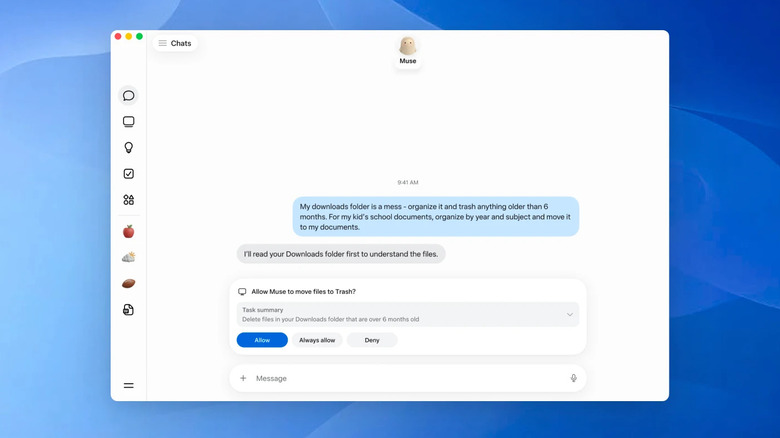
Muse operates on a dedicated Secure VM with its own browser, providing a communication style that feels like chatting with a person. It can be accessed via Muse’s applications, web interface, or WhatsApp, and can be linked to email and calendar services for enhanced capabilities. In hands-on evaluations, Muse successfully organized saved posts from Instagram and Facebook into curated collections of recipes and restaurants.
Conversely, Dot is integrated into ChatGPT and powered by GPT-6 Astra. Each Dot is equipped with its own cloud computing resources, has access to connected plugins, retains relevant context, and can perform scheduled tasks. Users are also able to grant Dots access to local files or the internet, with plans for managing multiple Dots concurrently in the future.
However, it’s important to note that these agents still require some level of oversight. Muse seeks approval before performing sensitive actions such as sending emails or making purchases. Similarly, OpenAI manages what Dots can do through permissions, custom rules, and automatic reviews, cautioning users that these agents may err. Even browser access is restricted; for example, Amazon has prohibited Muse from making purchases on its platform.
Muse presents a more affordable option, yet privacy controls are crucial for both
The primary distinction between the two agents is their pricing model. Muse offers a free tier with usage limitations, while its Power and Maximum tiers are priced at $20 and $100 monthly, respectively. In contrast, utilizing Dots currently requires a significantly higher subscription fee, with the base option starting at $100 per month for the Pro plan. The Business Premium option costs $100 per user monthly when billed annually, or $125 monthly when billed monthly.
Cost is not the only concern; the more accounts you connect, the more capable the agent becomes. However, this also involves granting access to your email, calendar, files, and browsing sessions, which many users may hesitate to provide. Meta claims that conversations and data within its Secure VM do not interact with its advertising systems, and users have the choice to opt-out of allowing interactions to enhance Meta’s AI models. Reports suggest that the model-improvement option is on by default, along with a default permission setting that only prompts for a selection of actions.
OpenAI indicates that activities from personal Dots could be leveraged to improve its models based on user settings in ChatGPT, while Business and Enterprise data remains excluded from training by default. Proactive Dot research is available in read-only mode until a subsequent action passes standard permission checks.
Access issues also arise; Dots are gradually being rolled out to qualifying Pro users outside the EEA, Switzerland, and the UK. Meanwhile, Dots are accessible to Business Premium users in supported ChatGPT regions, while Enterprise access remains in beta. Notably, OpenAI states that using Dots will not count toward usage limits unless they operate within ChatGPT Work or Codex. Currently, Muse is available exclusively in the US and Canada.