Instead of needing to download another application, an increasing number of digital assistants can now be texted like a regular contact.
You simply send a message specifying your needs, and these assistants can retain context, integrate with existing applications, and perform tasks on your behalf. This can include scheduling appointments, managing calendars, researching travel options, sending emails, making reservations, online shopping, or setting reminders for future events.
Currently, Instinct is garnering attention as a significant AI assistant, having achieved a valuation of $10 billion following a recent $1 billion funding round. However, several other players are also seeking to claim their spot in this evolving field.
Here’s a look at some noteworthy options available, ranging from versatile personal assistants to those tailored for families, travel, and workplaces.
Caddy
Caddy acts as an AI assistant, transforming your scattered information on your phone into actionable tasks. It integrates seamlessly with iMessage for iPhone users and RCS for those on Android, eliminating the need for a standalone app.
For example, if an email includes an appointment to add to your calendar or a friend shares a shopping list, Caddy connects to your conversations and calendars to manage these tasks effectively. It can add calendar events, set reminders, track follow-ups, and even conduct online research for you.
Caddy has been in public beta since April 2026.
Fambot
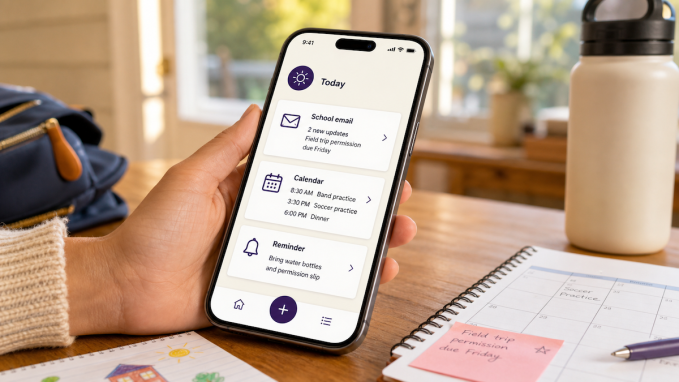
Fambot operates as a family-focused AI assistant, streamlining various aspects of family life, such as communication with schools, activities, meal planning, and everyday tasks into a cohesive plan.
Accessible via both an app and text messages, Fambot is available on iOS, Android, and the web, allowing families to interact through SMS. Every evening, Fambot sends a summary of the next day’s events, including tasks to complete, ensuring that parents remain informed and organized. Parents can respond to queries, verify information, and adjust their calendars as needed.
Currently, Fambot integrates with Gmail and Google Calendar, with support for Outlook and Apple Calendar expected in the future.
Launched in beta in early September 2026, the company has raised $3.5 million in pre-seed funding, and the service is free during this testing phase, with plans to introduce subscriptions akin to a Netflix plan.
Folk
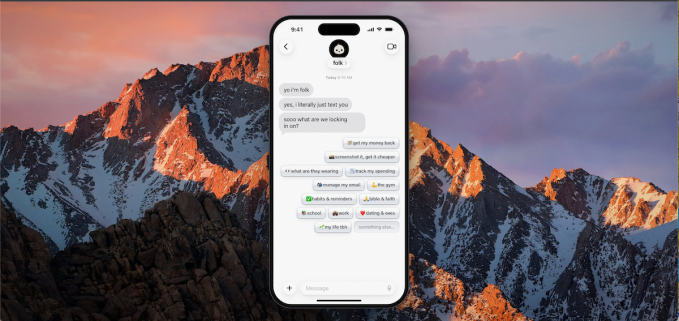
Folk is another AI assistant accessible via iMessage, WhatsApp, and Telegram, capable of retaining personal context and managing reminders, researching topics, tracking flights, handling emails, and executing real-world tasks like making reservations.
A unique feature of Folk is that it operates on its own private cloud system, enabling it to run code and manage multi-step processes beyond mere conversational responses.
Folk began its beta testing in May 2026, currently available for free, with a Pro subscription option at $8.33 per month for unlimited background tasks.
Instinct
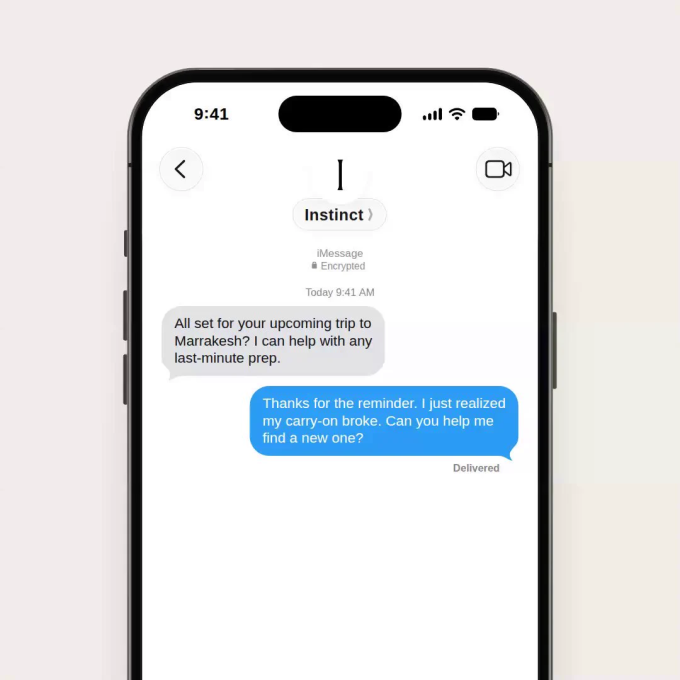
Instinct gained attention after securing $350 million at a $2.5 billion valuation, followed by a $1 billion investment in September 2026 that boosted its value to $10 billion.
This ever-present assistant can act on your behalf rather than merely answering questions. Users can communicate with Instinct via text or voice, allowing it to integrate seamlessly with apps and services like email and calendars. Early users have utilized Instinct for a range of tasks including travel planning, grocery shopping, ticket booking, and subscription cancellations.
In September, Instinct introduced dedicated email addresses for its users, enabling it to create and manage accounts independently without cluttering personal inboxes. The agent uses its address to sign up for services, follow up with businesses, and perform tasks that require email assistance. This high level of autonomy, however, has raised some privacy and security concerns. Support for making calls is also being rolled out.
The company remains in private beta at this time.
Iris
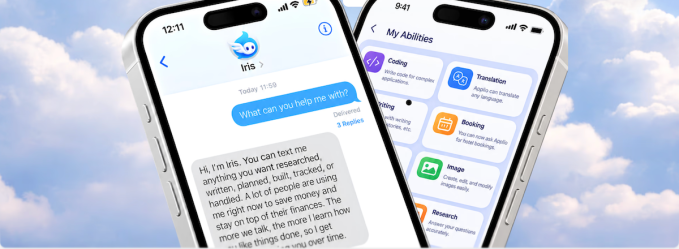
Iris utilizes the Hermes framework to enable users to assign tasks directly to an AI assistant via iMessage. Users can connect their favorite applications, and delegate tasks through a simple message. The assistant then navigates the required steps while keeping track of the context from previous interactions, proactively following up with users as needed.
Martin
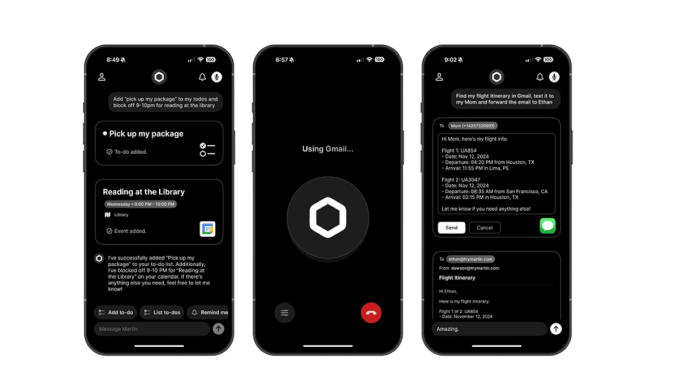
Martin serves as a versatile personal assistant that users can reach via SMS, phone, WhatsApp, email, Slack, and its dedicated iOS application.
It assists users in managing calendars, emails, reminders, tasks, and communications. Additionally, it can act on users’ behalf by sending messages or making phone calls, while providing daily briefings on items needing attention.
Subscription plans start at $21 per month, making it a more premium option.
Miso
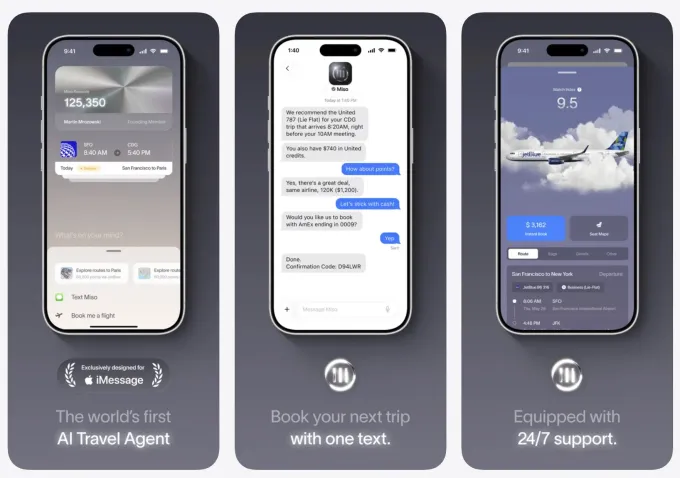
Miso specializes as a travel assistant, harnessing AI to facilitate trip planning while supported by a dedicated travel team.
Through iMessage, it enables users to manage travel arrangements by considering individual preferences and loyalty schemes. Miso also provides travelers with updates on their itineraries, flight information, and personalized recommendations.
Ohai
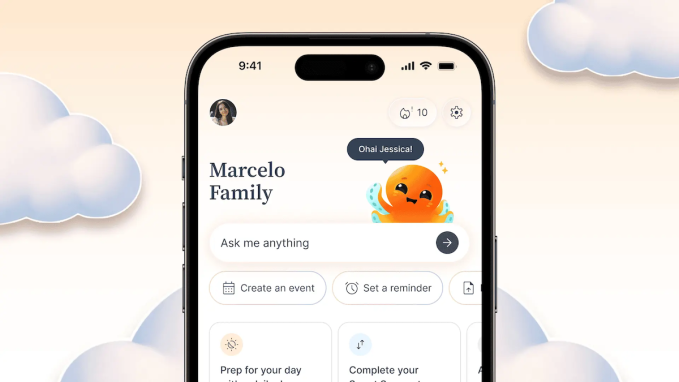
Ohai, much like other family-oriented assistants, focuses on aiding households in managing the floods of daily obligations and information.
Users can send messages, forward emails, or make voice requests, with the assistant converting these into schedules, reminders, and actionable plans. It can coordinate schedules, household tasks, and meal planning for multiple family members.
A basic free option is available, along with various subscription plans starting at $9.99 per month based on family size.
Ollie
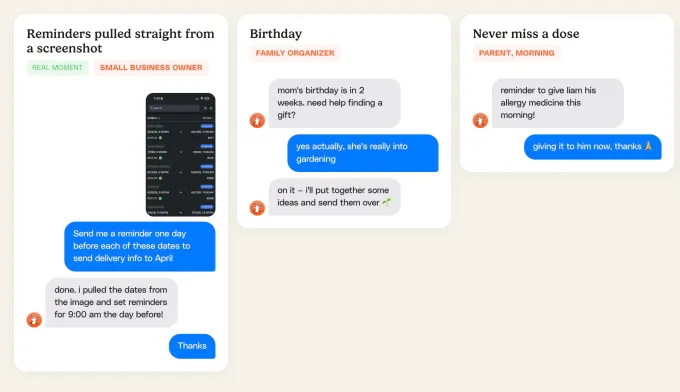
Following a similar approach to other family-focused digital assistants, Ollie seeks to integrate the multiple sources of information scattered across school messages, calendars, tasks, and group chats to provide a unified view.
It can track calendars, emails, reminders, and household tasks, then convey important information directly to users via text.
A key differentiator for Ollie is its achievement of SOC 2 compliance, a respected security standard. Launched in June 2026, Ollie provides a free tier, with paid plans starting at $25 per month for 150 messages, and another option at $100 per month that allows for up to 1,000 messages.
Orbits
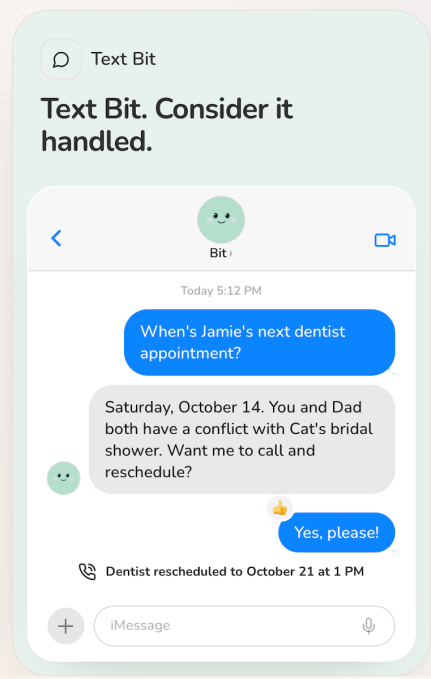
Orbits offers another AI assistant tailored for household management.
Accessible via the Orbits app and SMS, it consolidates schedules, lists, and communications while performing various tasks. These tasks may include online searches, placing orders, making reservations, rescheduling appointments, and obtaining quotes for home services.
Moreover, Orbits can send reminders for chores and communicate with service providers, helping to coordinate responsibilities for the household and beyond.
Investors backing Orbits include Andreessen Horowitz (a16z), Speedrun fund, N49P, and Garage Capital.
Pally
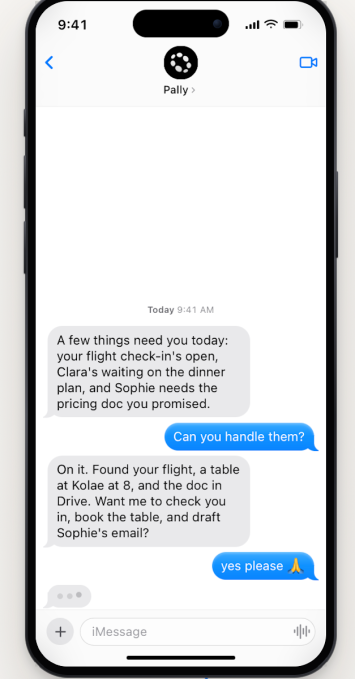
With Pally, users communicate as if they were texting a friend, granting it access to their existing apps. This assistant integrates data from various services like WhatsApp, Gmail, calendars, and Google Drive, helping users keep track of plans, receipts, important dates, files, and other information.
A free tier is available, which includes 15 minutes of calls monthly, along with paid plans that start at $25 per month for 30 minutes of calling and $100 per month for 60 minutes.
Poke
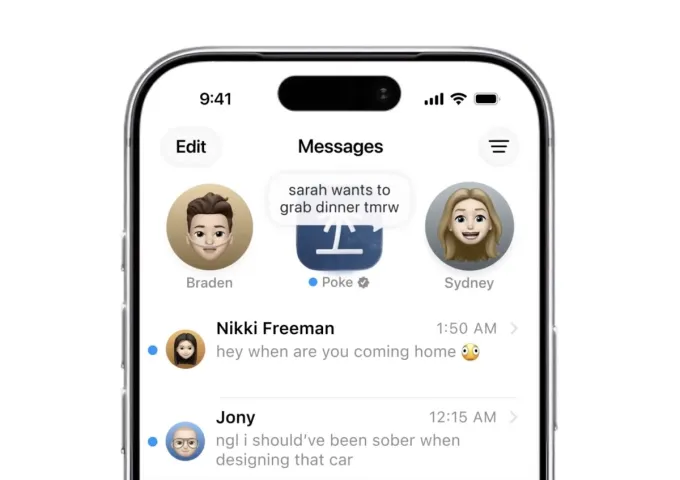
Poke was introduced in March 2026 as a comprehensive assistant accessible through text messaging. It can manage tasks related to scheduling, health and fitness, smart home controls, photos, and typical daily activities.
This assistant gained distinction in June 2026 when it became the first AI agent approved for the Apple Messages for Business platform. The following month, the parent company, The Interaction Company of California, was acquired by Cognition, an AI coding startup, in a deal valued in nine figures.
Rene
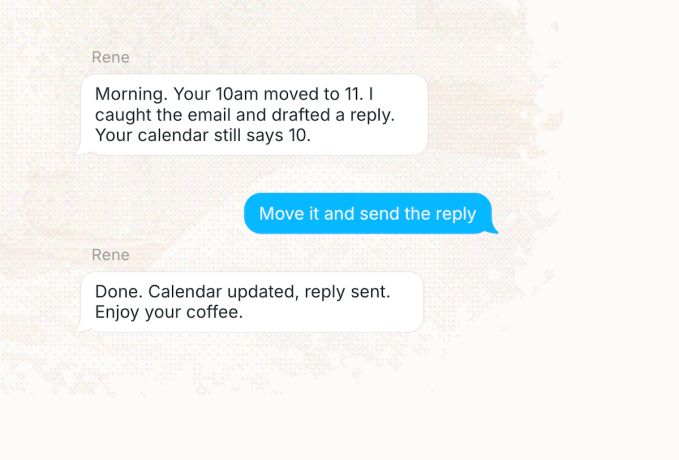
Rene serves as a personal AI assistant intended to act as a “best contact” instead of just another productivity tool. It allows for text-based interactions and can convert natural language conversations into actionable reminders, tasks, and follow-ups. Rene maintains context and can bring relevant details to the forefront when necessary.
Additionally, it incorporates a web browser, can write code, shop on behalf of users, and create presentations or images.
Rene is available through iMessage, Telegram, and WhatsApp.
Skye
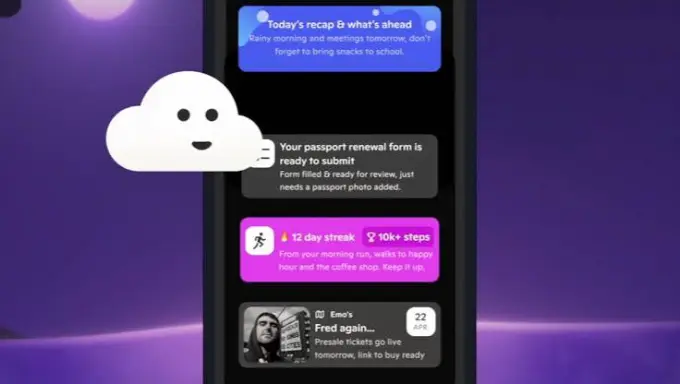
Instead of waiting for users to open an app, Skye operates as an “agentic homescreen” for iPhones. It analyzes information from linked services and presents relevant insights through contextual cards, suggestions, and daily overviews. The assistant can deliver audio briefings, prepare data ahead of meetings, surface reminders, and clarify useful information on demand.
Signull Labs reported raising about $3.6 million in seed funding in 2025. The platform entered private testing and beta in April 2026, although a public release date has not yet been announced.
Stanley
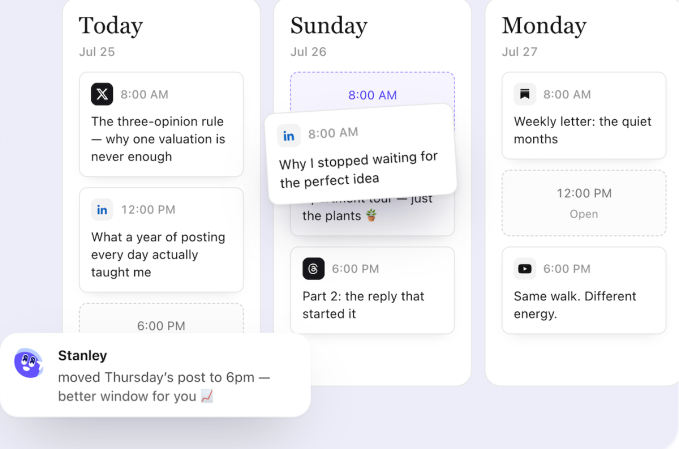
Stanley caters specifically to content creators, serving as an AI assistant for managing content rather than general productivity. Available through iMessage, Telegram, and the web, it functions as a virtual content manager, aiding users in generating content ideas, transforming them into posts, and maintaining a publishing schedule.
Stanley can connect to users’ social media accounts, using that information to propose content aligned with their activities. Users may also send voice notes, which Stanley can convert into scripts, captions, and other marketing assets. It includes a planning calendar and can schedule posts to facilitate a seamless content creation process.
Tomo
What sets Tomo apart from traditional personal assistants is its capability to participate in group conversations. Designed for collaborative goal setting, accountability, scheduling, and organization, it can send reminders, conduct web searches, integrate with calendars and emails, and even create and edit photos and videos.
A basic subscription plan is available starting from $19.99 per month.
Town
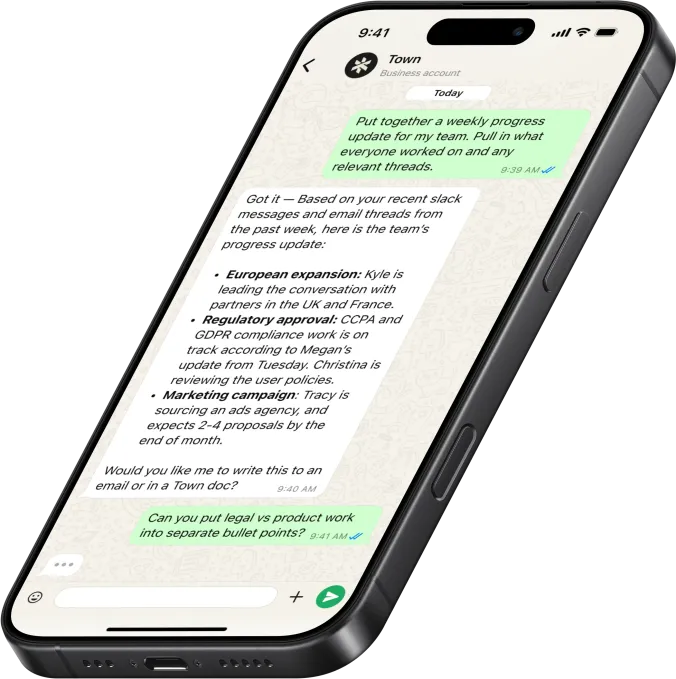
Town is geared more towards professional endeavors, providing users with a “Townie” AI that adapts to their workflow and manages recurring tasks. It can integrate with email, calendars, documents, Slack, and more.
In June 2026, the company secured a $55 million Series A funding round led by Andreessen Horowitz and Forerunner.
Wajo
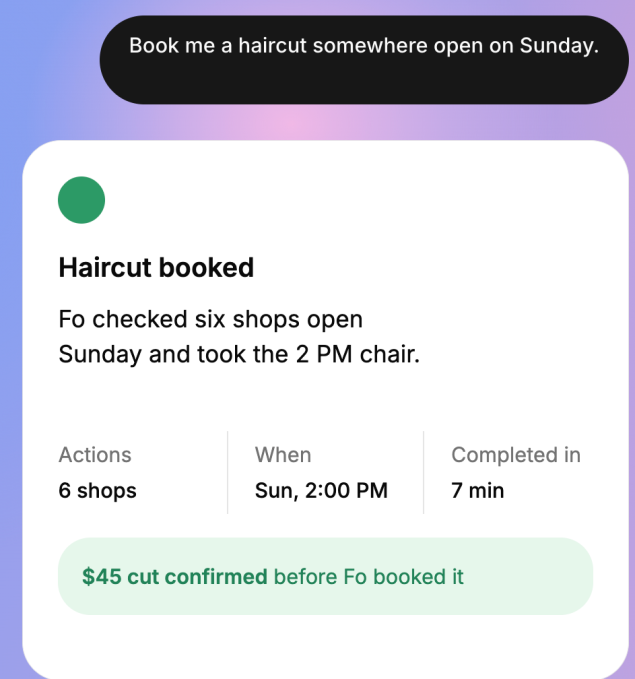
Wajo introduces its first consumer agent, Fo, capable of calling businesses, sending emails, participating in group chats, making reservations, and coordinating with stakeholders to accomplish everyday tasks.
A key aspect of Wajo’s strategy is providing Fo with its own identity, including a unique email address, phone number, and payment method. This allows Fo to interact independently with companies without needing the user’s private credentials.
Significantly, when Fo encounters challenges it cannot resolve independently, Wajo has the ability to involve a human assistant to ensure task completion.
Fo was publicly released in September 2025, offering a free tier and options for heavier usage through a paid Pro offering.
When you purchase through links in our articles, we may earn a small commission. This doesn’t affect our editorial independence.