Ethernet cables might appear to be simple devices: just plug them in to access the internet. However, there are several nuances to consider, such as the implications of cable length on connectivity and proper routing to avoid damage, which can make Ethernet cables more complicated than they seem.
Your Ethernet Cable Shouldn’t Be Supported by the Connector
That Small Boot Isn’t Meant to Bear Weight
To diverge slightly, you might recall recent issues with Nvidia’s GPU connectors, which led to certain graphics cards and power supplies catching fire. The culprit was largely user error, as bending connectors that need to be firmly seated is detrimental to their function.
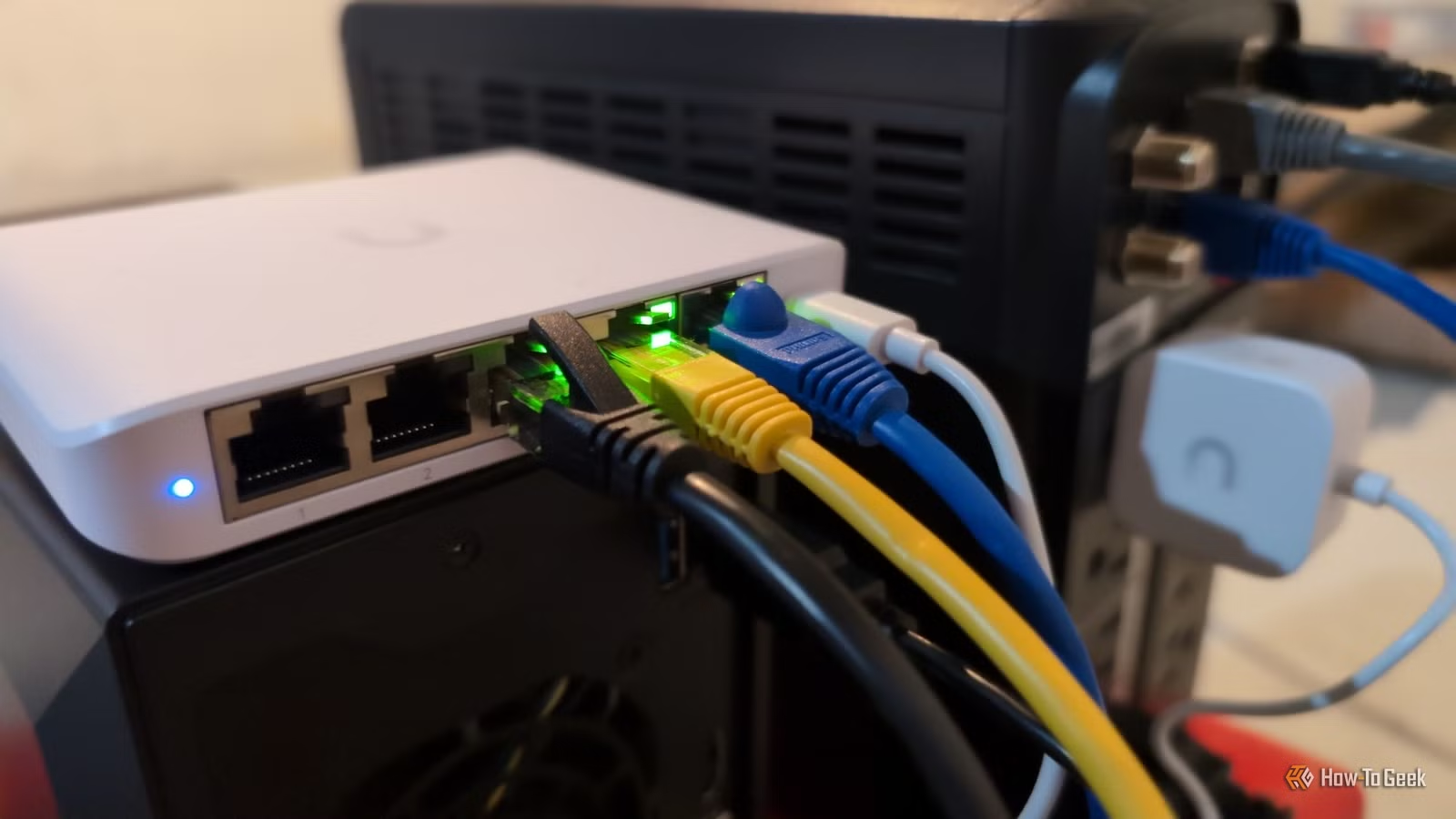
With Ethernet cables, while the stakes might not be as high, the general principle remains: avoid bending the cable. When you connect an Ethernet cable to your router, switch, PC, or access point and then push it downward or sideways, the connector can end up having to support part of the cable’s weight, which puts stress on the bent section behind the plug.
This practice can contribute to premature wear. The boot at the back of an RJ45 connector is designed to alleviate strain by distributing force over a larger section of the cable. However, this boot shouldn’t substitute for proper cable management.
If your cable is continually tugging in different directions, you’re accelerating its degradation. While Ethernet cables are robust, they can suffer damage, leading to issues down the line if you’re not cautious.
A Sharp Bend Can Cause Issues Long Before Breakage
Ethernet Is More Sensitive to Geometry Than Power Cables
To be honest, I don’t always treat my Ethernet cables with the utmost care. They’re relatively inexpensive and durable, yet you don’t need a complete failure for connectivity issues to occur. A tightly bent or crushed cable can distort the copper wire pairs inside, interfering with signal clarity.
That’s why recommendations often advise maintaining some space between the cable and surrounding walls; for a Cat6 cable, the guiding principle is about four times its outer diameter.
If these guidelines are neglected, you might encounter problems like packet loss, unstable connections, or lower speed negotiations. Thus, you may find yourself contacting your internet service provider, only to discover the issue originates from your own setup.
A Tightly Bent Cable Isn’t Necessarily Doomed
The Key Is Bend Radius
While avoiding unnecessary wear on your Ethernet cable is wise, a tightly bent cable can still function properly if it adheres to its specified bend radius. Tests on Cat6A high-flex patch cords showed that even when bent at the recommended radius for extended periods, they exhibited no significant performance drops.
The success hinges on not forcing the cable into tighter bends than it can handle. Smooth bends at acceptable angles can be fine, whereas sharper angles can lead to damage.
I No Longer Use Patch Cables for Long-Term Installations
The Flexible Segment Should Only Extend the Last Distance to Your Device
All the advice above leads me to suggest keeping the permanent cables distinct from the more flexible patch cables that connect to your devices.
The section nearest to your device is also where bends are likely to occur. While giving ample space would be ideal, I recognize that such arrangements aren’t always possible. Thus, it’s practical to use shorter patch cables for these connections since they typically consist of stranded conductors that allow them to withstand the bending and movement often seen in that area.
For the longer runs, I prefer to utilize solid-core Ethernet cabling, terminating it in wall outlets or keystones, before connecting a shorter patch cable for the final stretch.
Ensure the Cable Has a Path Before Plugging It In
No matter the type of cable—whether Ethernet or something else—the best approach to ensure longevity is to use it according to its design. While challenging to adhere to, doing this will ultimately benefit your connectivity.