This year has brought a mix of excitement and concern in the 3D printing world, marked by innovative models, refreshed favorites, and major advancements from various companies. However, certain developments have led to a sense of skepticism that wasn’t present in the previous year.
Bambu Lab Facing Backlash Again
Legal Concerns and Cloud Restrictions
Bambu Lab has consistently stirred controversy since mid-2025, particularly after introducing a “security” update for its printer firmware. This update restricts printers from communicating with non-Bambu Connect slicers via the cloud.
Bambu Connect is a proprietary plugin; without it, slicers lose the ability to operate with Bambu Lab’s cloud-enabled printers. Users who refuse to adopt this software must switch their printers to LAN and Developer modes, resulting in the loss of vital cloud features like the Bambu Handy mobile application.
The situation escalated when a developer attempted to restore cloud access for an OrcaSlicer variant, only to face legal threats from Bambu Lab, which led to the project’s shutdown. This incident sparked a larger discussion about the open-source integrity of Bambu Lab’s slicer, originally based on Prusa Slicer under a GNU “copyleft” license.
The company’s actions not only frustrated many users but also caught the attention of consumer rights advocates. The controversy intensified due to the “Streisand Effect,” ultimately prompting OrcaSlicer, a third-party alternative, to incorporate Bambu Connect as an optional add-on.
This move reinforced opinions that Bambu Lab’s restrictive policies are less about user security and more about fortifying its enclosed ecosystem. While Bambu Lab consistently produces quality printers, the uncertainty surrounding its future grows increasingly worrisome.
Poor Customer Communication Strategies
The ongoing debate over the use of 3D printers for illegal activities remains a significant concern. Flashforge contributed to this discussion in a poorly received way by releasing contentious advertisements on social media that incited anger among users.
Their messaging indicated that “violations may lead to account termination and referral to authorities,” which caused many users to opt for offline printer modes, fearing surveillance of their printing habits. This response underscores a growing anxiety over potential restrictions on the liberties currently enjoyed by 3D printer owners.
It’s worth considering how such language would be perceived in other sectors, such as the automotive industry. Regardless of one’s stance on the dangers posed by 3D printing, terms like “referral to authorities” would be unwelcome in any promotional material.
Mixed Reactions to Prusa’s INDX
What Happened with Prusa?
Credit: Source Name
Prusa is well-known for its high-end printers, garnering a dedicated following among enthusiasts since its emergence from the RepRap movement. The company initially championed the open-source model but has gradually retreated from this stance, especially with its flagship Core One+ to compete with mass-produced rivals like Bambu Lab.
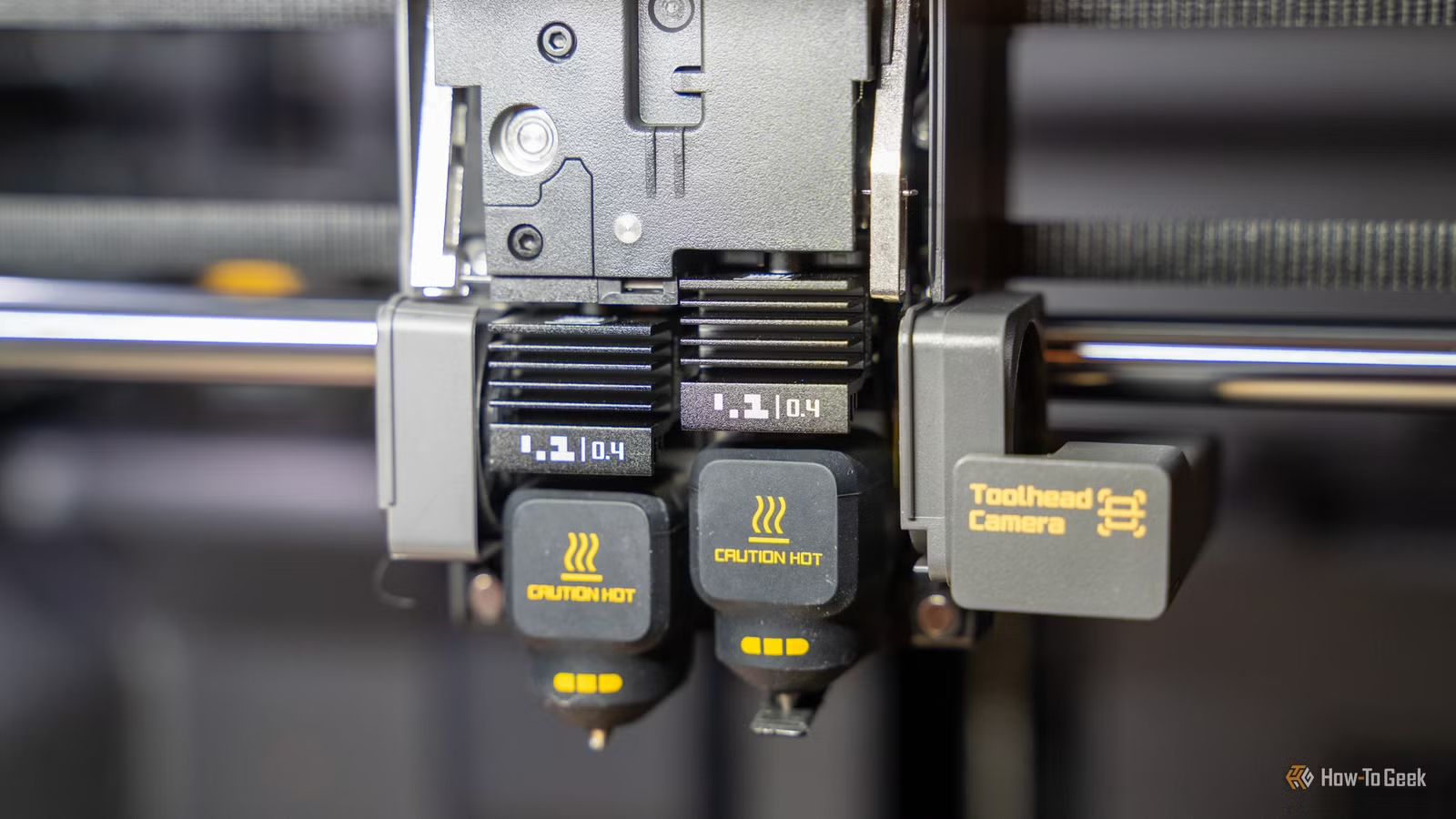
Despite rarely attracting criticism, Prusa found itself in hot water during the “Nozzlegate” incident concerning the INDX add-on. This tool, designed to facilitate multi-material printing, was developed in partnership with the Swedish company Bondtech.
The controversy arose when it was revealed that the promised hardened nozzles were not designed for prolonged use with abrasive filaments, leading to frustration among consumers who were already growing restless with delays.
The Present Landscape of 3D Printing
Negative Attention
Credit: Source Name
Over the last few years, 3D printers have advanced significantly. Features like automated bed leveling and calibration are now standard, and printers can guide users through maintenance tasks such as cold pulls. Swapping nozzles has become a hassle-free process, and many devices can identify loaded filament or detect when prints are no longer adhering to the bed.
Currently, the focus has evolved beyond mere print quality. Manufacturers are addressing challenges like waste generation from multicolor prints while also emphasizing the advantages of large-scale production, all while navigating the need to “protect” their communities and ecosystems.
The 3D printing landscape has moved beyond initial leaders like Prusa and Bambu Lab. Today’s environment is characterized by corporate excess, marketing blunders, and challenges associated with ambition outweighing capability.
For those new to 3D printing, consider exploring a glossary on the subject along with advice on selecting the “ideal” printer.