With the rise of 3D printing in recent years, the prevalence of rigorous “torture tests” for these machines has diminished. This trend is not coincidental; it reflects the advancements in technology and quality that have emerged in the 3D printing industry.
Understanding 3D Printer Torture Testing
More Than Just Benchy
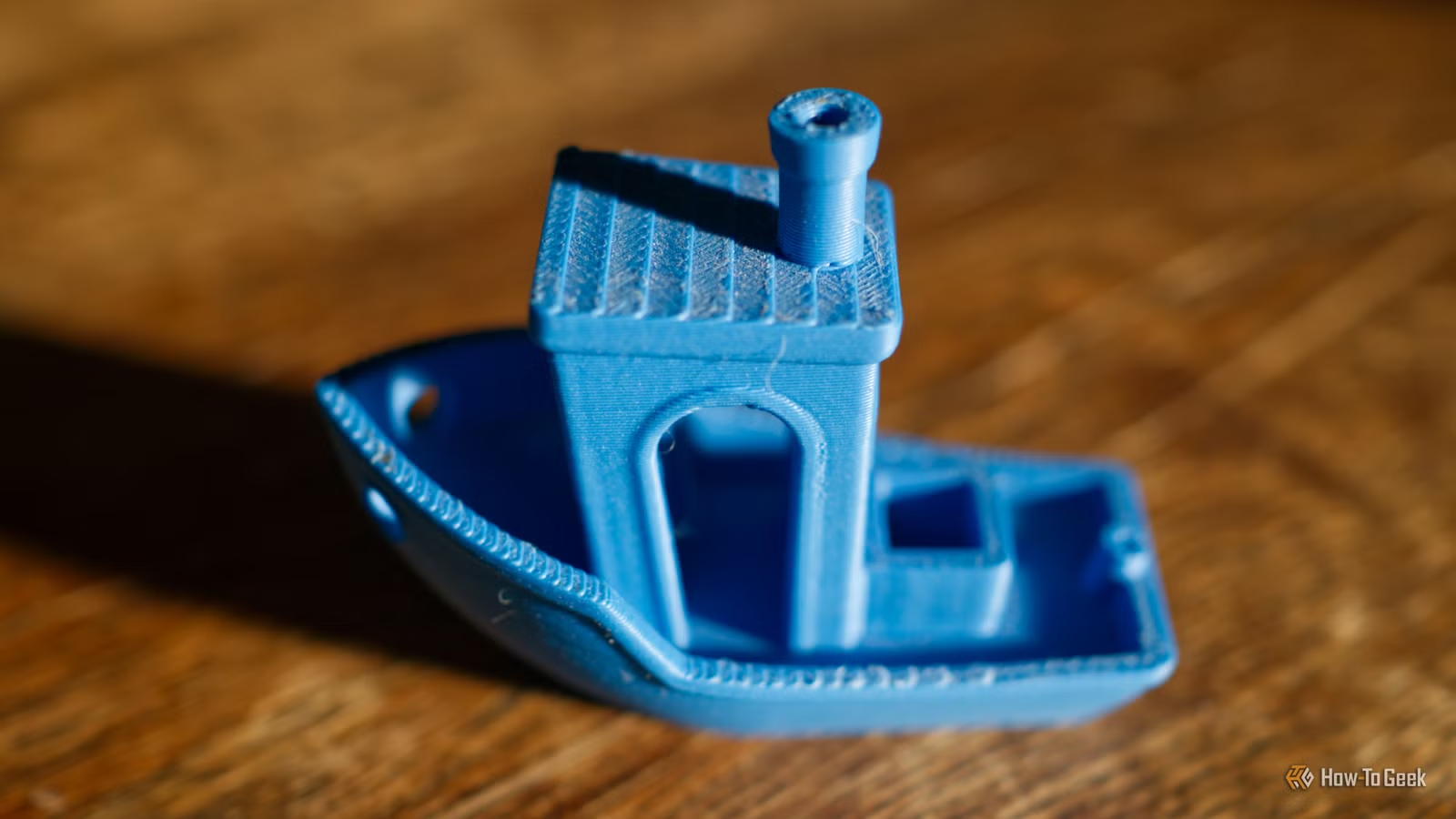
Torture testing refers to challenging a 3D printer to gauge its capabilities. The objective is not to destroy the printer but to identify its limits. The 3DBenchy is the most recognized test, serving as an unofficial symbol for 3D printing enthusiasts.
Introduced in 2015, 3DBenchy incorporates various demanding elements into a design resembling a charming boat. Its large, smooth hull evaluates the printer’s ability to create overhangs without support, while its uniform shape helps detect warping. Inclined surfaces target issues like “stepping,” and the text areas test the printer’s precision in detail reproduction.
While many new 3D printer owners start their journey with the Benchy, there are other more complex tests available. One such model is the Torture Toaster, which features movable parts designed to simulate a toaster’s functionalities.
This test introduces challenges like bed adhesion due to minimal contact points, where prints can easily shift or detach. Moreover, issues like ‘elephant footing’—where lower layers spread out too much—can affect the print. Stringing, which appears as unwanted strands between sections, can hinder the operation of moving parts.
Although users are still welcome to download and print these tests, they no longer hold the significance they once did.
The Evolution of 3D Printing
Modern Printers: A Significant Leap Forward
Historically, these tests were valuable for identifying printer issues or tweaking settings to enhance print quality. However, many traditional benchmarks have become less relevant as technology has improved. These tests were particularly crucial when building custom setups from standard components or manually calibrating machines was the norm.
Today’s newcomers are likely to opt for modern printers from reputable brands like Bambu Lab. Even popular brands like Prusa have automated functions like bed leveling and flow calibration, effectively addressing many issues before they arise.
3D printing ecosystems have simplified many aspects of the printing process. For instance, Bambu Lab filament spools contain RFID chips that communicate specific requirements to the printer, eliminating the need to manually adjust settings like temperature. Similarly, Prusa employs a comparable system via its OpenPrintag standard.
Even complex maintenance routines are now easily accessible through printer menus. For example, Bambu Lab models guide users through every step needed to clear blockages effectively.
Overall, modern 3D printers are vastly superior to those available five to ten years ago, resulting in high-quality outputs with significantly reduced complications.
Enduring Calibration and Torture Prints
Fun with Calibration Models
Many 3D printing enthusiasts have a Benchy or similar calibration models on display. While benchmarking may not be essential, many still enjoy running these tests to compare advancements in technology over time.
OrcaSlicer’s suite of calibration tools continues to attract users, with straightforward models like the Calibration Cube assisting in diagnosing persistent issues. The investment in time and filament for such prints is minimal.
Today, these tests seem to primarily interest journalists and reviewers who explore printers in-depth. Viewers can find numerous reviews and demonstrations online, diminishing the necessity for individual benchmarking.
As print quality has become less of a distinguishing factor in purchasing decisions, considerations such as budget, preferred materials, and the challenges of multicolor printing have taken precedence.
Although 3D printer benchmarking might seem outdated, the record for the fastest Benchy print remains a must-see for every enthusiast.