Navigating the Legal Landscape: Can AI Models Use Copyrighted Books for Training?

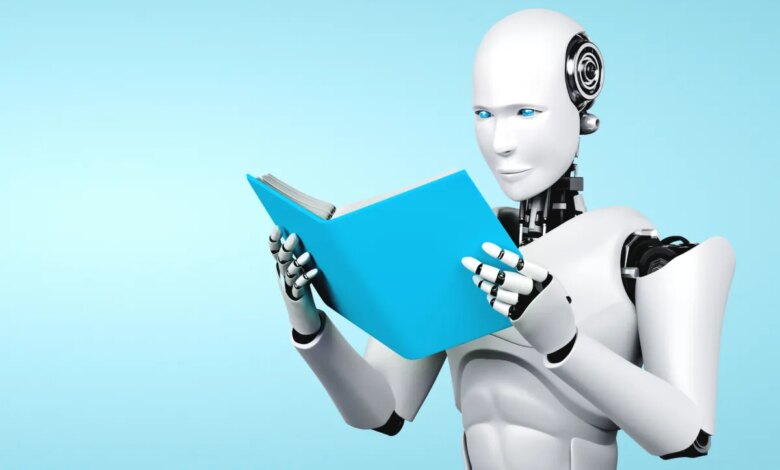
Many are aware that AI systems like ChatGPT and others are developed using vast collections of written materials, including books, articles, and academic papers. Consequently, many authors have unknowingly contributed to the creation of AI technologies that may threaten their careers. This raises questions about legality.
However, the situation is more nuanced.
Cathy Gellis, an attorney specializing in intellectual property and copyright, explained that the legal landscape around AI and copyright is complicated and filled with strong opinions on both sides.
In a significant ruling last year, Judge William Alsup mandated that Anthropic pay $1.5 billion in damages to authors whose works were utilized to develop its AI systems. While this appeared to favor the authors, the judge ultimately concluded that Anthropic’s training methods were legal, as the penalty stemmed from the illegal acquisition of materials from unlicensed online libraries.
Judge Alsup described Anthropic’s use of the text as more akin to how writers study literature rather than attempting to duplicate it verbatim. In his view, the AI models were not designed to replicate existing works but rather to innovate upon them.
Gellis suggests that the ruling may ultimately benefit AI firms, especially considering the substantial revenue projections that some of these companies have.
She noted, “The ruling is generally positive for AI training as it frames the issue as using copyrighted material for educational purposes rather than outright copying.” Copyright law primarily focuses on direct copying rather than the use or interaction with a work.
Copyright regulations, last revised decades ago, leave judges with the challenge of applying outdated guidelines to modern technological scenarios that could define the future of AI.
Jason Henderson, a senior attorney in intellectual property law, emphasized that the current state of the law is chaotic, prompting concerns about how the legal parameters are evolving in light of AI’s data usage.
Discussions around fair use—pertaining to whether a work’s use can be deemed transformative—are at the heart of many of these legal cases.
Fair use allows for the utilization of copyrighted material under specific circumstances without needing explicit permission, fostering activities such as criticism and education. Courts typically assess multiple factors in determining fair use, such as the intent behind the use, the quantity of material used, and its market impact.
Henderson pointed out that when a party’s use of a copyrighted work serves to directly challenge its market position, courts tend to view it negatively. Conversely, non-competitive uses are often deemed acceptable.
He referenced a case involving Thomson Reuters, where Ross Intelligence faced backlash for allegedly using its content to develop a competing AI-driven legal service. The judge in that case concluded that Ross’s usage was not transformative, as it did not serve a significantly different purpose than that of Thomson Reuters.
Although authors could argue that generative chatbots rival their work by producing new material, this has not yet succeeded in court.
Gellis believes it is crucial to clarify the focus of discussions regarding AI and copyright, as the debate surrounding training AI is distinct from the issues tied to copyrighting AI-generated content.
In a notable case, the court determined that completely AI-generated works do not qualify for copyright, which raises further questions about how to verify whether a work involved AI and the extent of AI’s contribution.
Gellis remarked, “Using tools like spell check does not grant those tools ownership of your content, which is a perspective we need to reconsider with AI.”
Currently, many AI companies find themselves embroiled in ongoing litigation over these complex issues, with no clear resolution in sight.
Gellis noted that early legal outcomes are influential, but future legal decisions could counter them, meaning ongoing litigation will ultimately clarify which interpretations will prevail. Nevertheless, the current rulings are shaping the AI landscape, and ignoring them would be unwise for these companies.