Two Years Post-Launch: Walmart’s Flipkart Gains Ground on India’s Quick-Commerce Titans

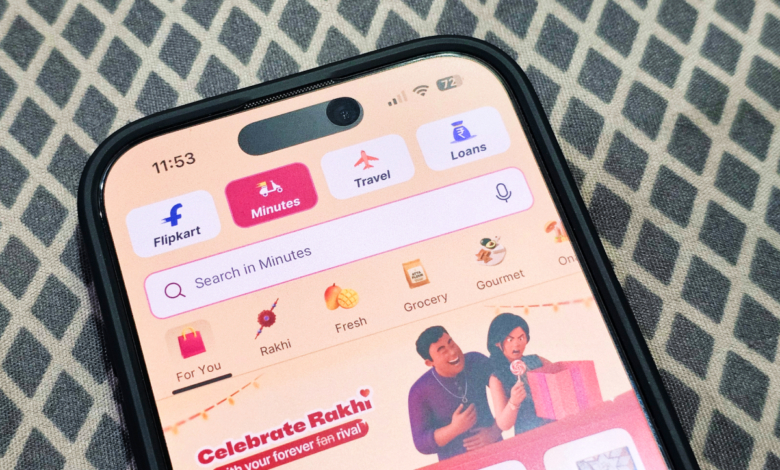
In India, startups have invested years in creating a culture where consumers expect rapid delivery of groceries and everyday items. Now, Flipkart, owned by Walmart, is quickly closing the gap with those pioneers of quick commerce, as Amazon ramps up its own instant delivery initiatives.
Launched in August 2024, Flipkart Minutes has rapidly increased its order volume to between 1.1 million and 1.2 million daily deliveries, a significant jump from around 390,000 to 400,000 in November. This positions the relatively new service close to Swiggy’s Instamart, which delivers approximately 1.4 million orders each day, according to insiders.
As a newcomer, Flipkart is entering an arena led by established names like Instamart, Blinkit, and Zepto. Swiggy introduced Instamart in 2020, followed by Zepto in 2021, during the pandemic, while Blinkit evolved from the earlier grocery platform Grofers, launched in 2013. Today, these three companies dominate India’s quick-commerce sector.
Currently, Blinkit holds the largest market share with about 3.4 million to 3.6 million daily orders, while Zepto follows with 2.4 million to 2.6 million estimates from Datum Intelligence. Flipkart has significantly reduced the gap with Instamart, the smallest in terms of order volume among the top three.
Instamart has a robust infrastructure, boasting over 14 million monthly active users and more than 1,200 dark stores across 130 cities. The company has also made strides in improving its contribution margins, with a portion of its dark-store network now profitable.
Flipkart, for its part, has rapidly expanded its delivery network. Currently, Minutes operates around 1,020 to 1,050 micro-fulfillment centers—small warehouses strategically placed for speedy deliveries—up from 600 in January and roughly 340 a year ago. The plan is to add about 100 of these facilities each month, aiming for 1,500 by the end of 2026.
In addition, Flipkart can leverage its vast existing customer base, built over years and significant investment, making it easier for Minutes to attract customers for immediate deliveries, according to experts.
“Flipkart is already a major player,” said an industry adviser. “Achieving 1,000 dark stores and a million daily orders is a serious milestone.”
The Minutes service is witnessing high customer retention, with 65% to 70% of its users making repeat purchases each month and individual transaction frequency climbing by 50% to 60% year-on-year. Customers typically spend around ₹400 to ₹500 (about $4.20–$5.20) per order, with categories like fruits, vegetables, staples, dairy, and meat experiencing significant growth. Flipkart is also broadening its range to include premium gourmet products to capture more customer spending.
Despite its expansion, Minutes has improved its average delivery times, now approximately 11 minutes, down from 13 minutes last year.
A Competitive Landscape for Indian Consumers
Flipkart’s rapid growth coincides with a shift in consumer behavior, with a growing preference for quick commerce amid signs of declining overall consumer demand. Recent insights indicate that while general consumption growth slowed in July, quick commerce platforms still demonstrated robust growth in active user engagement.
In parallel, Amazon is working to carve out its share in the Indian quick-commerce landscape, enhancing its Amazon Now service to adapt to this instant delivery trend. During a recent visit by CEO Andy Jassy to India, Amazon reported that Now has become its fastest-growing segment in the region, with its order volume doubling each quarter since its inception. The company also aims to expand the service to over 300 cities and establish a network of more than 1,000 micro-fulfillment centers to broaden its service offerings.
The competition in quick commerce is becoming a dual strategy for both Flipkart and Amazon, focusing on both offense and defense. As consumers increasingly expect instantaneous delivery, these e-commerce giants face the risk of losing business to specialized platforms if they cannot keep pace with available services.
“Can consumers revert to scheduled grocery deliveries? Absolutely not,” the expert remarked. “That expectation has permanently shifted.”