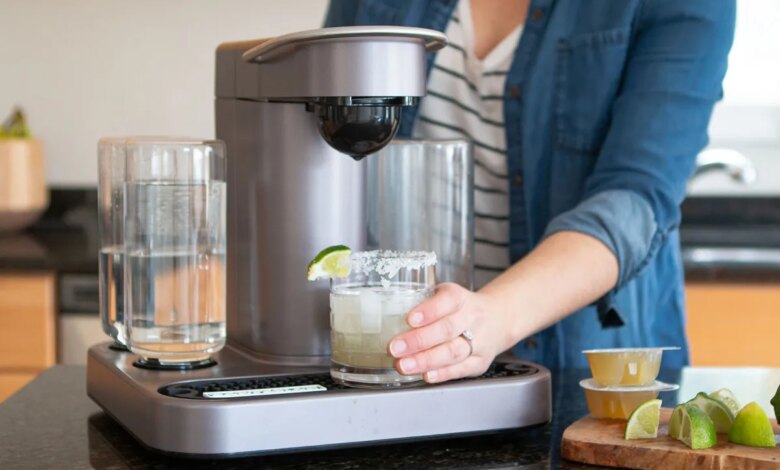
Bartesian’s cocktail machines are akin to a Keurig or Nespresso, but designed for mixed drinks. The Duet model I tested truly embodies this concept, allowing easy preparation of various cocktails at the touch of a button, alongside your chosen spirits.
While enjoying a raspberry ginger gimlet, I wondered: who is willing to invest in a $300 cocktail-making device?
There’s nothing fundamentally wrong with the device; it operates as intended. With its sleek design, you can load up to four different types of spirits and insert a Bartesian capsule containing concentrated mixtures for complex cocktails such as espresso martinis, watermelon margaritas, mai tais, and cosmopolitans. The capsule, equipped with a barcode, informs the machine of which spirits are needed, and you can specify your preferred strength, which adjusts the water used to dilute the concentrate. Afterward, you shake your drink with ice in the provided cocktail shaker before serving.
When I hosted friends to try out the Bartesian, we were intrigued by the novelty of this unique product. As we sampled our drinks, we debated the ideal customer for such an unusual appliance, especially considering it requires additional purchases of cocktail capsules priced around $2.50 each.
The Bartesian might not appeal to genuine cocktail aficionados, as the capsules lack any actual alcohol. For instance, a classic aviation drink would result in a non-alcoholic replica of traditional ingredients like crème de violette and maraschino liqueur.
Interestingly, my friends and I preferred the lemon drop capsules, where vodka is the only spirit we had to provide ourselves. It’s worth mentioning that recommending a Nespresso machine to a coffee enthusiast who values single-origin beans wouldn’t be advisable either.
This cocktail-making device also requires ample counter space, which could be a drawback for those limited in that area. Its sizeable dimensions suggest it is not meant for daily use, and the $300 investment might urge some to consume cocktails more frequently. If one already enjoys cocktails and has the financial means, they likely possess a well-stocked bar with premium liqueurs. Serving cocktails that don’t utilize real crème de violette might raise eyebrows among higher-end clientele.
Even though I view Tito’s as a decent liquor choice, I recognized an artificial taste in many drinks made with the Bartesian. My friends and I enhanced our beverages with seltzer and lemon juice, which improved their flavor, yet this modification somewhat undermines the machine’s convenience factor.
Perhaps my preferences differ from those of the Bartesian creators; a colleague previously tried another model and raved about it, particularly the margaritas.
Regardless of taste differences, I’m left questioning: who is this product truly meant for?
I see potential for the Bartesian in scenarios where hosting is common but hiring a bartender is not an option, allowing for the easy preparation of a diverse cocktail menu. One friend noted that it might appeal to older couples looking to entertain at their beach homes, while another indicated it could be a hit in retirement communities. Personally, I envision the Bartesian as a fun addition to a co-working space during happy hour—where free drinks are a delight—but there’s a reason why places like WeWork curtailed their free beer offerings in the past.