Historian Jill Lepore Critiques Silicon Valley’s Misinterpretation of Science Fiction and Its Threat to Democracy

In her forthcoming publication “The Rise and Fall of the Artificial State,” Jill Lepore cautions that technology firms are progressively taking over roles traditionally held by democratic governments. She believes this transition signifies “a regression to tyranny and confusion under the dominion of algorithms, corporations, and machines.”
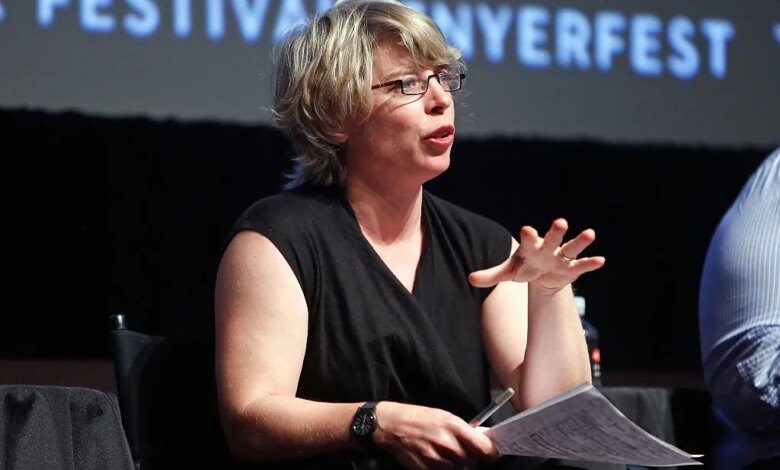
During a recent episode of TechCrunch’s Equity podcast, I had a discussion with Lepore, a Harvard historian and staff writer for The New Yorker, who recently garnered a Pulitzer Prize for her insights into the U.S. Constitution. We explored how the concept of being governed by machines, which she termed “the artificial state,” has developed over time.
“I’m not against technology,” Lepore emphasized. She clarified that her concern lies in “the ways in which private companies are increasingly assuming the responsibilities of the state.”
While her book delves into technocratic ideals dating back hundreds of years, Lepore contends that many prominent figures in Silicon Valley, notably Elon Musk, are paving the way for a future inspired by misinterpreted science fiction and comic narratives.
“Interestingly, the themes Musk is captivated by actually contradict his own political beliefs,” she noted.
Our dialogue also touched upon Apple’s iconic “1984” Macintosh advertisement, the absurdity of labeling Twitter a digital town square, and the backlash against data centers. Here are some key excerpts from our conversation, condensed for clarity and brevity.
Could you define what you mean by the “artificial state”?
The “artificial state” refers to a concept that is replacing the liberal democratic nation-state in the U.S. and globally. It represents both a physical reality and a philosophical idea.
In my book “The Rise and Fall of the Artificial State,” I examine how the concept of being ruled by machines has evolved. I also explore the notion of its inevitable failure, which is a recurring theme in science fiction.
You describe the emergence of the artificial state as a decline of democratic values and equal rights, labeling it “a return to tyranny and mystification through rule by algorithms, corporations, and machines.” Can you elaborate on this perspective?
Yes, I do hold a rather bleak view on this issue. I think it’s essential to differentiate between the artificial state and technology itself. I’m not opposed to technology—I’m married to a computer scientist and enthusiastic about various intellectual advancements we’re experiencing.
My concern is how private enterprises have been encroaching on the roles of government without public consent. This transformation has been a gradual and largely unintentional shift in the operational capabilities of nation-states, starting with the United States.
Initially, many technological innovations were introduced with good intentions, aimed at enhancing efficiency and affordability. However, in recent decades, these changes have become intentional attempts to usurp governmental functions.
Prominent tech entrepreneurs frequently speak about transcending the nation-state era, reflecting a long-standing libertarian sentiment prevalent among futurists since the 1990s and aimed at dissolving traditional governance structures.
Considering both technology and the underlying philosophies, do you think it’s possible to create an internet and social media landscape that avoids the dystopian future you allude to?
Absolutely. As a historian, my role is to unravel various possibilities and alternatives that were previously neglected.
Back in the 1990s, there was considerable discussion regarding the internet’s potential. Many would argue that the 1996 Telecommunications Act was a misstep, albeit not due to malicious intent. It was a reflection of the political climate influenced by figures like Newt Gingrich, which made it difficult to revisit those ideas later.
Similarly, as we think about personal computing’s evolution, we can trace its historical roots back to insights like the 1984 Apple Macintosh advertisement portraying mainframe computers as symbols of tyranny while promoting personal computers as tools of liberation.
That narrative ultimately proved misleading; while personal computers opened new avenues, it did not guarantee improvements in civic engagement or democratic participation.
Fast forward to today, we observe tech leaders making outlandish statements like proposing an AI president—indicative of how tech companies have adopted many attributes and roles of the government.
Regarding the so-called “Twitter revolution,” many believed it would catalyze global democracy. How should we view current assertions from leaders like Sam Altman that AI will bring unprecedented benefits?
Twitter serves as a great case study. Initially launched as a lighthearted platform, it morphed into a digital tool for politicians aiming to enhance their outreach and power, gradually being portrayed as a civic engagement tool—despite the fact that it mostly amplified extreme voices and did not represent the broader electorate adequately.
While Twitter didn’t intend to subvert democracy, its marketing campaigns suggested otherwise, leading to a distorted representation of political discourse.
Let’s discuss your book’s structure, which intertwines technological history with science fiction narratives. Why did you adopt this approach?
I was keen to explore how frequently science fiction predicts the emergence of the artificial state. I wanted to create a literary tradition that highlights stories where machines increasingly assume human roles, even evolving into rulers over humans.
This theme, prevalent in literature dating back to the 1850s, reflects societal anxieties about rapid technological advancement and its unforeseen consequences, and how people often equate technological growth with progress.
My work illustrates that a deeply embedded belief in technological progress often overshadows alternate views of improvement, which emphasize moral growth and societal advancement. This historical misalignment complicates contemporary discussions around technological innovation.
You suggest that tech leaders like Musk may misinterpret science fiction warnings as blueprints for the future. Do these interpretations stem from a deeper, libertarian philosophy within some sci-fi works?
Indeed, there exists a thread of libertarian ideologies within some science fiction that resonate with current tech leaders. However, the pivotal distinction remains that many of their interpretations contradict foundational tenets of their political beliefs.
Why do you believe the current iteration of the artificial state is ultimately bound for failure?
This prediction aligns with numerous science fiction narratives. To impose an artificial state, one must dissociate humanity from the natural world since reliance on it erodes both conditions. Ultimately, the artificial state cannot survive without a healthy environment, making its collapse inevitable.
As a historian, what does the dismantling of the artificial state entail? Is it simply about shutting down tech companies or creating regulatory frameworks?
I don’t have a definitive roadmap, but I advocate for a democratic approach where decisions are made with public input. The current discontent surrounding data centers is emblematic of larger issues where community voices are often sidelined.
Addressing these local matters can lead to broader political consequences and inform future elections, but this necessitates a functioning democracy that allows citizens to engage with their representatives meaningfully.
Reflecting on your earlier critique of disruptive innovation, how do you view its implications ten years later?
I maintain my stance on disruptive innovation as a concept that lacks the explanatory power to make sense of historical change. Academics should engage with technological narratives more meaningfully, as understanding history can illuminate the complexities surrounding new innovations.
Thank you for having me today.