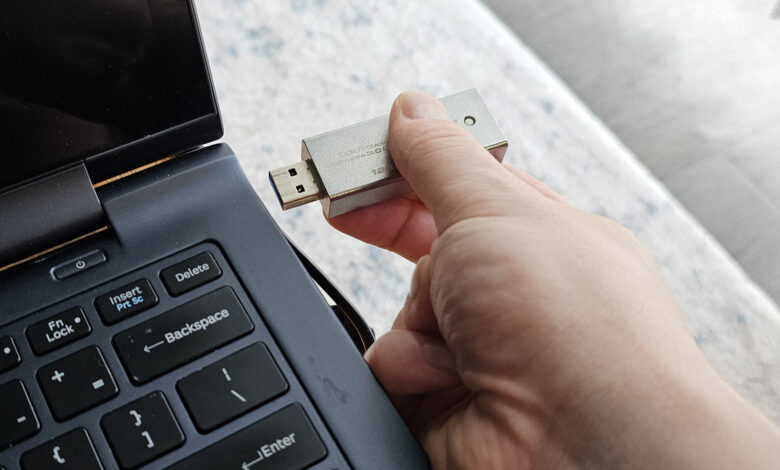
Flash drives have been a staple for quite some time.
USB flash drives have stood the test of time, first emerging in the early 2000s after replacing floppy disks as the preferred portable storage option. They gained popularity due to their much larger data capacity and faster transfer speeds. However, as technology has progressed, one might wonder whether these drives are becoming obsolete.
The Museum of Obsolete Media currently rates USB flash drives with a low obsolescence risk. As long as USB ports remain prevalent, these drives will likely continue to be useful. Additionally, the rising costs of alternative storage options may help maintain their appeal. Although there’s no definitive decline in flash drive sales, their use has diminished as more users work with larger files on advanced hardware, particularly in IT and creative fields.
So, are flash drives still valuable, or is it time to consider alternatives? That depends on your specific needs.
SSDs outperform flash drives in speed and capacity

As flash drives become less impressive, their limitations become apparent. Most models typically offer up to 128GB in capacity, which can be inadequate for larger files. Today’s smartphones can easily generate 4K videos, which require approximately 1GB of storage for each minute. Other types of large files, like ZIP archives or system backups, can quickly exceed what a thumb drive can hold. Even if the files fit, transfers are often slow.
In contrast, solid-state drives (SSDs) have emerged as superior alternatives. High-quality SSDs typically boast storage capacities of at least 1TB, alongside significantly faster transfer rates. They are also built to last, with many portable SSDs featuring protective casings and advanced memory controllers. Compared to traditional flash drives, SSDs offer a better return on investment in terms of longevity and performance. Furthermore, modern portable SSDs are more compact, typically fitting easily into bags.
With the advent of USB-C ports in many new laptops, using SSDs has become even more straightforward. While USB-C flash drives are available, **most portable SSDs** come with both USB Type-A and Type-C cables for maximum versatility.
The cost of SSDs makes flash drives an appealing choice
Despite any decline in flash drive popularity, the recent surge in demand for data storage—especially driven by advancements in AI—has altered the landscape. Since late 2025, SSD prices have skyrocketed due to increased demand, particularly for data centers. While SSDs were once affordable, their prices have surged, with a 4TB Samsung 990 Pro model previously purchased for $318 now listed at an astounding $1,100.
Meanwhile, prices for USB flash drives have risen too, but at a slower rate than SSDs. Importantly, their lower storage capacities—like a five-pack of 64GB USB 3.0 drives for $43—make them a cost-effective option for everyday users who simply need to transfer files or store documents. You can easily see spikes in interest for terms like “USB flash drive portable” in online searches since early 2026, indicating a renewed fascination.
Flash drives remain ideal for certain tasks, such as creating bootable media for operating system installs or running lightweight, portable applications. They offer practical solutions for users needing quick access to storage without tying up larger SSDs unnecessarily.