Unlocking Health Insights: How Smartwatches and AI Can Spot Early Illness Indicators

Long before any flu or COVID-19 symptoms appear, our bodies begin to exhibit subtle changes. While alterations in skin temperature, resting heart rate, or respiratory patterns might seem insignificant on their own, when assessed together and compared with one’s usual health benchmarks, they can suggest the onset of illness.
Studies indicate that wearable devices can identify physiological changes associated with respiratory infections prior to the manifestation of symptoms. For instance, recent research from Texas A&M and Stanford has found that smartwatches can detect preliminary indicators of COVID-19 and influenza just hours after exposure. Researchers estimated that encouraging early isolation, testing, and treatment could potentially reduce the spread of infections by as much as 50 percent.
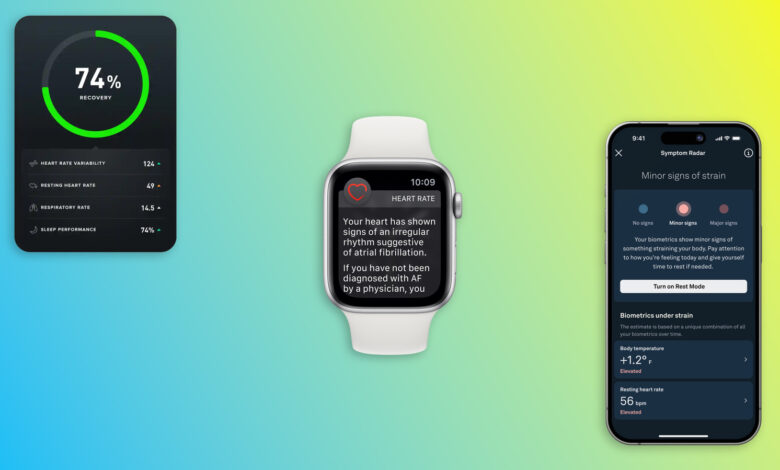
Although wearables, flu seasons, and pandemics have been part of our lives for years, advancements in artificial intelligence and sensor technologies may enhance these capabilities. Companies such as Google, Oura, and Whoop have begun integrating AI coaching or advisory functions into their applications, assisting users in interpreting their data.
Additionally, there are features not explicitly branded as “AI,” like Oura’s Symptom Radar and Apple’s Vitals, which synthesize information from various sensors and assess it against personal health baselines. The improved processing power of cutting-edge AI models, like Google’s Gemini featured in its Health Coach, is expected to play a crucial role in integrating these data points and recommending actionable insights. However, much of this AI-driven analysis will operate behind the scenes, potentially providing little to aid medical professionals directly.
Ultimately, AI health evaluations might encourage individuals to seek medical attention sooner. Conversely, they could lead some to rely on computer-generated recommendations instead of professional healthcare advice.
While current AI technologies encourage users to consult with healthcare providers, there remains a concern that individuals may overly depend on wearable data or app feedback as definitive health assessments. Whether it’s information gathered from a small sensor on your wrist or advice from an app’s chatbot, regular medical checkups with healthcare professionals are irreplaceable.
The future of wearable health technology is unlikely to resemble a wrist-mounted medical device capable of diagnosing illnesses like a fictional Tricorder. Instead, we can expect devices that quietly monitor health trends, prompt users when irregularities are detected, and provide valuable insights to discuss with medical practitioners.