NASA’s X-59 Achieves Key Speed and Altitude Goals in Preparation for Groundbreaking Silent Supersonic Test Flights

A groundbreaking aircraft is preparing for test flights over American towns.
The X-59 aircraft developed by NASA has recently completed its inaugural supersonic flight and has successfully showcased its ability to attain the necessary speed and altitude for upcoming overflights of U.S. communities. The design of the X-59 focuses on flying at supersonic speeds without generating the disruptive sonic boom that typically accompanies such flights; instead, it is expected to create a much quieter “sonic thump.” During current testing, the plane is flying in conjunction with another research aircraft that does produce a sonic boom to effectively mask any noises the X-59 may generate.
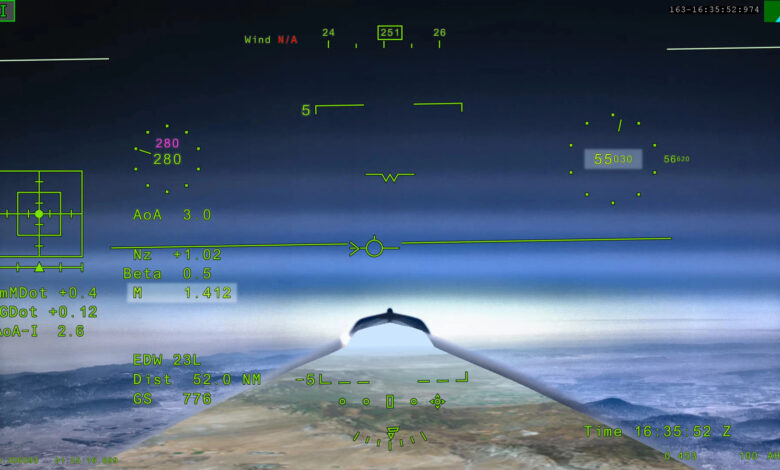
In a significant test flight conducted last Friday, the X-59 achieved a speed of Mach 1.4, approximately 924 mph, while soaring to an altitude of 55,000 feet. Earlier, on June 5, it successfully reached Mach 1.1.
This latest flight is considered a pivotal milestone by NASA as it confirms crucial parameters that will be consistent during its upcoming Quesst mission. This mission, which is still some months away, will involve the X-59 flying over populated regions, allowing NASA to gather public feedback on the acoustic experience of the sonic thump from the ground perspective. Before that, the aircraft will enter an acoustic validation phase, where its sonic signature during supersonic flight will be accurately measured to ensure it breaks the sound barrier without causing a conventional sonic boom.