3D films have often been viewed as a novelty, yet they can be quite captivating when executed effectively. Consider the success of James Cameron’s Avatar series or animated features like Moana and Zootopia. However, the decline of 3D TVs has left viewers with fewer options to experience 3D content at home. This is where virtual reality headsets come into play; for years, VR enthusiasts have been converting 3D Blu-rays for their stereoscopic displays. Apple has prominently featured 3D movies as a major attraction for its Vision Pro headset, and now, Meta has entered the realm with a library of 3D films available for its Quest 3 and 3S headsets, along with a new Disney+ application that showcases 3D content and settings. This means you can finally experience Tron: Legacy in its intended format (more or less).
Having spent considerable time enjoying 3D films on the Apple Vision Pro, I was intrigued to see how Meta would present them on more affordable headsets. My primary observation? While the addition of 3D movies is a thrilling new feature for current Quest 3 and Quest 3S users, they are limited by the operating system. It’s also puzzling as to why it took so long for 3D movies to be made available on Quest devices, leaving out the well-loved Quest 2 entirely.
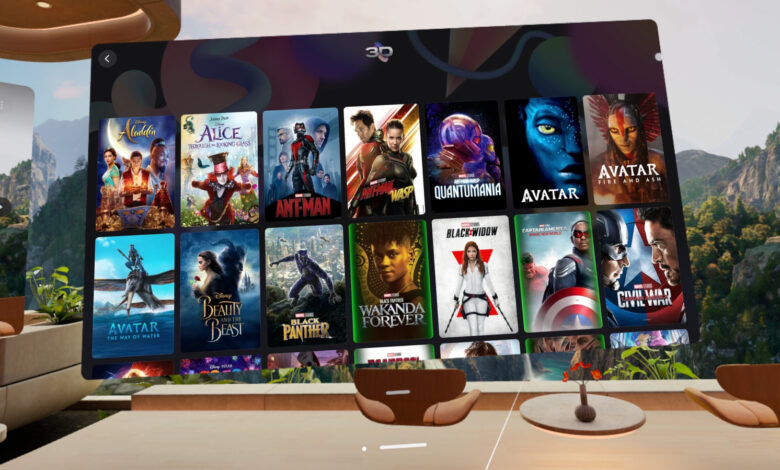
On the positive side, Disney has opened its collection of 3D films to Disney+ (titles may vary by region), featuring a comprehensive selection from Marvel, Pixar, and recent Star Wars releases. Disney+ subscribers can simply select a movie, verify its 3D support, and start watching. The initial sequences of Guardians of the Galaxy and the thrilling car chase from Black Panther appeared stunning on the Quest 3, providing a depth that flat screens can’t match. Additionally, Disney+ offers high-frame-rate 3D versions of the Avatar films, which look fantastic on the Quest 3 and were previously exclusive to the Apple Vision Pro for home viewing.
I have always believed that 3D films translate better on VR headsets compared to cinemas, primarily due to the brighter displays as opposed to the darkened screens seen with 3D glasses. This holds true for the Quest 3 as well. If you own a Quest 3 or 3S and have Disney+, I highly recommend exploring the library of 3D films. Just remember to wear headphones, since the Quest’s built-in speakers offer limited sound quality, lacking depth and bass. The Quest 3 does support Dolby Vision and Dolby Atmos, but these terms are somewhat superficial on this device. The LCD screens do not provide true HDR, and the Atmos experience is minimal on the subpar speakers.
Meta’s Horizon OS has evolved to resemble Apple’s visionOS, yet it remains less adaptable for video playback. Users cannot spontaneously resize the Disney+ window; it must occupy a predetermined area within Meta’s OS. As a fan of immersive cinema, I prefer video windows that fill my entire field of view, occasionally breaching into my periphery. The only way to achieve this on the Quest 3 is by viewing 3D content in the cinema environment, which allows seating in the front, middle, or back. While it works, it’s not the best option if you wish to simultaneously engage with other VR applications.
Though it’s nice that Meta has finally made 3D films available, I can’t help but wonder about the lengthy delay in their release. The Quest 3 debuted in the fall of 2023, and there is no technological barrier preventing earlier models like the Quest 2 or 1 from streaming 3D content. I suspect that Apple has retained some exclusivity regarding 3D content on Disney+ since the introduction of the Vision Pro in 2024, though this should not have hindered Meta from providing 3D films on its own platform. With Quest sales declining sharply, this new feature may not significantly boost its appeal.
Perhaps Meta was aiming to showcase a new feature in anticipation of its upcoming $1,300 VR glasses, set for release in spring 2027. I haven’t had the chance to test those glasses yet, but watching high-quality 3D films on lighter devices should be far more comfortable than donning a Quest headset. For now, it’s certainly an appealing option for anyone still holding onto a Quest 3 or 3S.