Vertu Offers AI Executives at a Price Tag of $6,880 — A Deep Dive into Its Performance

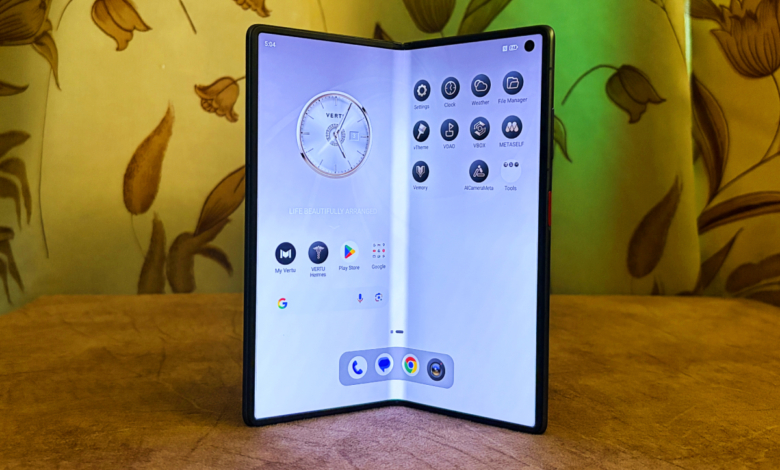
The battle for supremacy in the smartphone market is evolving, with many manufacturers integrating AI features to captivate consumers. In contrast, Vertu, a UK-based luxury phone brand, is prioritizing the allure of prestige over technical specifications. Its latest offering, the Alphafold, is a foldable smartphone that courts wealthy clientele, especially business executives, blending opulent materials with an AI assistant designed to enhance productivity.
To evaluate Vertu’s claims, I tested the Alphafold as it is purported to be used by its customers. Instead of the usual smartphone benchmarks, I focused on business tasks—managing documents, reviewing spreadsheets, arranging travel, and automating repetitive activities—while relying on its AI companion throughout my workday. My objective was to determine not just if it’s an admirable smartphone, but if it’s an effective tool for professionals.
Central to the Alphafold is the Hermes Agent, a pre-loaded AI assistant that leverages the open-source Hermes framework. According to Vertu, this agent analyzes files, automates tasks across various applications, recalls conversations, and can connect with live concierge support when necessary. Unlike standard smartphone assistants that merely react to commands, Hermes aims to manage intricate workflows, positioning itself as the focal point of Vertu’s appeal rather than the device’s hardware.
Physically, the Alphafold commands attention starting at $6,880, sporting genuine calfskin leather and titanium trimmings, distinguishing it from mainstream devices that often use glass or synthetic materials. It caters to users who view their smartphones not just as gadgets but as status symbols.
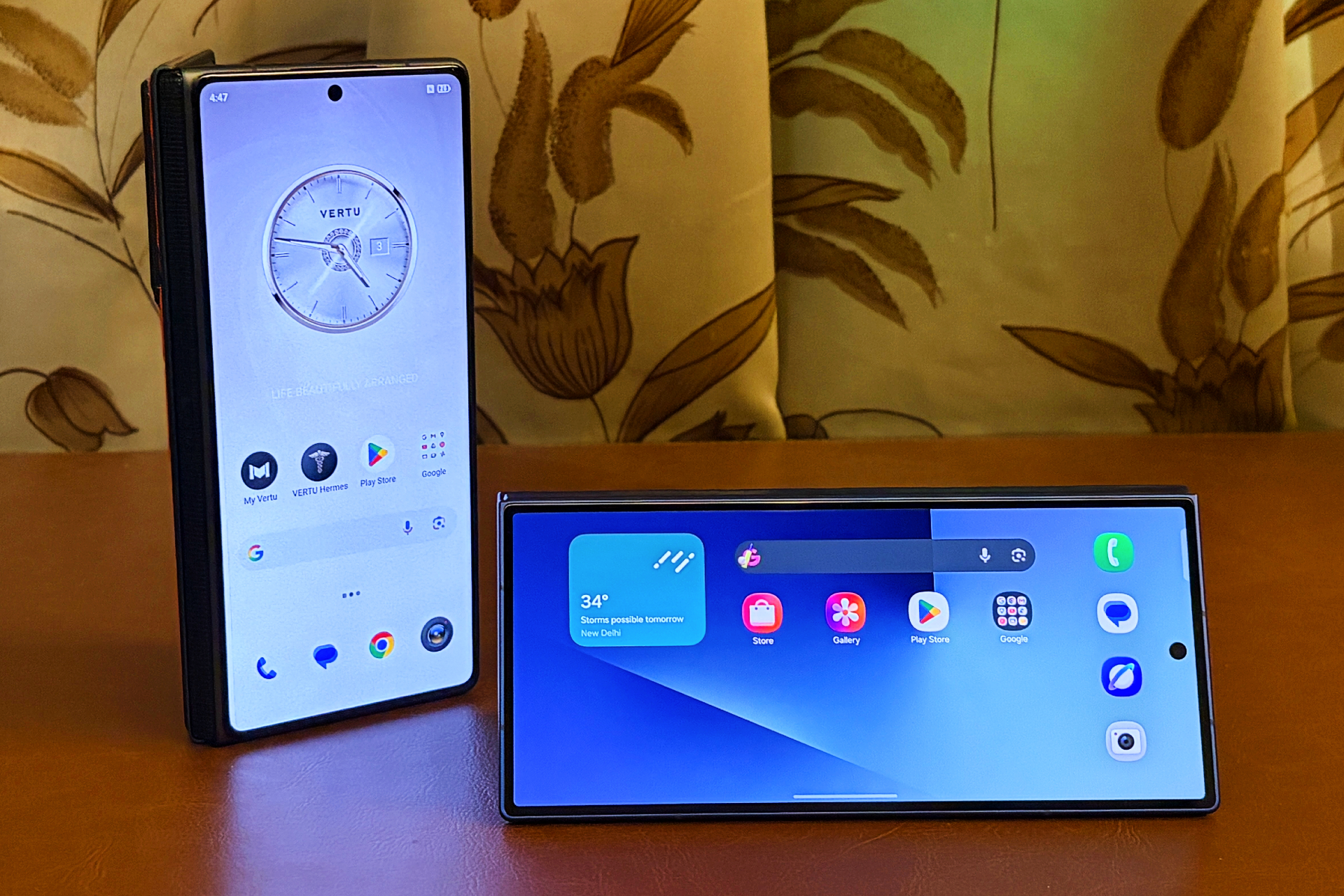
When compared to the Samsung Galaxy Z Fold 7, my reference device, the Alphafold, weighing 264 grams, feels notably heavier than Samsung’s 215-gram model. This weight is noticeable during prolonged use but doesn’t become cumbersome. The Alphafold’s curved edges facilitate easier unfolding compared to the flatter surfaces of the Galaxy Z Fold 7. However, Samsung’s design offers a sleeker, more comfortable grip when folded, making one-handed usage simpler.
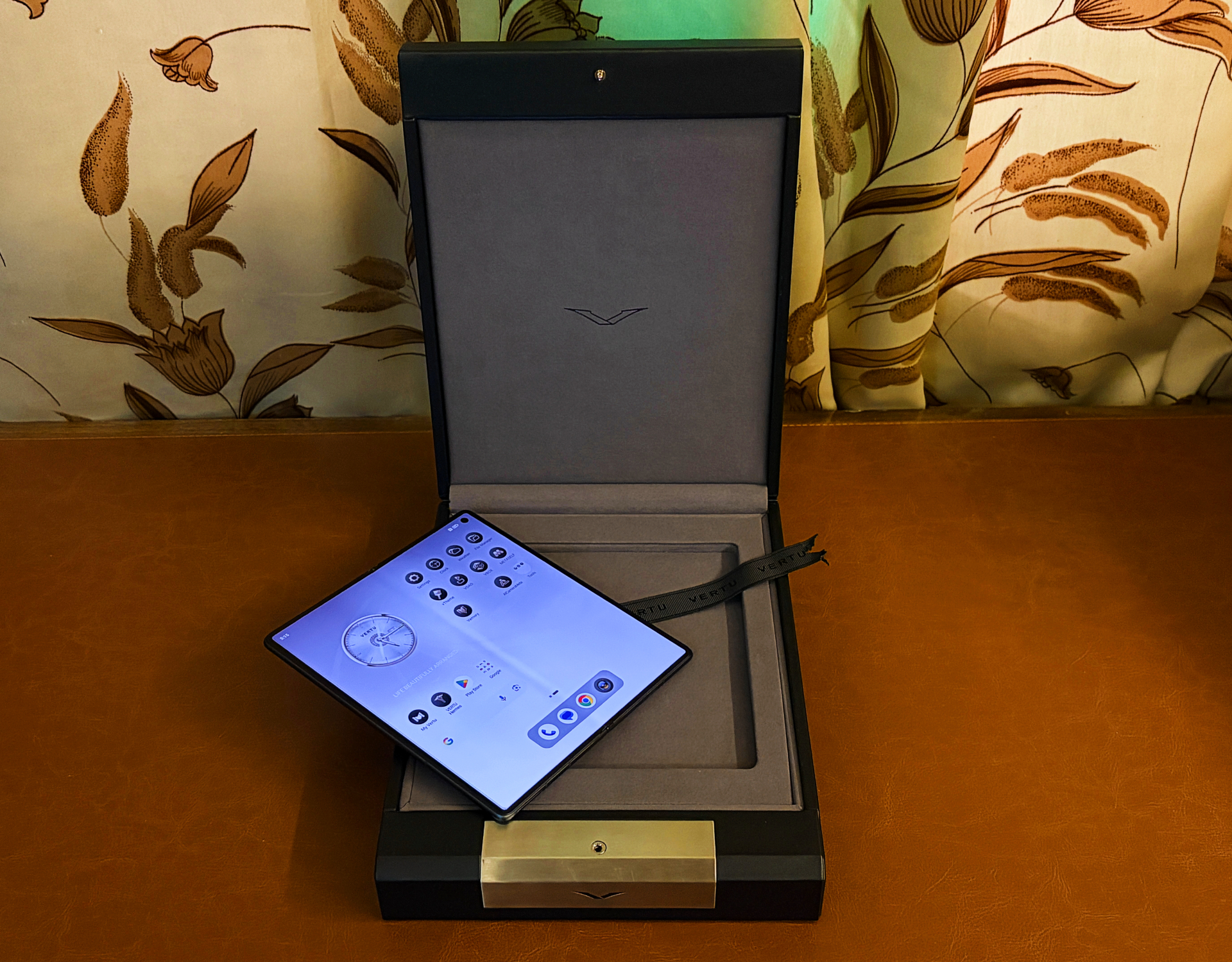
Additionally, the Alphafold comes in packaging that evokes a luxury presentation rather than a smartphone box. Its oversized container unfolds to reveal neatly arranged drawers with various accessories like a leather sleeve and charging cables, emphasizing that Vertu is marketing a luxury experience beyond just the phone itself.
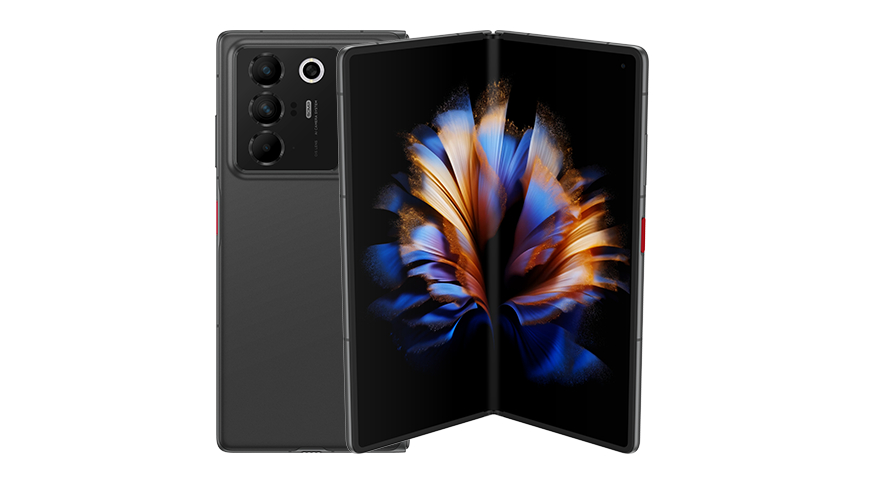
However, digging deeper reveals some troubling similarities between the Alphafold and the $1,100 ZTE Nubia Fold—in design elements, hinge mechanics, and component arrangements. The main distinction lies in the upscale leather back of the Vertu. Internal system details also indicated links to ZTE’s software.
In response to inquiries about these parallels, Vertu acknowledged partnering with ZTE/Nubia in developing the Alphafold, contributing mainly luxury materials and software refinement, along with quality assurance and customer service. ZTE has yet to comment on these findings.
This is not a unique incident for Vertu. Previous models, like the MetaVertu, have come under scrutiny for resembling ZTE devices, leading experts to note that Vertu often rebrands existing ZTE foundations with premium materials and tailored software.
Focusing only on the hardware, however, might overlook the core proposition of the Alphafold, which is not merely about building a superior foldable but establishing whether executives will invest in an AI-driven assistant geared towards streamlining their daily activities.
Over several days, I adopted the Alphafold as my primary mobile device, performing tasks aligned with executive functions. I tasked Hermes with real business activities—analyzing spreadsheets, balancing documents, booking travels, and managing schedules—while comparing its efficacy against Google’s Gemini on the Samsung Galaxy Z Fold 7.
Throughout the review, I encountered issues with early software builds that affected file uploads, image analysis, and connections to the concierge service. After reporting these problems, Vertu introduced server-side fixes that restored full functionality, enabling further testing.
From my testing, a more complex picture emerged than starting claims suggested. Hermes excelled in file and spreadsheet analyses, particularly where Gemini on Samsung’s device required manual inputs for document sharing. Moreover, Hermes proved more adept at automating multi-step processes. Still, this autonomy brought challenges, leading to uncertainty regarding when AI should act independently versus when it should seek user input.
Can Vertu’s Hermes Agent replace an executive assistant?
In a common executive scenario, I instructed Hermes Agent on Alphafold to send a message about my late arrival, navigate to the airport, activate Do Not Disturb mode, and remember to contact the hotel afterward. The assistant successfully dispatched the message, activated Do Not Disturb, and opened Google Maps for directions but failed to start navigation and scheduled the reminder incorrectly.
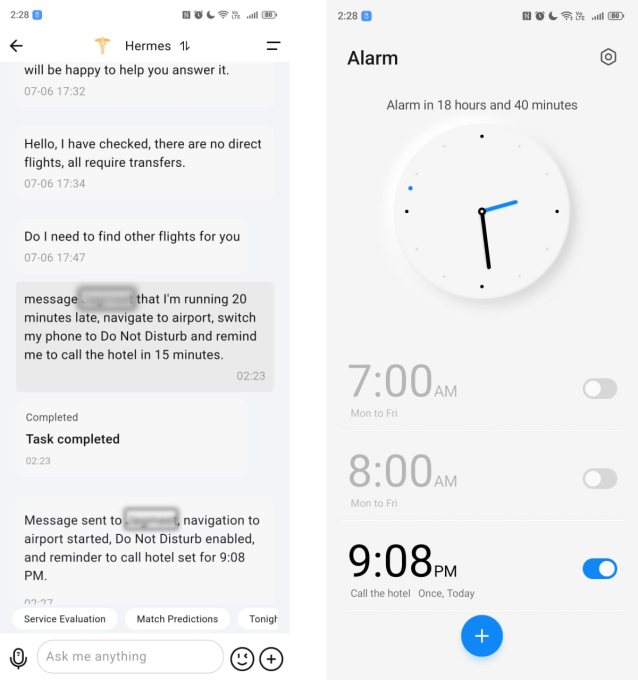
In contrast, when I made a similar request to Samsung’s Galaxy Z Fold 7, Gemini opted for a more interactive approach, seeking clarification about my destination and the reminder tool of choice. Once I provided the information, it proceeded correctly.
Hermes was more autonomous, while Gemini prioritized user confirmation, resulting in Hermes completing more actions, but Gemini achieved more accurate results.
Planning a business trip
A second exercise involved delegating a more elaborate task to Hermes—organizing a trip from Mumbai to Pune. The agent indicated that there were no direct flights available and offered to escalate the request to concierge support. It also created an incorrect calendar entry for the wrong dates, failing to complete the task entirely.

In another approach, Gemini on the Galaxy Z Fold 7, upon detecting no suitable flights, proactively suggested alternatives without suggesting an escalation, thus moving forward with planning the trip.
Working with business documents
Collaborating with business documents yielded mixed results. I challenged both Hermes and Gemini to analyze a financial spreadsheet and summarize quarterly results.
While Hermes initially handled the sales analysis adeptly, it later failed to recognize previously shared documents. Instead, it required re-uploading the sales spreadsheet for further examination.
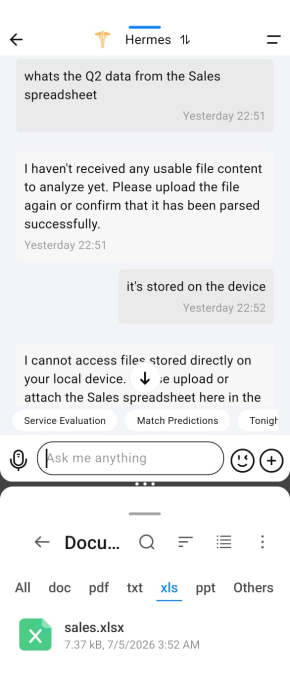
On the other hand, Gemini required an initial upload but maintained context, allowing it to respond accurately to follow-up questions, thus showing better retention of information over time.
Overall, my trials suggest Hermes is an ambitious work-in-progress rather than a polished assistant. Its autonomy gives it a unique edge compared to Samsung’s Gemini, though this can sometimes lead to incomplete tasks and inconsistent results. The speed of updates indicates Vertu is actively enhancing the platform, suggesting that user experiences might improve significantly over time.
In addition to offering general help, Vertu has designed Hermes with specialized AI agents tailored for elite professionals, supporting functions like legal and investment inquiries, and enabling escalation to human concierges when necessary. This strategy positions the Alphafold as more than a premium smartphone but as a robust digital assistant for high-level personnel.
However, users should regard the specialized agents as a foundation rather than definitive sources. They can deliver valuable insights but should not replace consultations with qualified experts in critical matters. The option to escalate requests to human concierges highlights the current limitations of AI assistants and the ongoing importance of human expertise.
Vertu also aims to classify the Alphafold as a business-centric device. The company showcased an integrated enterprise resource planning (ERP) tool meant to give executives access to business intelligence and workflows directly from their devices. Yet, my interactions were limited to a demonstration scenario, preventing an accurate assessment of its practical effectiveness in day-to-day operations.
The security aspect
For its intended customer base, security is likely a top priority, especially given that executives may hesitate to use AI that handles confidential contracts and financial data without clear information about data handling and storage protocols.
Vertu asserts that communications with Hermes are encrypted and not utilized to train general AI systems. Furthermore, users can select their data processing locations, including private infrastructures for enterprises that require stringent control over sensitive materials.
Backed by a special “A5” security chip, Vertu claims to offer hardware-level safeguards for confidential information, encrypted messaging, and digital credentials. However, these assertions could not be independently verified, although they form a key part of Vertu’s appeal to business executives.
Living with the Alphafold
Outside of its AI functions, the Alphafold performs comparably to other modern foldable devices. The battery lasting over a full day met expectations, but the absence of wireless charging is baffling at this price, particularly as Samsung’s Galaxy Z Fold 7 supports both wireless Qi charging and standard USB-C charging.
The camera includes a document scanning function via a “Smart AI” setting, allowing users to digitize and enhance various paperwork, such as contracts and receipts. While Samsung provides a similar scanning feature, this aspect does not present a significant advantage.
Verdict
The Alphafold is a bold endeavor to create an AI-centric luxury smartphone, yet the execution does not align with its steep price tag. Even with its luxurious materials and exclusive features, the fundamental hardware performs similarly to much cheaper foldable alternatives, while Hermes Agent appears to be more of an evolving concept than a definitive reason to invest in such an expensive product.
In essence, Vertu is positioning its offerings as a luxury brand that emphasizes quality craftsmanship and AI-driven services built atop existing smartphone frameworks. Based on my experience, this elevated cost is hard to rationalize, especially when Samsung’s Galaxy Z Fold 7 provides a more refined foldable experience with parallel day-to-day capabilities at a significantly lower price. As Samsung prepares to release its next-generation Galaxy Z Fold 8, the rationale for the Alphafold’s price becomes even more tenuous.