Unraveling the Tangle: How a Downed Power Line Revealed Challenges in AI Data Centers—and Solutions to Overcome Them

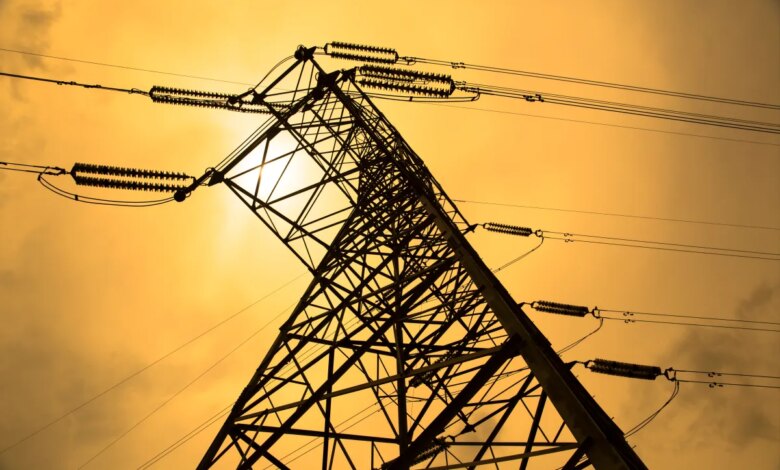
This week, a power line failure occurred near Washington, DC, leading to an unexpected delay in the grid’s recovery time. Typically, such incidents would see the grid stabilize in a matter of seconds, but this situation took over 10 minutes due to a significant number of data centers ceasing power consumption simultaneously.
The incident caused fluctuations in voltage across the PJM grid stretching from Northern Virginia to Chicago, according to observations by a tech startup utilizing IoT sensors in residential electrical outlets.
While this event did not result in a blackout, it did cause flickering lights in the surrounding areas. Experts interpret this as a demonstration of the impact large data centers can have on grid integrity, a situation predicted to occur more frequently in the future.
Northern Virginia, a key area within the PJM network, boasts the highest concentration of data centers globally.
Ricardo de Azevedo, Chief Technology Officer at ON.Energy, remarked that such incidents involving massive data centers are becoming increasingly common. He described the event as indicative of broader issues that may arise if data centers are not equipped to manage power disruptions effectively.
The recent outage resembles an incident from two years ago, which also occurred within PJM’s jurisdiction, and serves as a warning for potential larger scale disruptions if proper measures are not taken. PJM Interconnection oversees grid operations from New Jersey to Illinois, providing services to approximately 67 million customers, making it the largest grid operator in the U.S.
Following the power line failure, data centers quickly switched to backup power, resulting in a sharp decline in demand of about 3.1 gigawatts within just 30 seconds. Although the grid managed to recover to some extent, it took an additional 11 minutes for it to stabilize completely, with the lost data center capacity amounting to roughly 3% of PJM’s total demand during that time.
Although a few percentage points may seem minor, the power grid requires an almost perfect balance between supply and demand. If this balance is disrupted, it can lead to significant voltage fluctuations. While the grid can handle small changes, large discrepancies can activate failsafe mechanisms, causing facilities to disconnect.
In Northern Virginia, as data centers detected the voltage drop from the power line failure, they rapidly shifted to backup systems, which further reduced their load on the grid. This chain reaction turned a small dip in supply into a larger decline in demand, resulting in noticeable voltage spikes that caused lights to flicker.
Data centers typically make rapid decisions, and the facilities involved in this week’s incident were no exception. As soon as they detected the voltage drop, they disconnected nearly simultaneously, according to an expert in market modeling.
There is a growing consensus on the need for a more orderly method for these geographically clustered load centers to connect or disconnect in a sequential manner, allowing grid operators to formulate proactive procedures.
Alternately, innovations may help data centers withstand power disruptions without disconnecting. For instance, ON.Energy is developing a solution designed to help both data centers and the grid handle such events. Their technology features an uninterruptible power supply that encompasses an entire data center campus, managing not only the servers but also cooling systems and more.
This setup essentially allows the data center to be viewed by the grid as a single, stable load, minimizing the fluctuations caused by individual components. ON.Energy’s solution enables data centers to adjust operational loads smoothly, including tasks like AI training, without impacting grid stability.
Crucially, this technology allows data centers to adjust to grid fluctuations. The system can charge its batteries during excess power availability and supply energy back to servers when needed. Additionally, it can respond to grid conditions in milliseconds, averting issues like the recent incident.
ON.Energy is in the process of deploying systems that collectively total 3 gigawatts at four different data center locations.
Grid operators are also becoming increasingly aware of these challenges.
For example, ERCOT has indicated plans to mandate that large demand sources such as data centers must be capable of enduring disruptions.
However, time is of the essence. The recent event’s scale was twice as significant as a comparable occurrence in 2024, when numerous data centers simultaneously disconnected, causing a 1.5-gigawatt drop. At that point, data centers made up about 6% of PJM’s total load, but projections indicate they may account for 24% by 2040. Without timely interventions, the situation could worsen significantly.