Unlock Your Weekend: 3 Innovative ESP32 Projects to Spark Your Creativity (July 31)

Microcontrollers, such as the ESP32, have significantly broadened access to hobby engineering, providing affordable hardware and stimulating projects. While some of these creations may seem ambitious, they inspire and motivate future innovations.
The Halcyon Dawn Spaceship Simulator
An Interface for a Game That Might Never Be Played
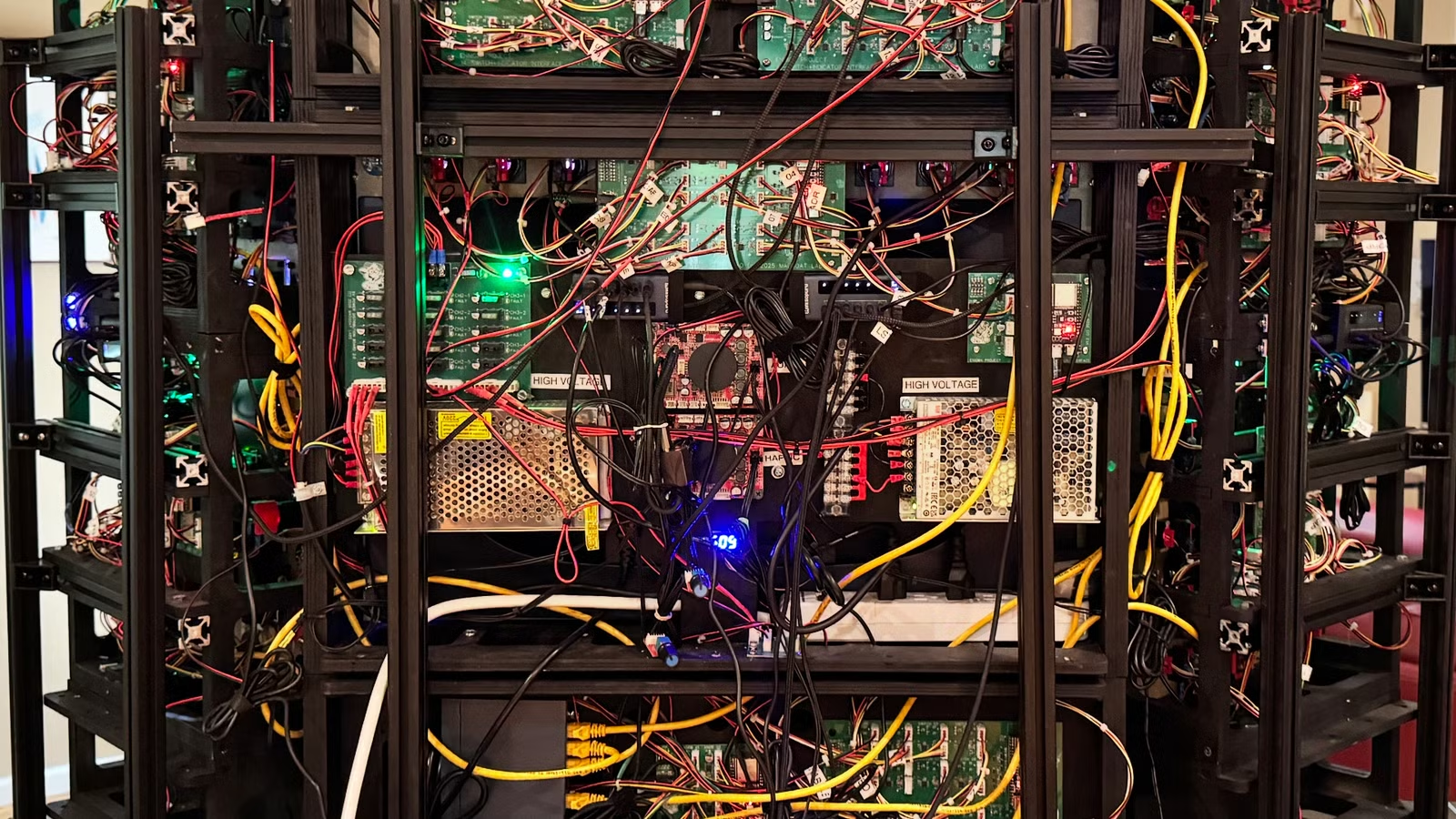
The Halcyon Dawn Spaceship Simulator stands out as one of the most extraordinary projects involving the ESP32. The creator, known as u/triggur from Mad Goat Labs, shared on Reddit that this endeavor is a heartfelt project featuring 152 physical controls, six screens, and a staggering 164,000 lines of code.
The creator also developed a game that complements this device, set in the sci-fi realm of John Scalzi’s Old Man’s War. However, the game is not intended for public release. The developer explains that it requires an expensive simulator frame not accessible to most users, alongside creative restrictions imposed by the original story’s author to avoid commercial exploitation.
What is publicly available is Enigma, the platform used to create the control system supporting the game. This includes USB human interface devices (HID) boards for various inputs, such as switches and rotary encoders, with features for sound and visual elements, accompanied by thorough documentation.
The project author noted that the control panels are designed to be “intentionally generic,” making them adaptable for future projects, including escape room challenges.
OomWoo Open-Source Robot Vacuum
A Self-Built Cleaning Solution
OomWoo is an innovative open-source robot vacuum that enthusiasts can construct themselves, with an ESP32 microcontroller being a key component. The total estimated cost for parts is about $200, excluding a Raspberry Pi 5 (4GB). This DIY robot aims to match the functionality of mid-range models typically priced around $600, offering capabilities like mopping and advanced obstacle avoidance.
While this project significantly cuts down on retail prices, the primary motivation for building it extends beyond mere savings; it presents a chance to embrace an open-source alternative to a market flooded with costly proprietary products.
Detailed build instructions are anticipated to be released in late 2026, as the project continues to evolve. The goal is to create a high-performing appliance that works seamlessly with Home Assistant, utilizes 3D-printed components, and operates independently without cloud reliance. For those eager to get started, consider installing Valetudo on an existing retail model in the meantime.
DIY Thermal Imaging Camera
Detect Temperature Variations Efficiently
If a thermal imaging camera is on your wishlist, numerous options are available, including the opportunity to build one from scratch. Circuit Digest offers an extensive guide detailing how to construct a camera capable of measuring temperatures from -40ºC to 300ºC, featuring an adjustable refresh rate, ten color palettes, and five interpolation modes.
This camera, powered by an ESP32, features a 3D-printed body, the ability to save images to an SD card, a built-in battery with charging capabilities, and an effective graphical interface with physical controls. The project creator has also provided PCB schematics and STL files for home printing on GitHub.
A thermal imaging camera can be a delightful gadget, providing both visual color cues and numerical temperature readings. It can be useful for identifying temperature fluctuations to improve insulation in homes or detecting leaks within walls, which may show visible temperature differences.
For those seeking simpler alternatives, options like the Makerfabs version are also available.
Ready to dive into some new projects? Explore last week’s compilation of ESP32 kitchen initiatives for inspiration.