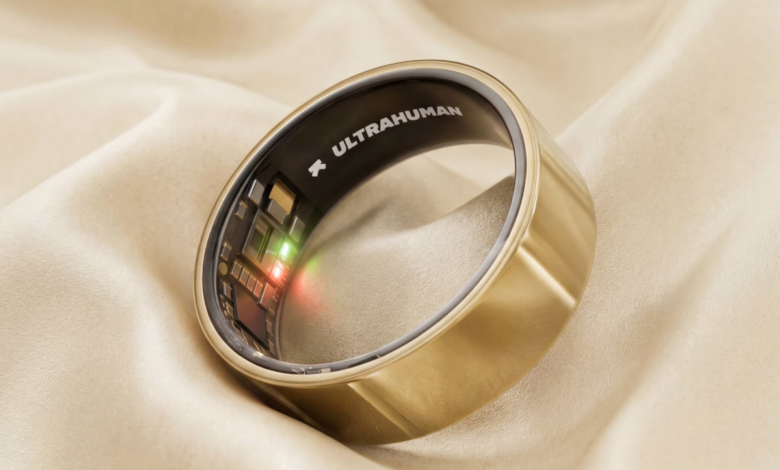
Bengaluru-based health technology startup Ultrahuman has entered into a partnership with Abu Dhabi health authorities to create a biological-age model that will soon be accessible to residents across the United Arab Emirates.
On Monday, Ultrahuman revealed that it has established a two-year memorandum of understanding with the Abu Dhabi Public Health Center (ADPHC) for the development and validation of this model. This initiative will integrate clinical biomarkers with data collected from wearable devices. The goal is to utilize these indicators to gauge an individual’s aging speed and pinpoint various factors, such as sleep, activity levels, cardiovascular health, and metabolism, that might influence this process.
This collaboration marks a significant step for Ultrahuman as it seeks to expand beyond merely selling wearable technology and implement its health algorithms on a broader scale. The startup increasingly identifies itself as a health data firm, with its smart ring being a valuable tool for harvesting data that supports algorithms related to aging, longevity, and other health domains, according to CEO Mohit Kumar.
“Ultrahuman encompasses the Ultrahuman Ring, which is a tool for gathering data from the human body,” Kumar shared. “What truly matters to us is not just the ring itself but how we utilize the information we collect.”
Kumar stated that partnering with government authorities allows Ultrahuman to apply its algorithms to a significantly larger population than its current customer base, noting that the company has sold approximately 800,000 smart rings worldwide. The Abu Dhabi collaboration is seen as an initial step towards deploying a health algorithm on a national level, ultimately aiming to provide the health age model to individuals throughout the UAE.
While Ultrahuman is primarily recognized for its smart rings, Kumar mentioned that the biological-age model is designed to be compatible with a variety of wearable devices. This means data from rings, wrist-worn gadgets, straps, and patches can contribute alongside clinical biomarkers. Patients will eventually be able to view their health age through government digital health platforms like TAMM and Sahatna.
Ultrahuman and ADPHC will dedicate the next two years to researching and clinically validating the model. Kumar mentioned that the broader rollout would be phased, though no specific timeline was provided.
The UAE has emerged as one of Ultrahuman’s top ten markets, accounting for about 4% to 5% of its total revenue. The startup has been active in the region for nearly five years, enjoying a retention rate that is approximately 25% higher than in other markets.
Ultrahuman’s current user demographic provides a limited perspective compared to a government health system. According to Kumar, typical users are aged between 25 and 43, while implementing the model nationwide would expose Ultrahuman to a broader spectrum of age groups.
The biological-age model was developed using existing data from Ultrahuman, correlating users’ chronological ages with signals from wearables, and, for some, blood-test indicators. This fusion of data allows the company to observe how health markers typically evolve with age and identify any discrepancies.
Kumar emphasized that the model would not be specifically trained using data from UAE residents. “We will deploy an algorithm based on UAE data, but we will not have access to any personally identifiable information through this initiative,” he clarified.
Ultrahuman is not the sole smart-ring manufacturer collaborating with Abu Dhabi on preventive health measures. In May, the Department of Health – Abu Dhabi also formed a partnership with Yura, Ultrahuman’s main competitor, to merge their wearable data with the emirate’s extensive health information, initially concentrating on women’s health and cardiometabolic issues.
Kumar noted that Ultrahuman is unaware of any other company working specifically on the health age model with Abu Dhabi authorities. While he acknowledged that the government collaborates with several health tech firms, he chose not to comment on the specifics of Yura’s partnership with Abu Dhabi.
These simultaneous partnerships occur as Ultrahuman and Yura vie for market share in the smart ring sector while aiming to extend their services beyond wearable devices and into the realm of preventive health. Furthermore, Ultrahuman is also working on developing a smart ring capable of running software directly on the device, enabling functionalities from AI interactions to gaming.